
The Curators Theatre returns in 2025 with Ode to Women: A Peace Play, a bedazzled and broad-reaching ensemble piece that ruminates on the cost of war for those beyond the fighting. Ode to Women is the first in the Post Dramatic Troy Disorder trilogy that will unfold throughout the year, a revisioned cycle of three classic Greek plays.
Directed and designed by Michael Beh, with dramaturgy by Maureen Todhunter, Ode to Women draws on Euripides’ Women of Troy and Charles Mee’s Remaking Project to reflect on the legacies of violence against innocents, particularly women and children.

Staged at “The Barney” in Red Hill, the performance began from the moment the audience entered. The actors, draped in lace, beads, and feathers, moved across the stage and interacted with the audience in character before the play began in earnest.
In Euripides’ play, the four central women are those who appear, lamenting Hector’s death, in the final book of Homer’s The Iliad: The Trojan Queen Hecuba and her daughters – sacrificed virgin Polyxena and prophetic priestess Cassandra – and daughter-in-law, the warrior princess Andromache. The play is a commentary on the costs of war, through the eyes of women and children, and an appeal for peace.
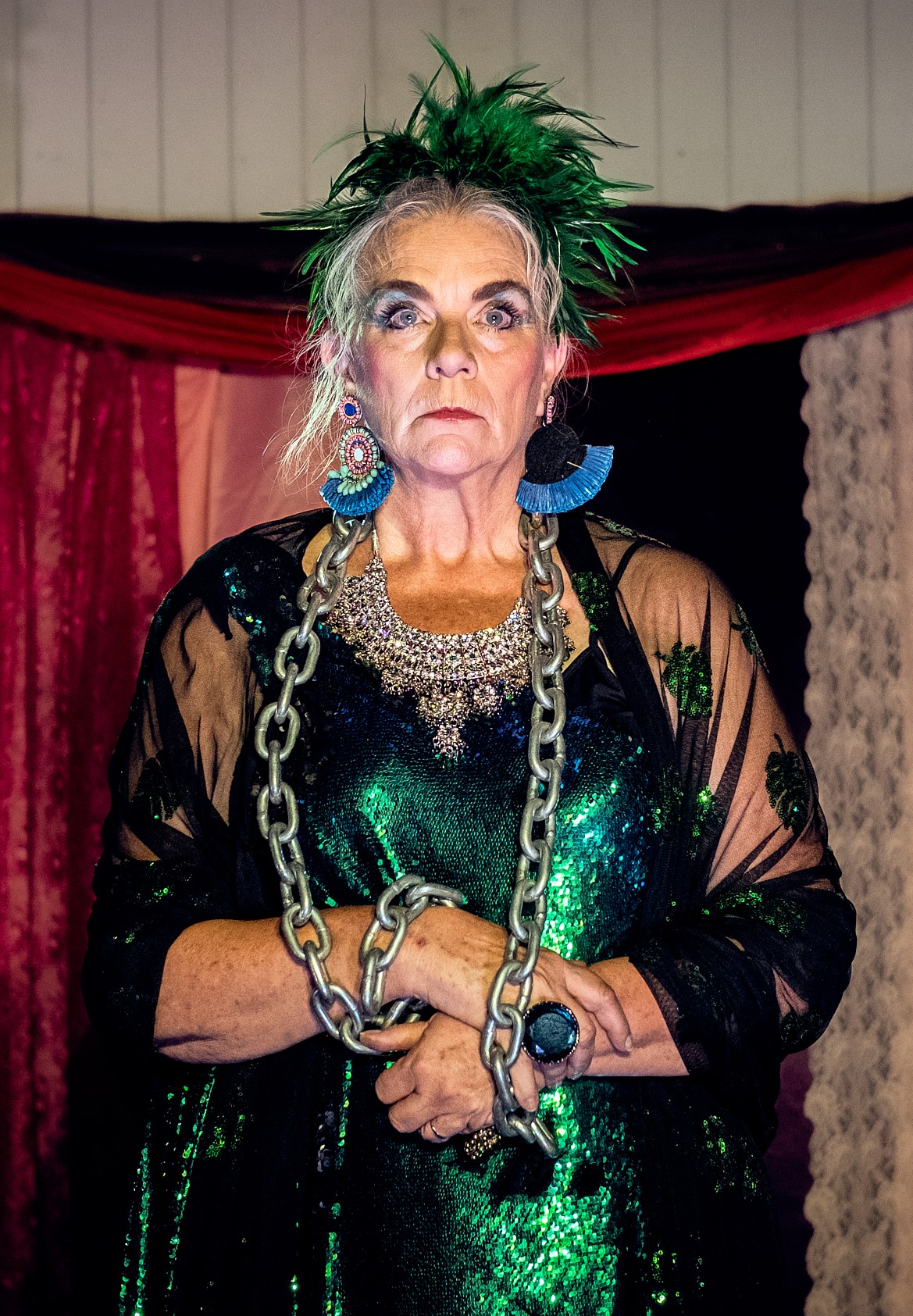
Ode to Women is set in The Bright Inside – a place seemingly outside of time, adorned with sunflowers and chiffon, where the tragedy of the Trojan women converges with more contemporary atrocities, recounted in women’s voices. As they sat on the stage, the characters were also established or embellished by props – Hecuba, the Peacock Queen, wore an array of blue and green feathers, Cassandra held a small, mirrored sphere that evoked both crystal ball and disco ball, and Andromache sharpened her sword.
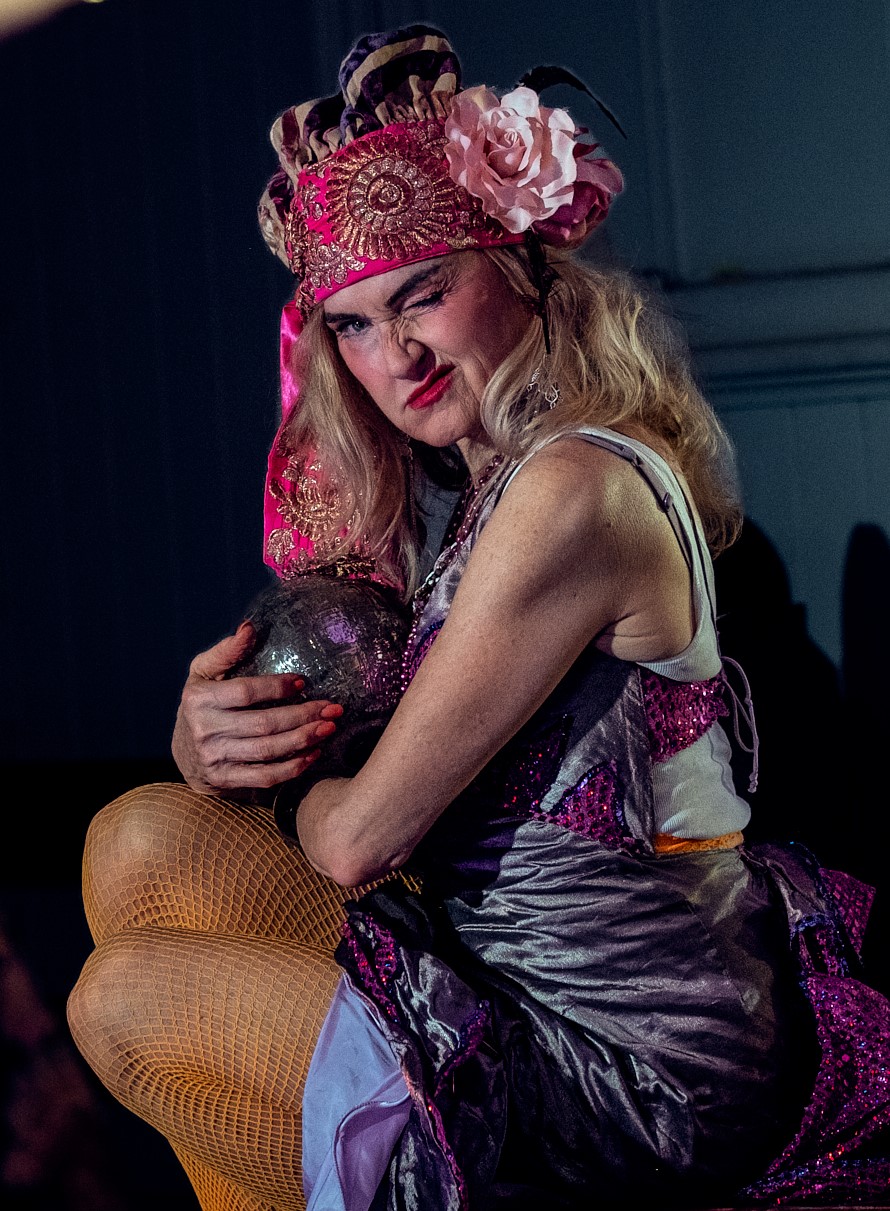
Structured loosely as a cabaret, hosted by the Angel of the Century of God (played with high energy and a touch of Joel Grey’s uncanny Cabaret MC by Bronywn Naylor), Ode to Women was a contemplation of the violence done to women, children and other innocents in the mythological conflict of the Trojan War and throughout history, right up to the present moment.
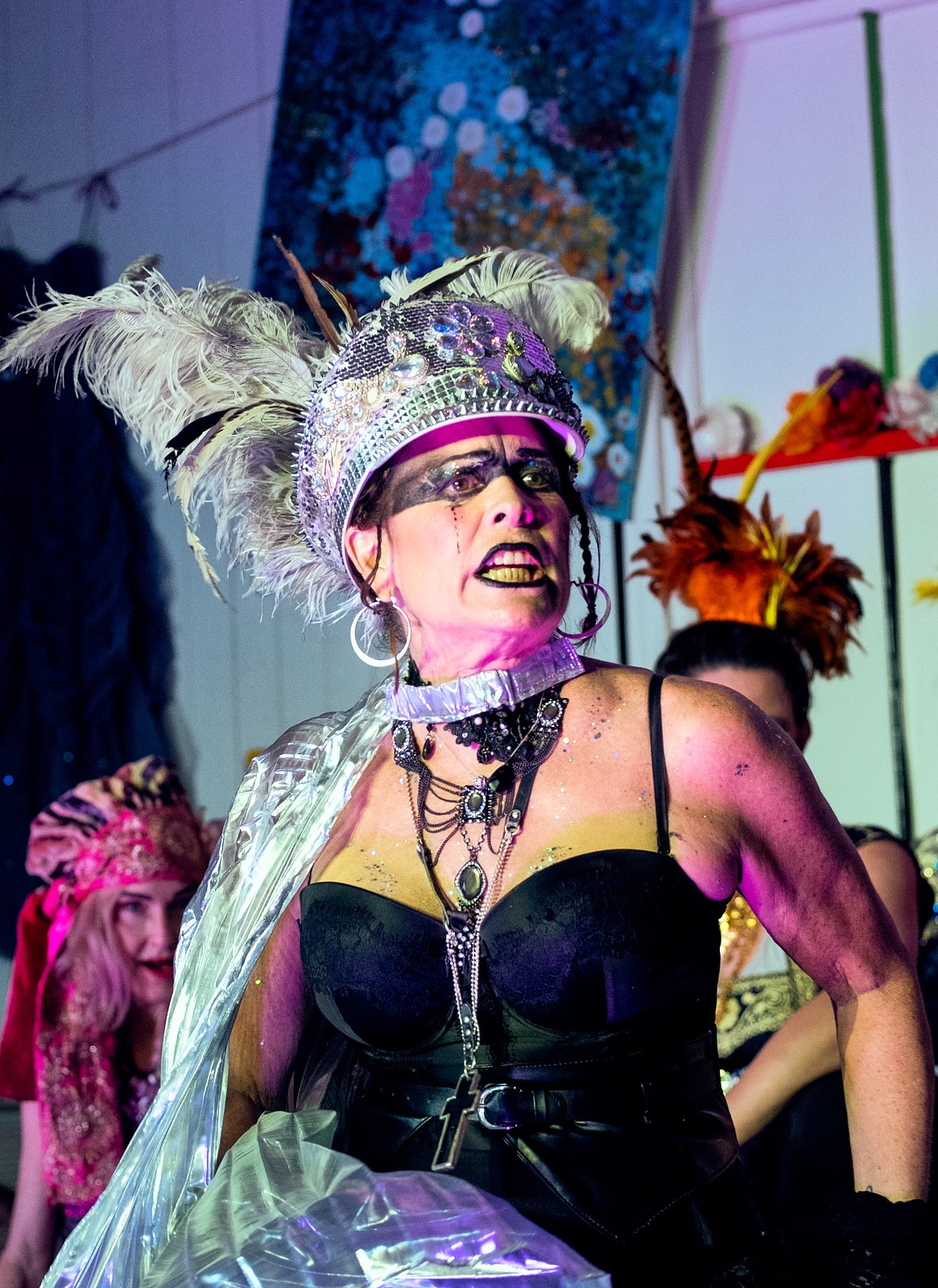
Naylor’s omnipotent Angel of the Century of God was accompanied by WOW (Woman of the World, played by Christie Eckersley) and WOOWOO (Woman of Spirit, played by Adrienne Costello), and her patter name-checked famous feminists like Gloria Steinman, Germaine Greer, and Simone de Beauvoir as well as prominent women in politics like Julia Gillard, Kamala Harris, and Hillary Clinton. She also pointed to the modern conflicts where war, genocide, and the murder of innocents are ongoing – Ukraine, Congo, and Gaza, to name a few.

Each of the Trojan women had her moment in the spotlights and a gong was struck to clearly demarcate each woman’s story. Interwoven with these monologues was music, movement, and live acapella singing, featuring the astounding vocal talents of Eckersley.
Costuming designed by Beh was full of colour and texture, feathers and lace and brocade and sequins and layers of tulle and beads. Vintage gowns hung from the walls behind the three-tiered stage, and giant sunflowers bloomed from a pale pink wheelie bin and seemingly from the stage itself. Music and technical design by Eckersley aided the clear delineation between stories and characters, and the lighting design included the use of handheld torches to create some stunning shadow effects.
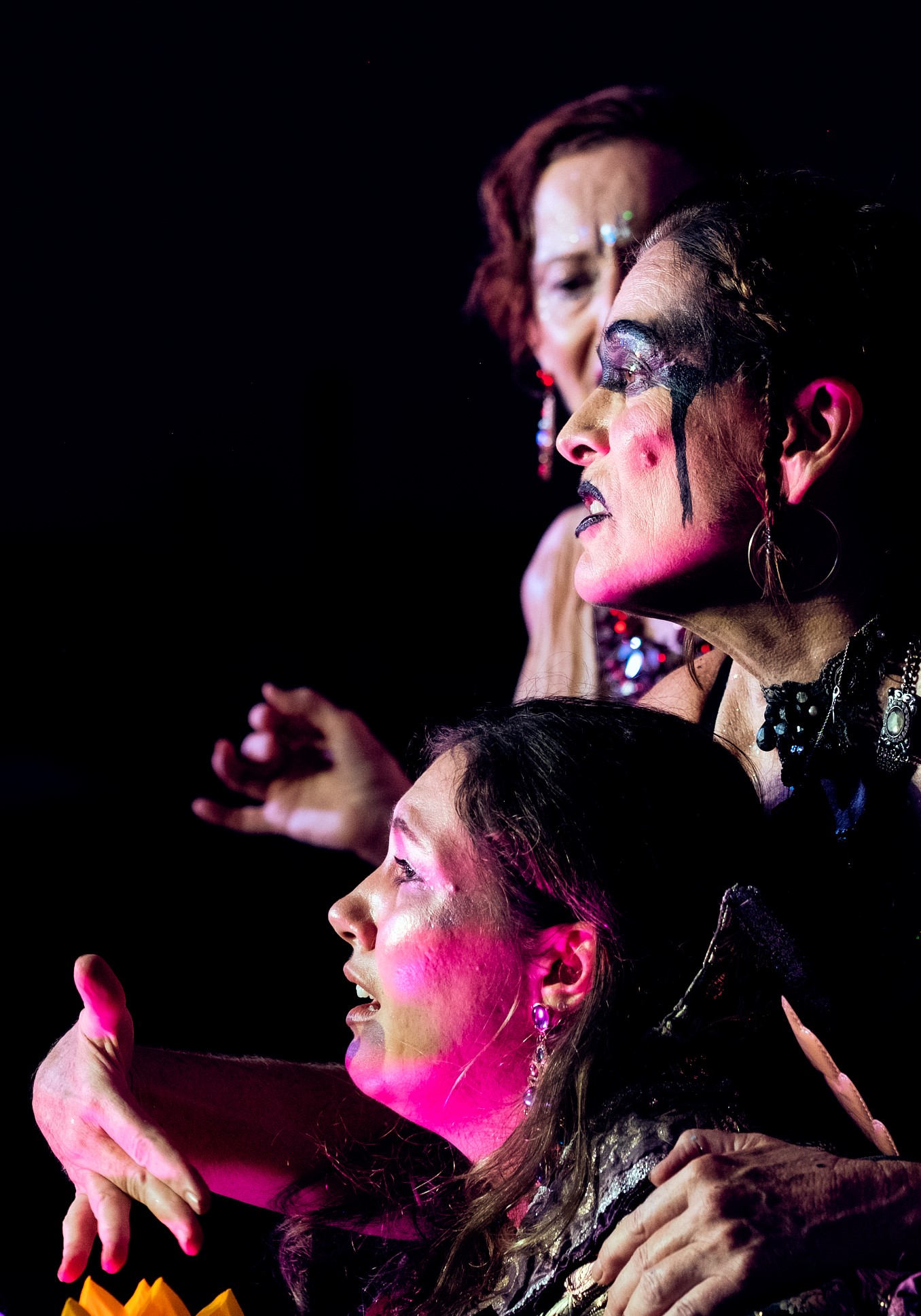
The fast-moving script, especially the connecting threads delivered by Naylor, were full of varied references, from Sappho, Scheherazade, and Samuel Taylor Coleridge to Pussy Riot, Legally Blonde, and the 2022 overruling of Roe v Wade. Ode to Women was a visual and verbal collage that spoke of feminist utopias, motherhood and massacres, and sexual violence in wartime and in supposed peace. A recurring theme was of mothers mourning children, and grieving lives lost to senseless violence – not only in the sense of death, but in the destruction of homes, families, and communities.

While the feminist theory underlying the work is well established, and some thematic and emotional depth was lost in favour of breadth, the actors performing Ode to Women were luminous with grief and rage and resolve. Martie Blanchett’s Hecuba was movingly grave and graceful, mourning with eyes ablaze. Sherri Smith played a tearfully furious Cassandra in search of her new “husband” Agamemnon, who takes her as a war prize after sacking her home city of Troy. Cam Scurrah played a sweet and serene Polyxena, composed in the face of death, and Vivien Whittle brought a raw anguish to the role of Andromache.
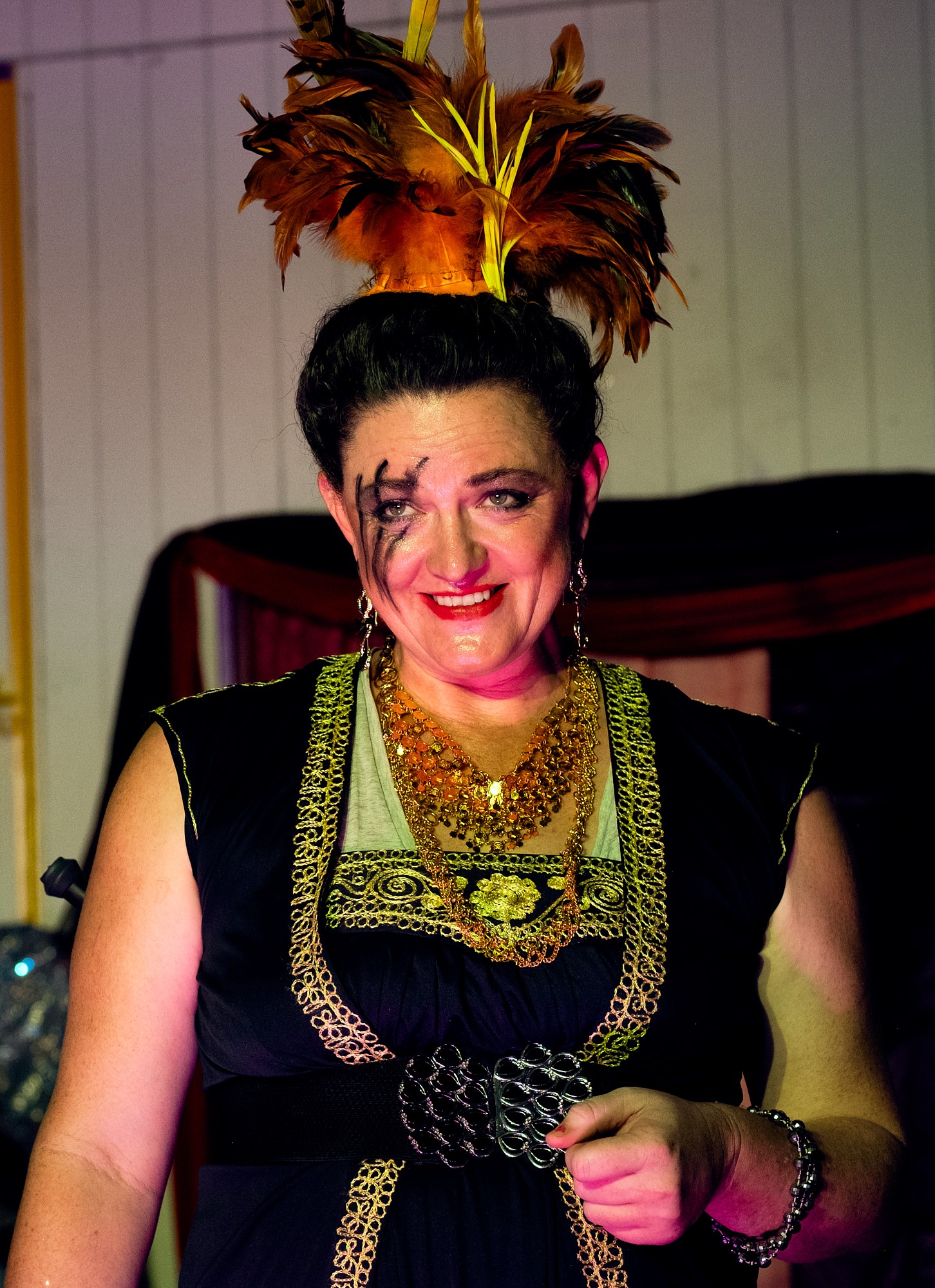
The play ended with the actors packing away their costuming and characters, emphasising that the issues raised in the play remain relevant to modern women such as themselves.
Powerful performances gave Ode to Women: A Peace Play strong emotional resonance, braiding together haunting stories of violence as well as honouring the resilience and resistance of women in myth and modernity.
Ode to Women will be performed at 28 St Barnabus Place, Red Hill, from 21 February – 15 March 2025
For ticketing and further information, visit The Curators’ website
 Backstreet Brisbane
Leave a comment