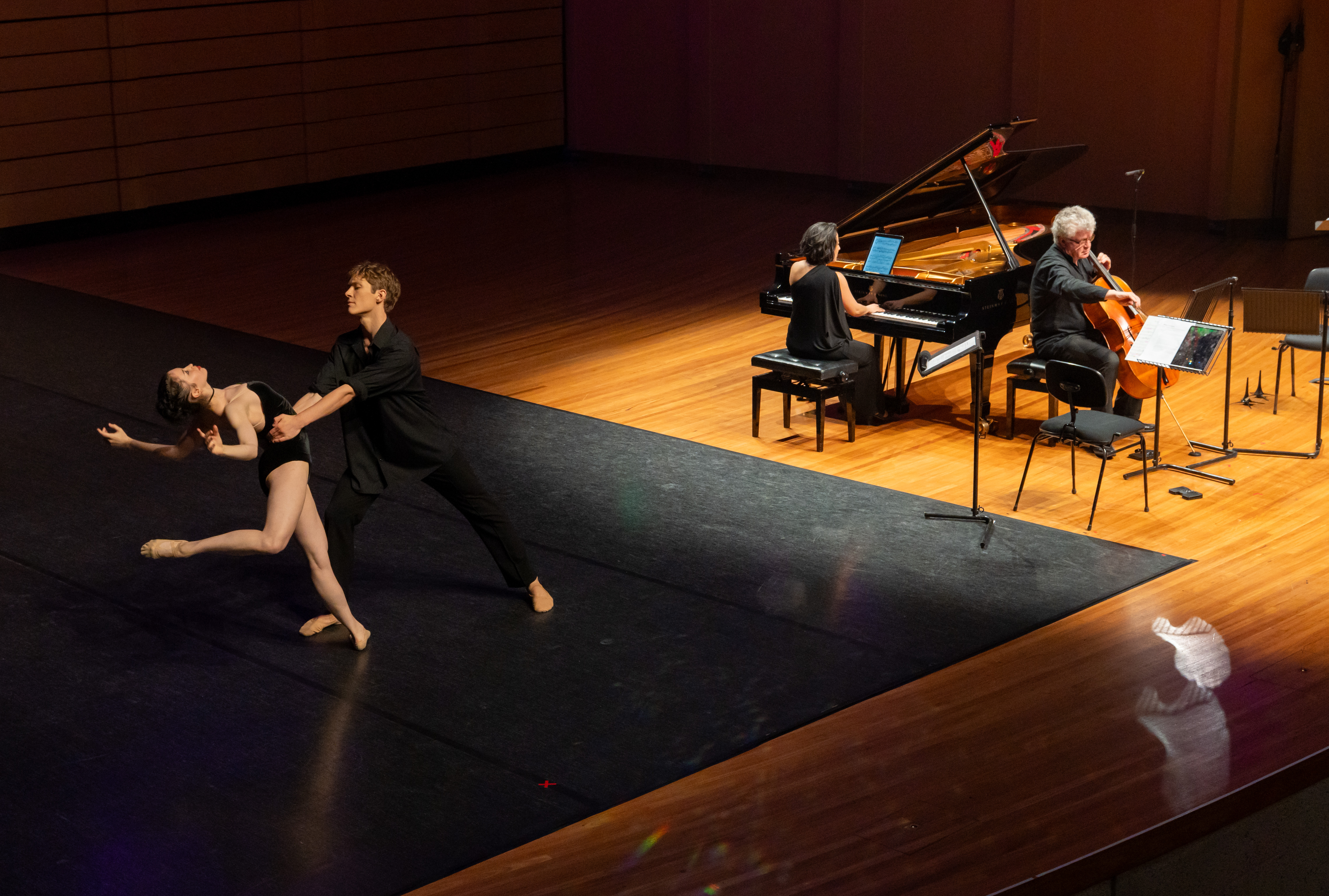
Under a sparkling chandelier in the QPAC Concert Hall, Southern Cross Soloists’ Wonder braided together compositions by Clara Schumann, her husband Robert Schumann, and Johannes Brahms. The concert also included readings from a dramatised version of the trio’s letters, an interpretation of their complex relationship through dance, and the premiere of a brand new work.
The concert began with the world premiere of Two Winds, One Song, a new work for didgeridoo and ensemble, co-composed by Chris Williams and Ray Lin as part of SXS’ ten-year SXS Didgeridoo Commissioning Project. As SXS’ First Nations Didgeridoo Artist in Residence, Williams collaborates with established composers to premiere three new works for didgeridoo and classical music ensemble each year, from 2022-2032, creating a canon of new Australian works in the leadup to Brisbane’s hosting of the Olympic Games.
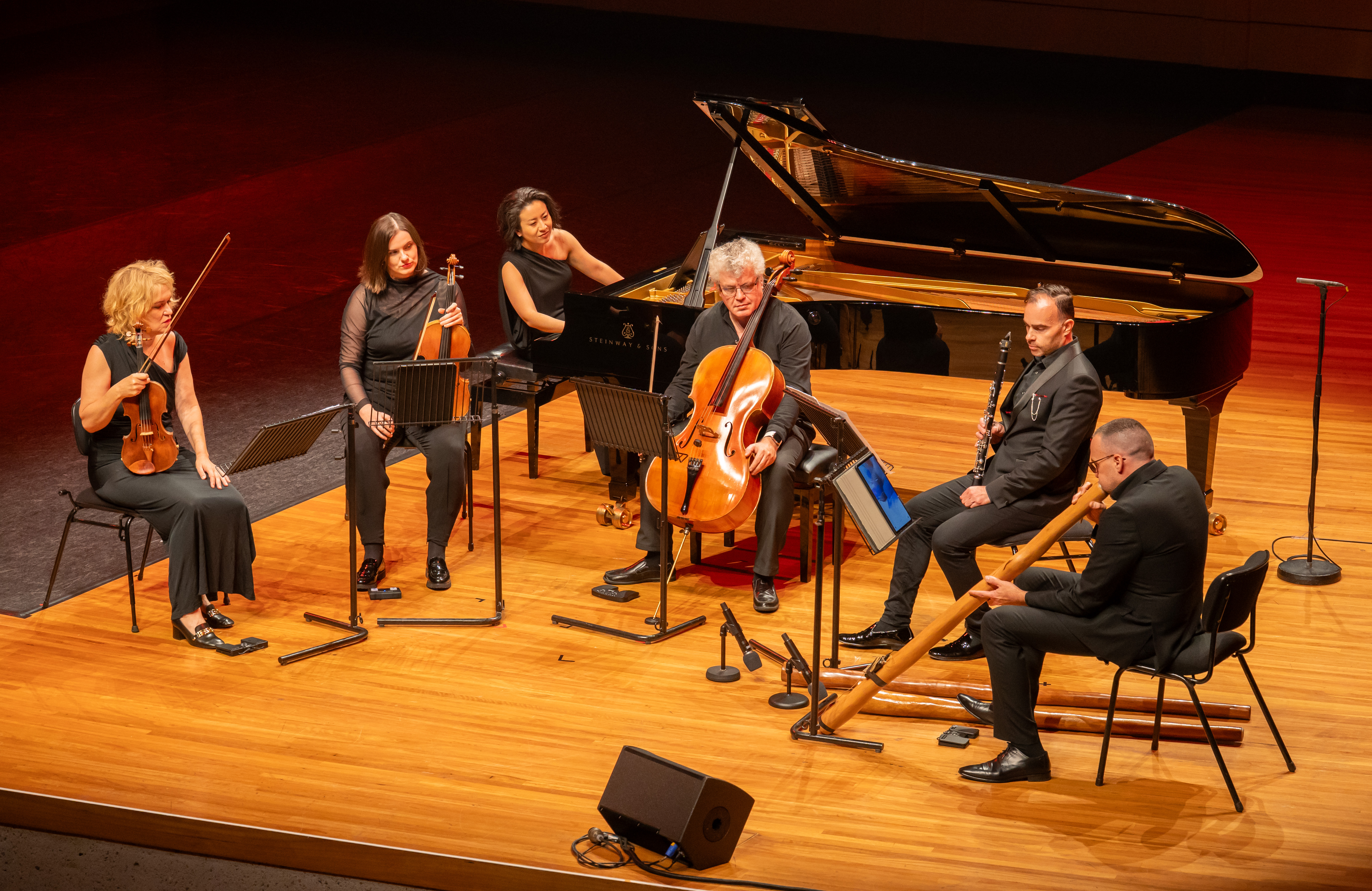
For Wonder, Williams collaborated with award-winning Australian-Chinese composer and conductor Ray Lin to co-compose Two Winds, One Song. Lin described the piece in his program note as “a reflection of cultural hybridity that is alive, shared, and distinctly Australian”. Inspired by the idea of two cultures meeting through music – one timelessly connected to the land, one searching for a new home and sense of belonging – Two Winds, One Song evolved to reflect on distinct but overlapping histories of marginalisation, colonisation, and cultural resilience from Aboriginal and Chinese people.
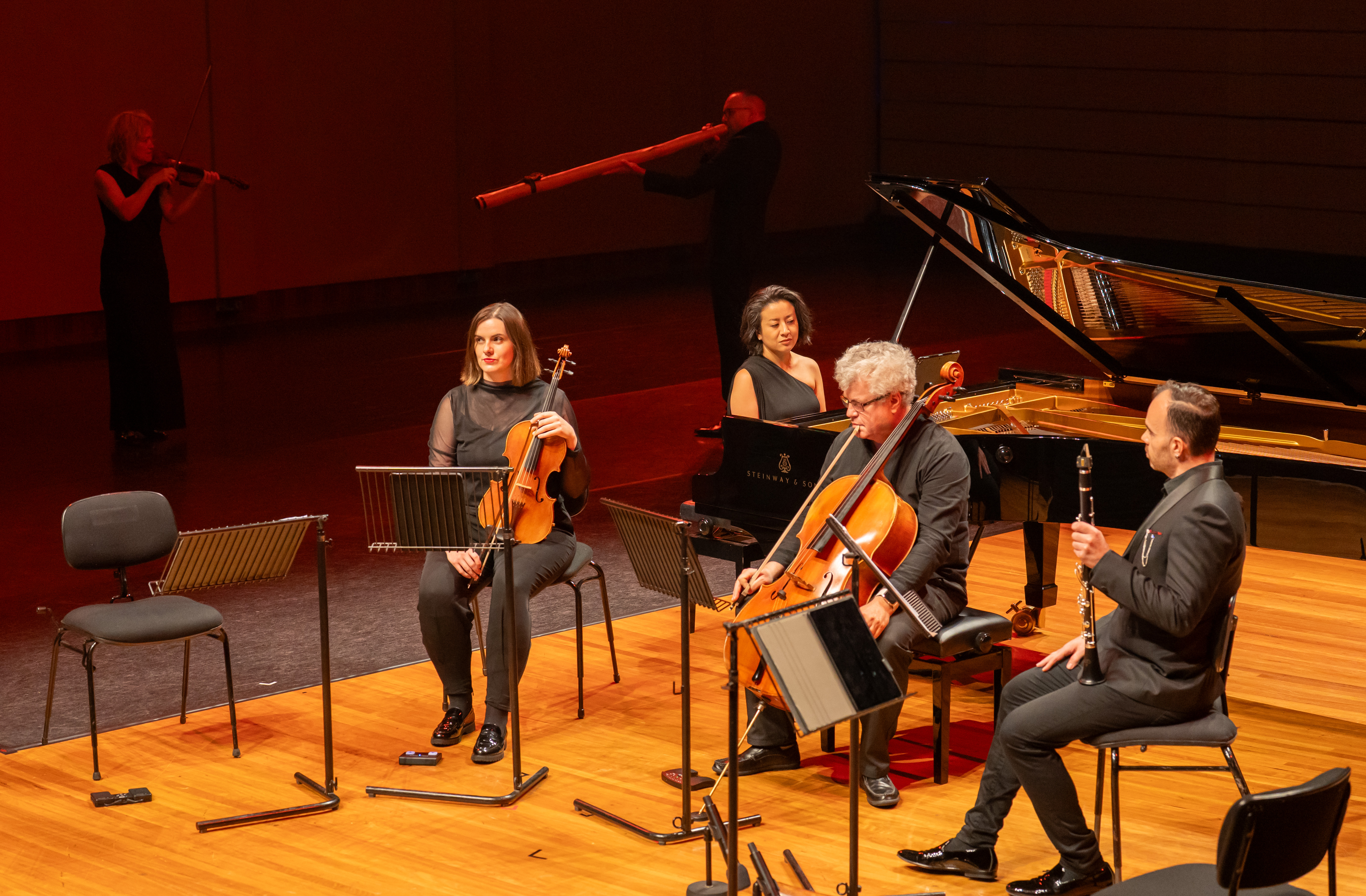
From a darkened stage, lightening like a dawn, the violin and didgeridoo soloists entered the stage separately and circled the space before settling into their position among the ensemble, where strings represented the Chinese “voice” in the work. Shimmering piano joined the tapping and rumbling of the didgeridoo, and the work picked up speed and dynamism with the stomp and slap of legs from the other musicians. Two Winds, One Song was invigorating, thoroughly modern and, as Lin noted, distinctly Australian.
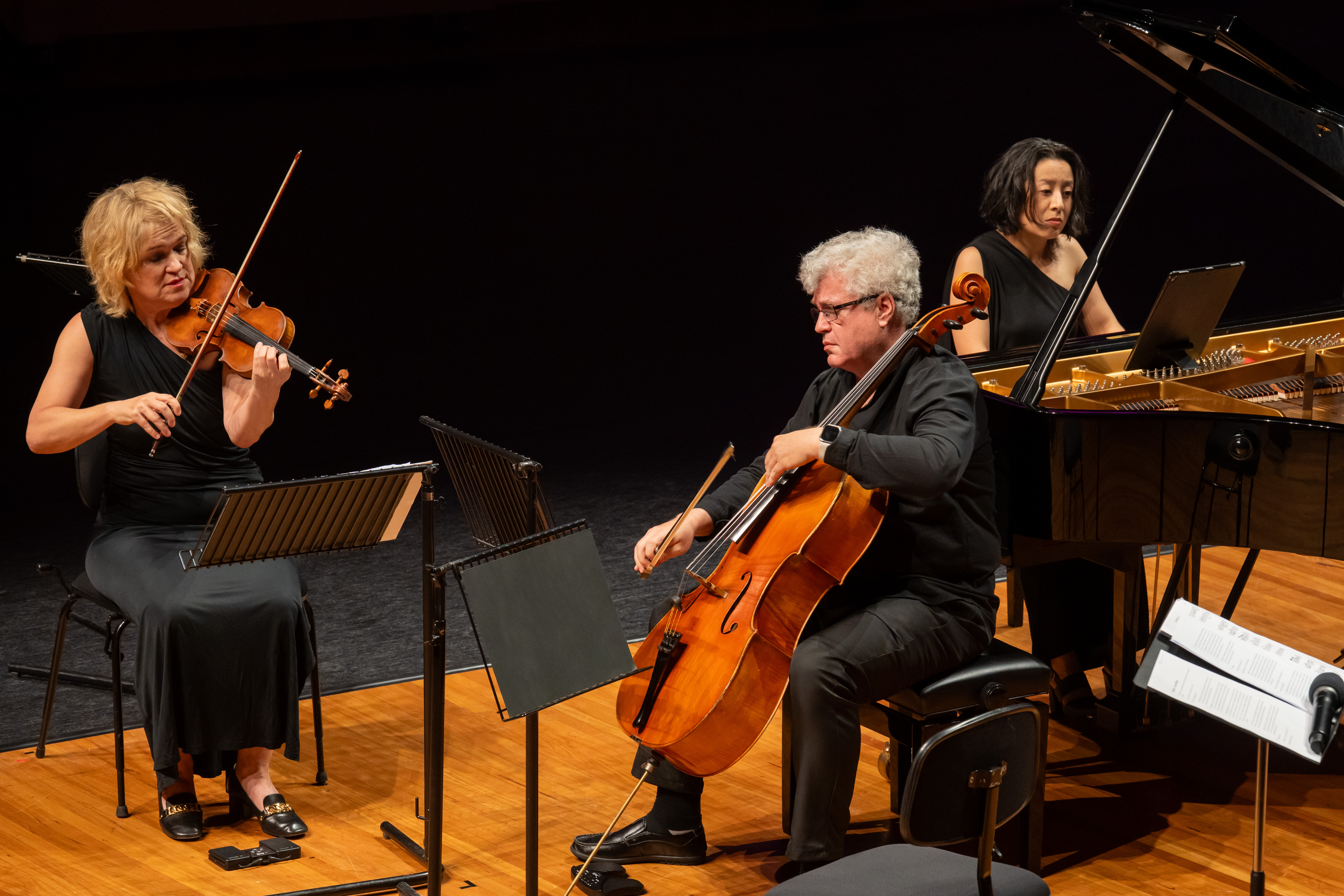
Following the Didgeridoo Commissioning Project premiere, which has been a feature of every SXS concert since the project commenced in 2022, Chair of the Southern Cross Soloists’ Board, Marg O’Donnell AO, announced that co-Artistic Directors Ashley Smith and Margaret Blades would be concluding their tenure, although continuing to play in the ensemble, and that flautist Tim Munro would be stepping into the Artistic Director role.
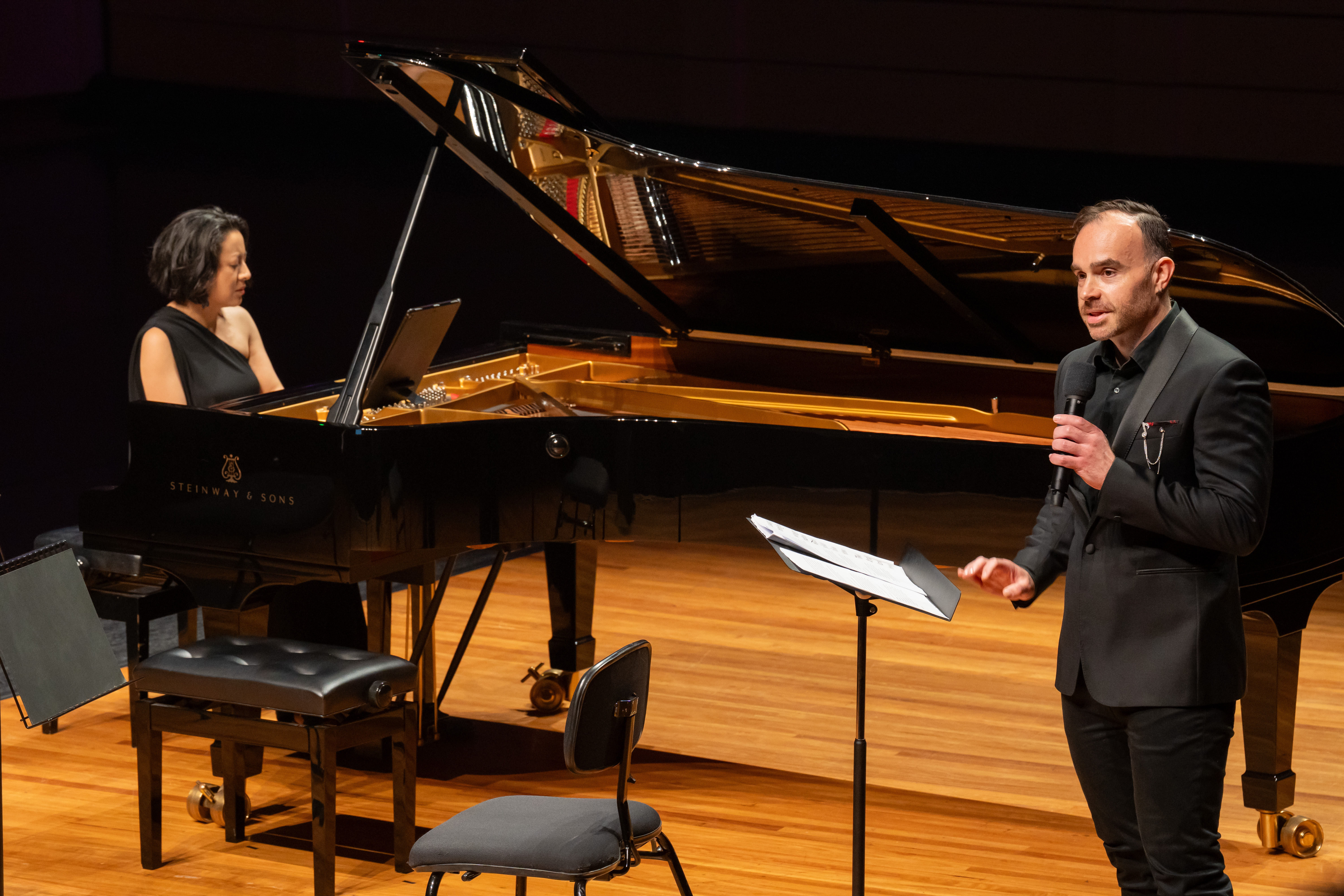
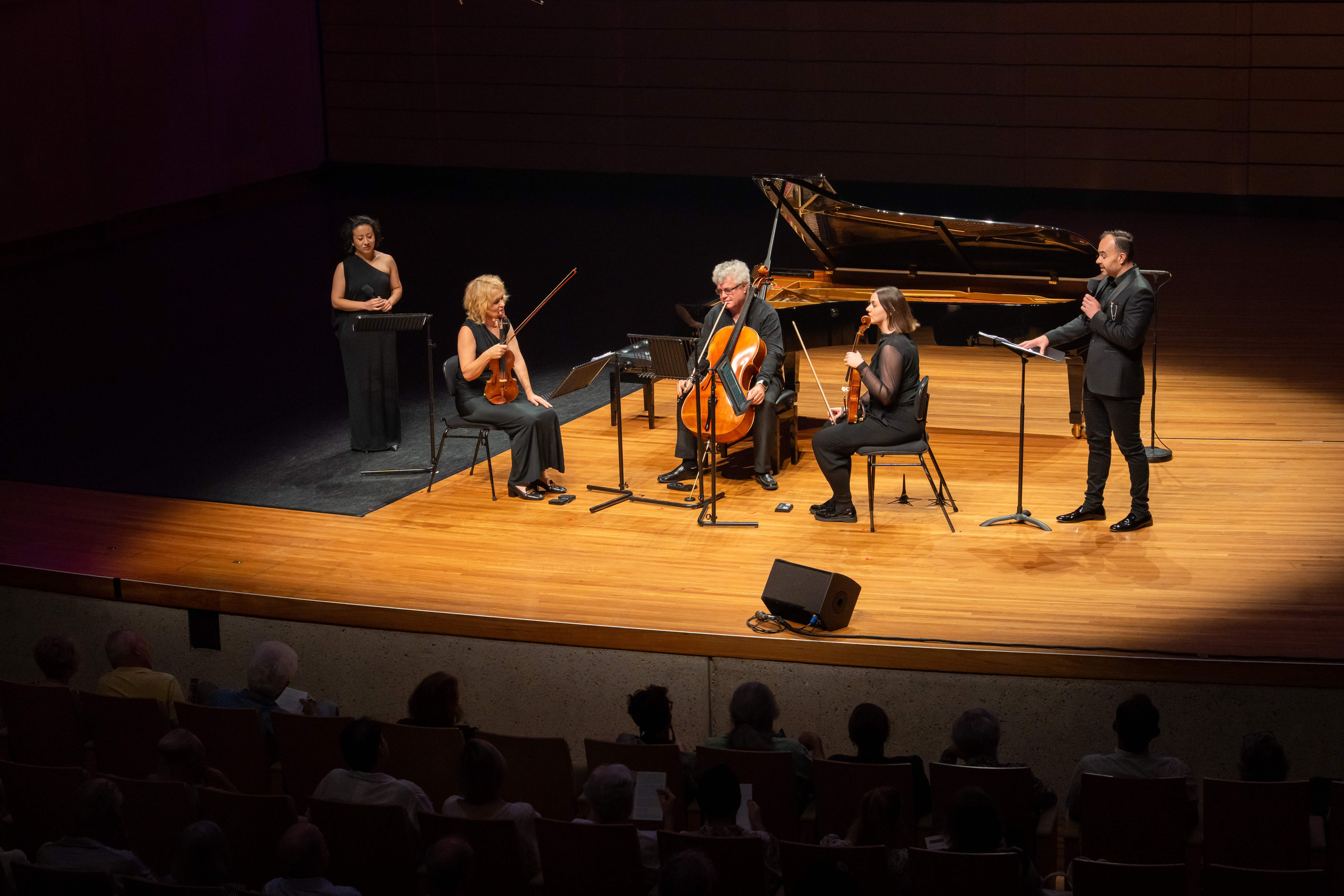
The remainder of Wonder was an exploration of the complex relationship between the married Schumann couple – celebrated pianist and composer Clara and composer and music critic Robert – and the young composer Johannes Brahms, whose work they championed. Ashley Smith spoke to the audience about the collaboration, friendship, and shared musical experience of the three artists, and the speculation about the nature of their relationship that had informed the concert theme, especially as Brahms stepped in to assist Clara and the Schumann children during Robert’s institutionalisation and after his death.
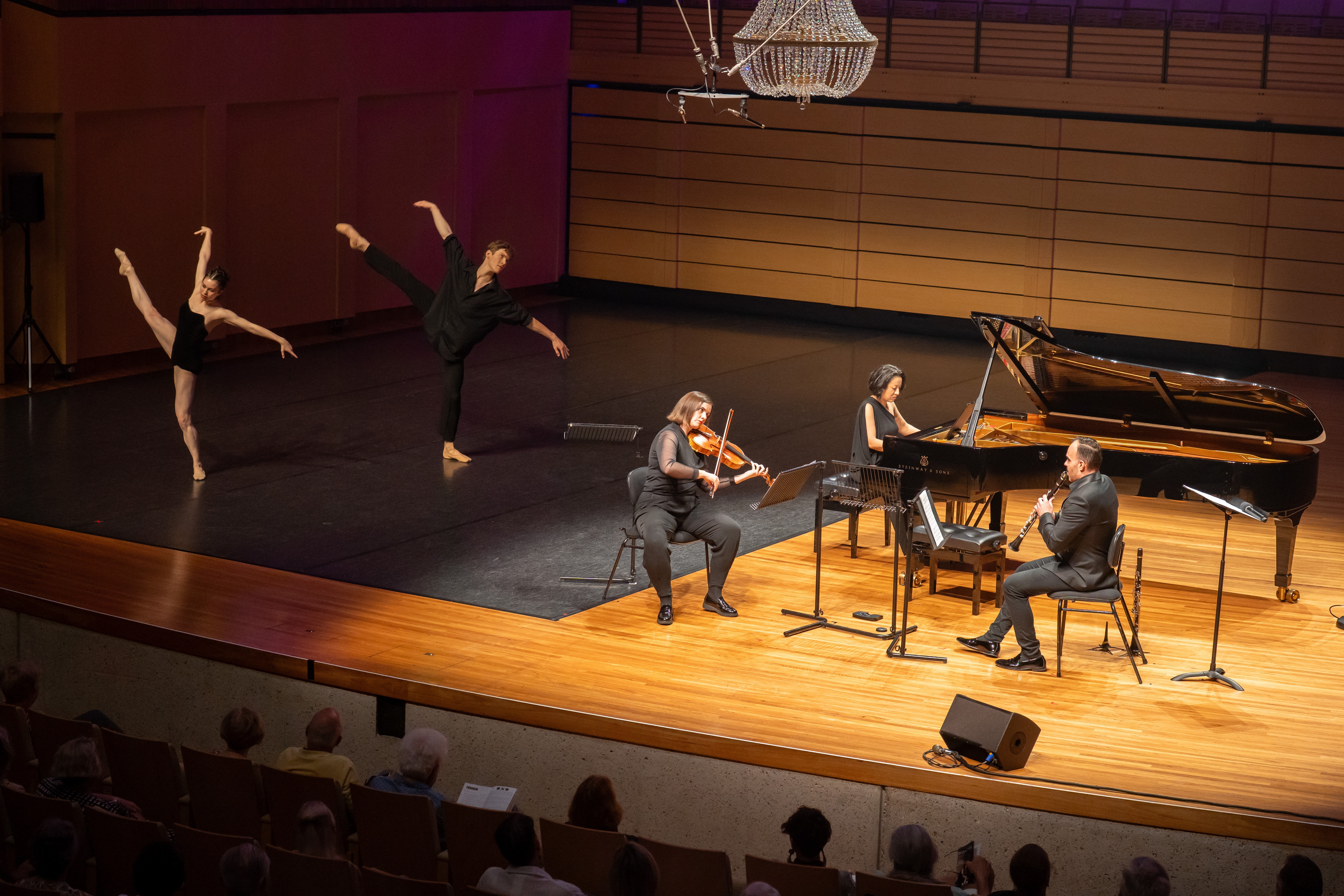
A program of musical selections from the three composers was interspersed with first-person dramatized accounts of their relationship, drawn from letters and read by guest artist Aura Go and clarinettist Ashley Smith. The evolving relationships between the three artists were also visually portrayed by Georgia Lorange and Jai Fauchon, dancers from Queensland Ballet’s Jette Parker Young Artist Program. Lorange had brilliant and precise technique, while Fauchon brought an emotional expressiveness to their duets.
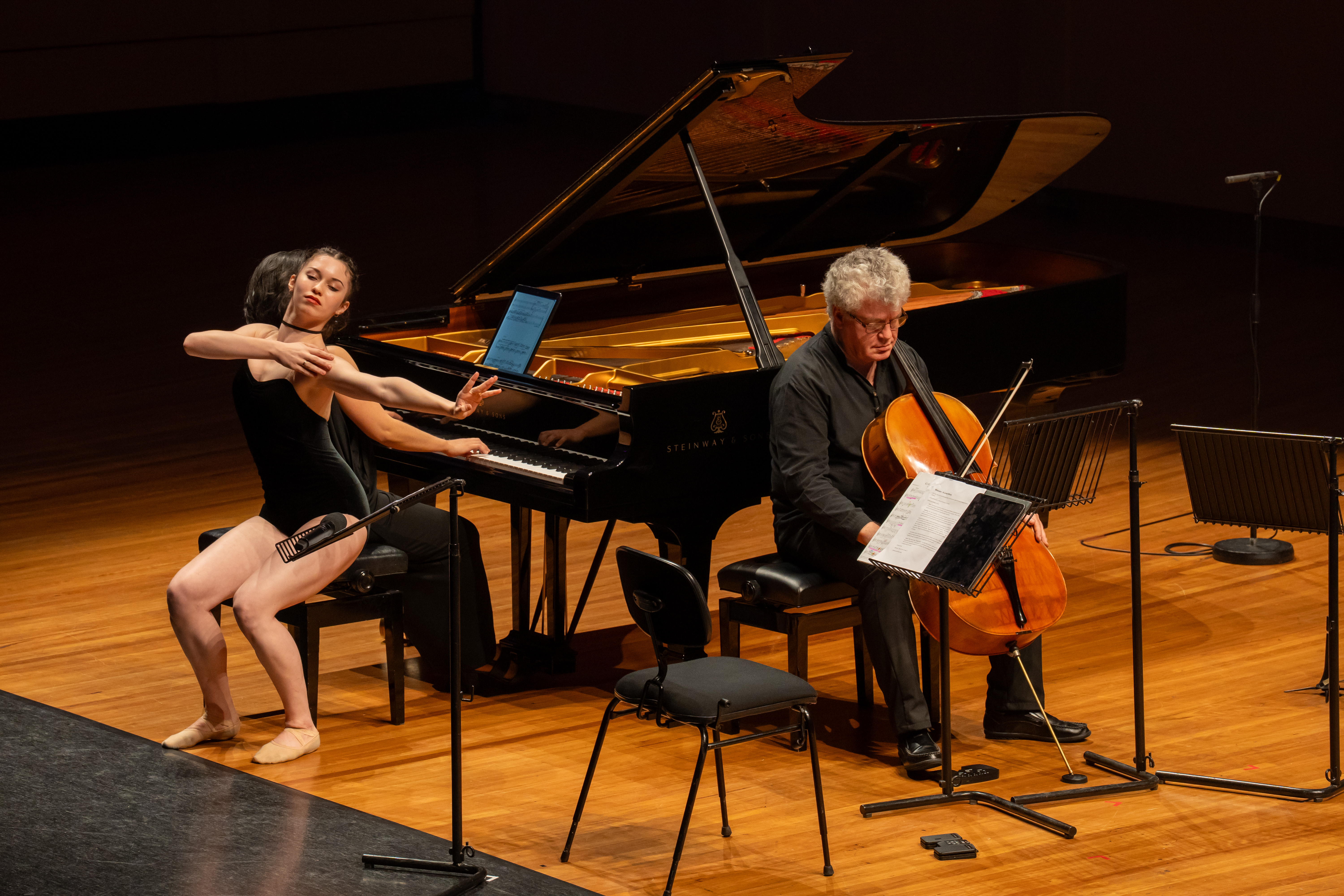
This section of the concert began with the second movement of Clara’s Piano Concerto in A minor, composed in her early teens and a significant contribution to the Romantic concerto repertoire, especially as a female composer of that era. Embodying Clara, Lorange sat on the piano stool alongside Aura. The duet of her budding relationship with Fauchon’s Robert Schumann, who encouraged her in composing the piece and assisted in its orchestration, included a lot of small isolations, rippling arms, and high kicks. Throughout the concert, Aura Go was a graceful and unhurried pianist, absorbed by her work, but she was often obscured by the dancers and fellow musicians.
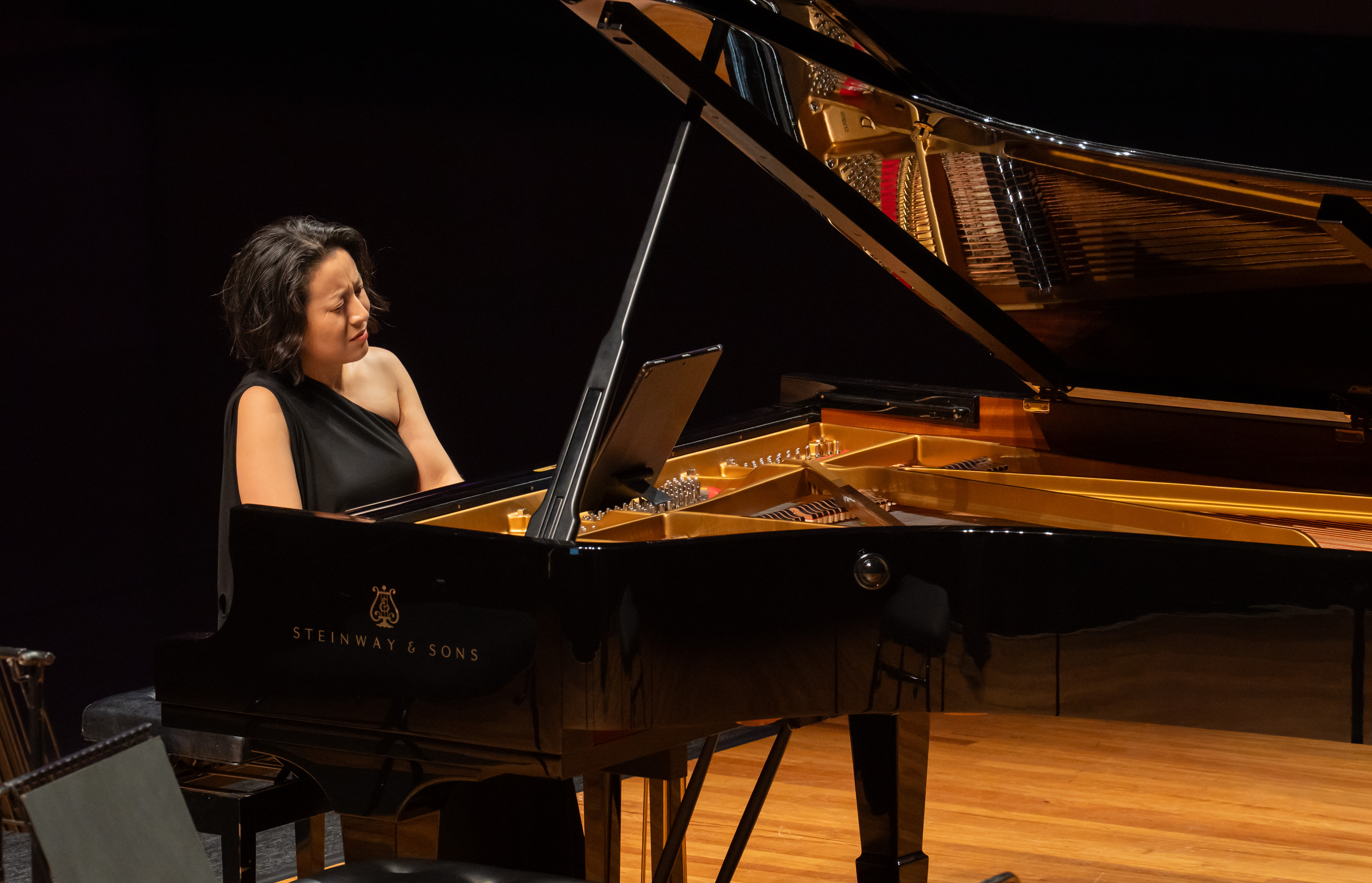
The concerto was followed by the first movement of Brahms’ Piano Trio in B Major. The piece was initially composed in 1854, shortly after he met the Schumanns, and revised extensively in 1889 by the composer. The readings described the evolving connections between the Schumanns and young Brahms, complemented by the seeping warmth and hopeful longing of his music.
Next was the fourth movement of Robert Schumann’s Piano Quartet in E flat major, in which the instruments expounded, debated, surged, declared and exclaimed with vibrant energy. This time, the excitement of the music was in contrast to the narrative, which described Clara trying to protect her husband in his ailing health.
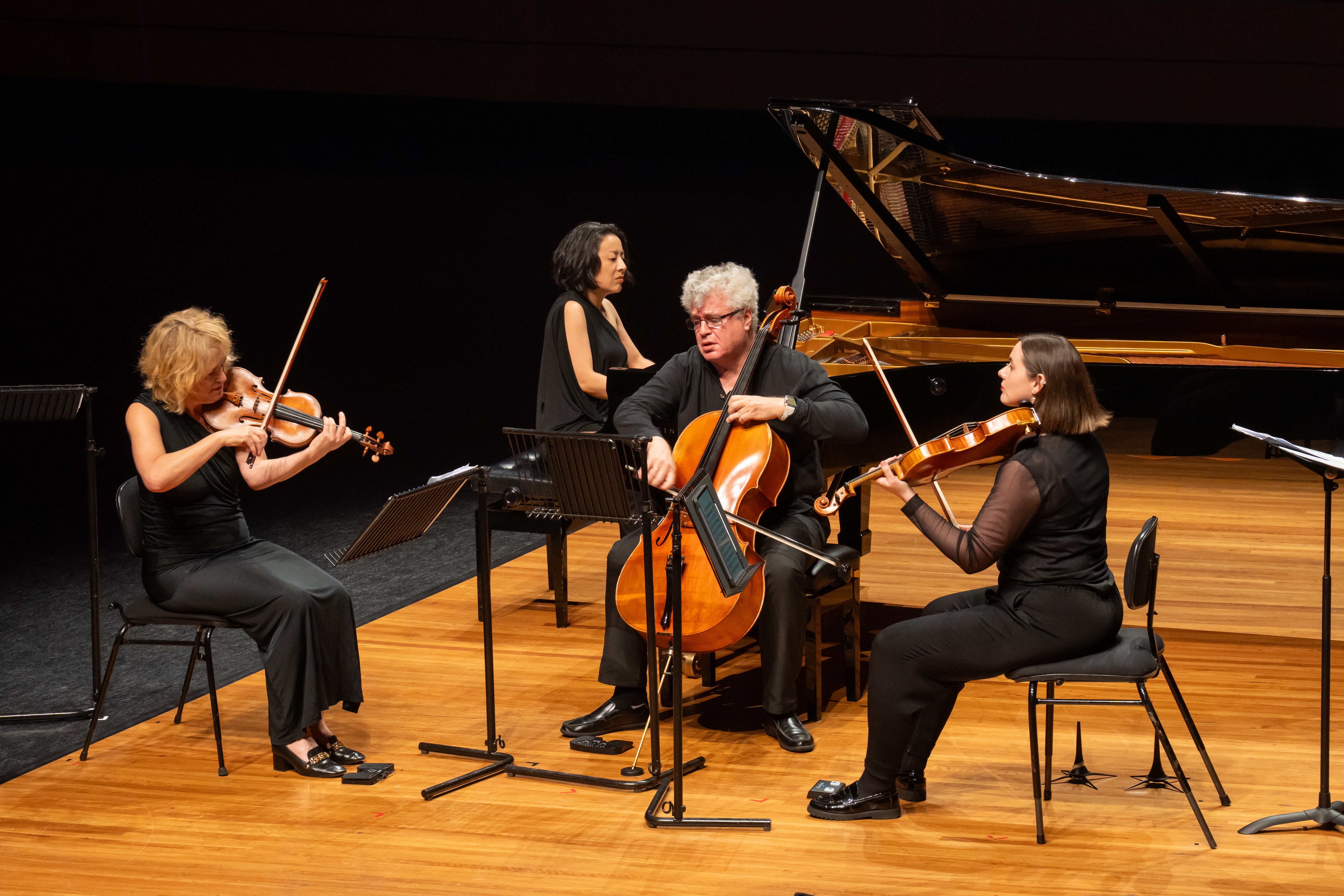
Robert Schumann’s melancholy Geistervariationen (‘Ghost Variations’) further shifted the mood. This was his final composition before voluntary admission to a sanitorium, and in his deteriorating mental health Robert believed he was receiving musical inspiration from both angels and demons.
The narrative arc went on to describe how Brahms became a caregiver to the Schumann children after Robert’s death, allowing Clara to keep touring. This was followed by Brahms’ Intermezzi and Clarinet Trio in A minor, and the dancers returned with swooping lifts.
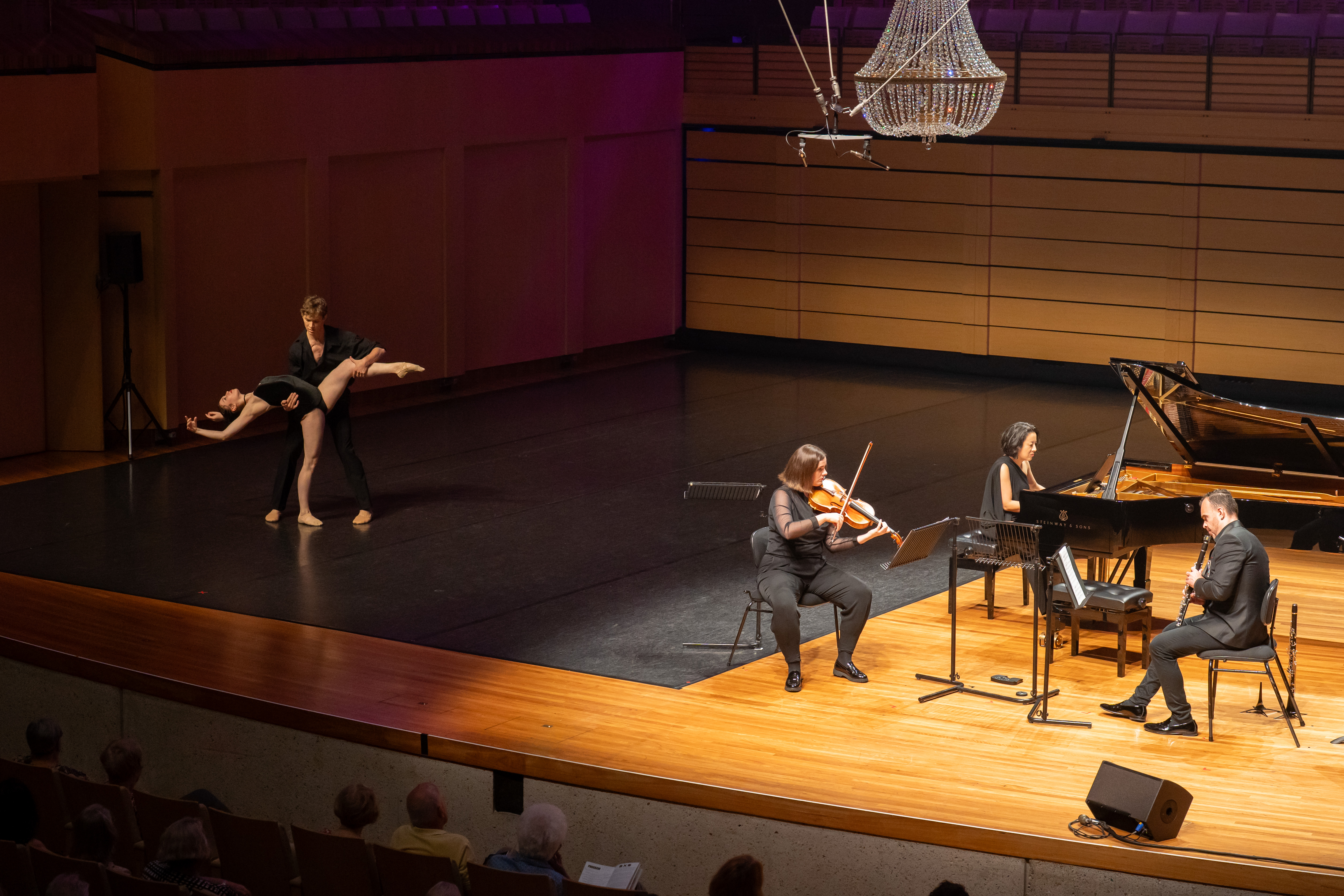
The dreamy, floating third movement from Robert’s Märchenerzählungen (Fairy Tales) was followed by the first movement of Clara’s Three Romances to close the concert. The readings reflected on the hundreds of letters exchanged between Clara and Brahms and the ways in which their bond endured as she continued to champion his work.
Southern Cross Soloists closed their 30th year and pearl anniversary with an ambitious multidisciplinary concert in Wonder, which contained both a curiosity about the nature of the relationship between three talented artists and an awe for the collaborative creative process.
Wonder was performed at the QPAC Concert Hall on 12 October 2025
For further information, visit the Southern Cross Soloists website
 Backstreet Brisbane
Leave a comment