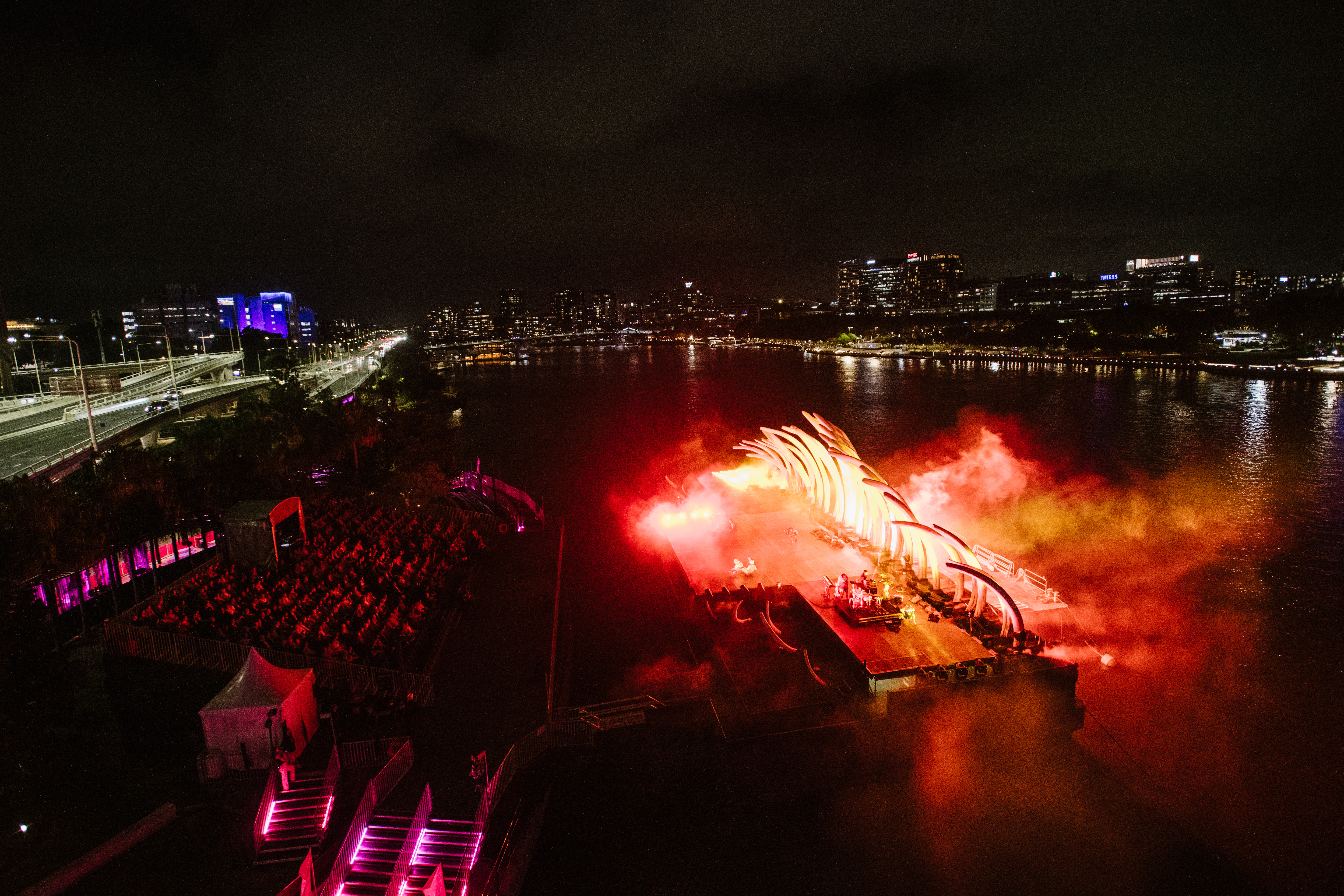
Stephen Page’s Baleen Moondjan was a work of impressive skill, vision, and Festival-scale spectacle, combining song, dance, and live music beneath huge whale bones stretching toward the stars. Staged on the Brisbane River with the audience seated on the edge of Queen’s Wharf, it was a unique and humbling experience to sit outdoors, with waves of eucalyptus smoke flowing over the water, and hear the applause swallowed up by the river and the open sky.
Co-written by Stephen Page and Alana Valentine, and directed by Page, Baleen Moondjan was originally commissioned by Adelaide Festival and made its world premiere on Glenelg Beach in 2024. It also marks the first major work by Page since his departure from Bangarra Dance Theatre in 2022.
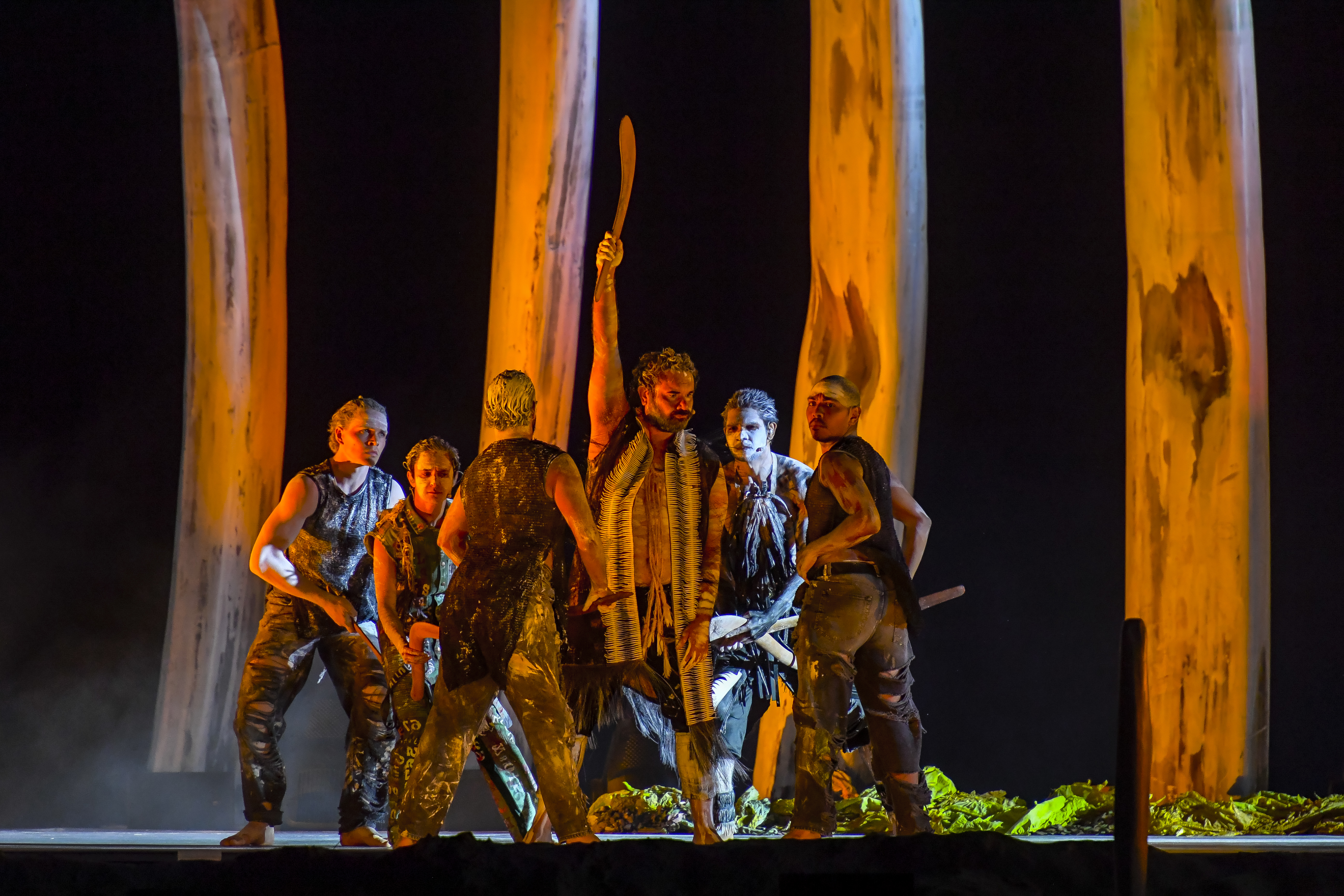
Sung in English and Jandai language, with Donna Page as Cultural and Language Consultant, Baleen Moondjan was inspired by a story from the Ngugi/Nunukul/Moondjan people of Minjerribah (Stradbroke Island). In a series of scenes that integrated dance, song, live music, and stagecraft, the work told the story of an Elder, Gindara, and her granddaughter Nundigili, as Gindara prepared to pass away and travel with her totem – the baleen whale – for a time. Baleen Moondjan explored totemic connection to Country, the passing on of sacred knowledge, and themes of grief and the essentiality of death to life, rushing and receding like a tide.
Majestic stage design by Jacob Nash suggested the exposed skeleton of a whale, installed on a floating barge on the Brisbane River. Nash’s design featured 39 fibreglass “whale bones”, some as tall as nine metres. The performers were dwarfed by these protrusions, giving the impression they were further away from the audience and recalling that humans, individually and collectively, are only a small presence on the land.
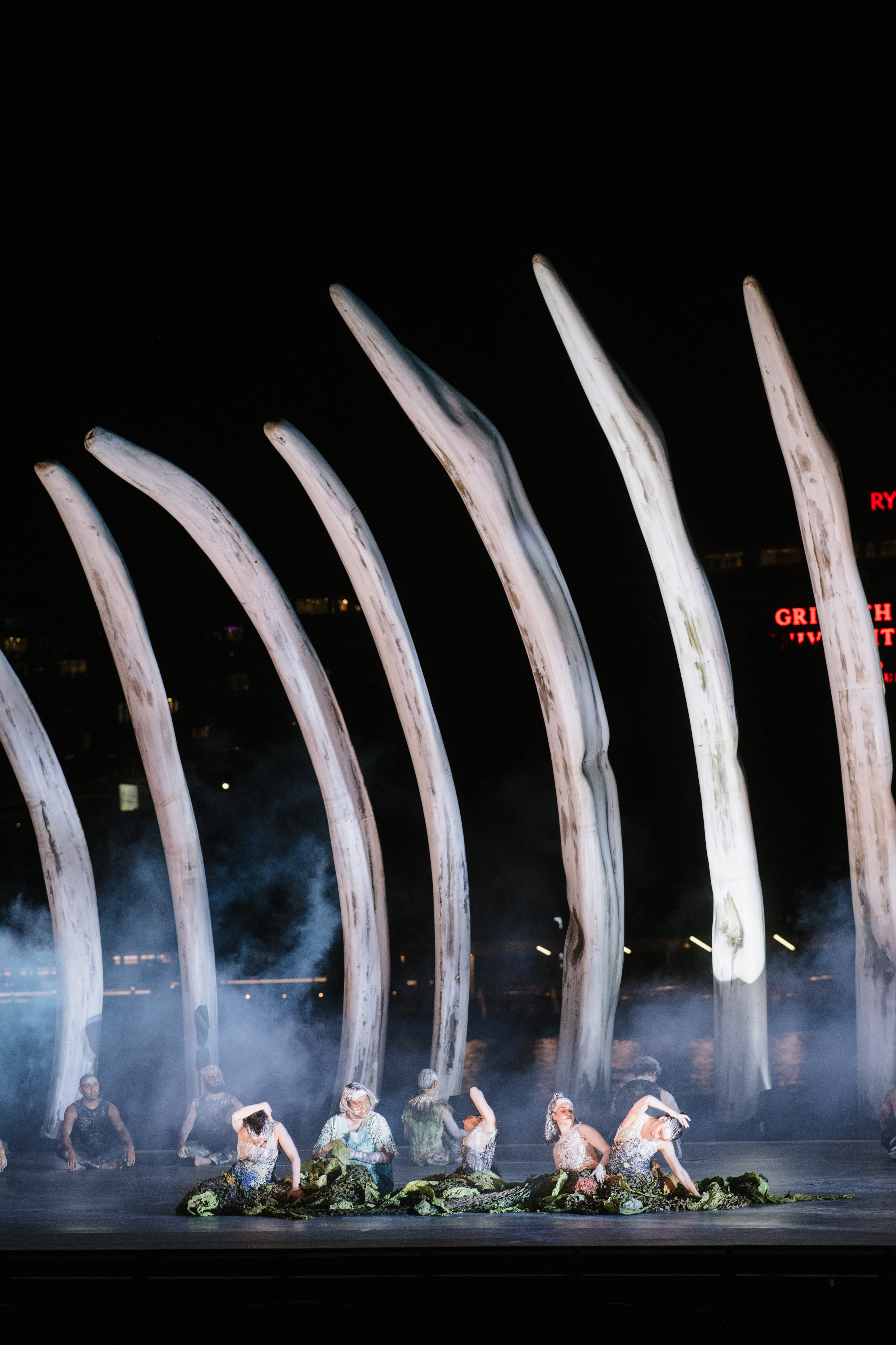
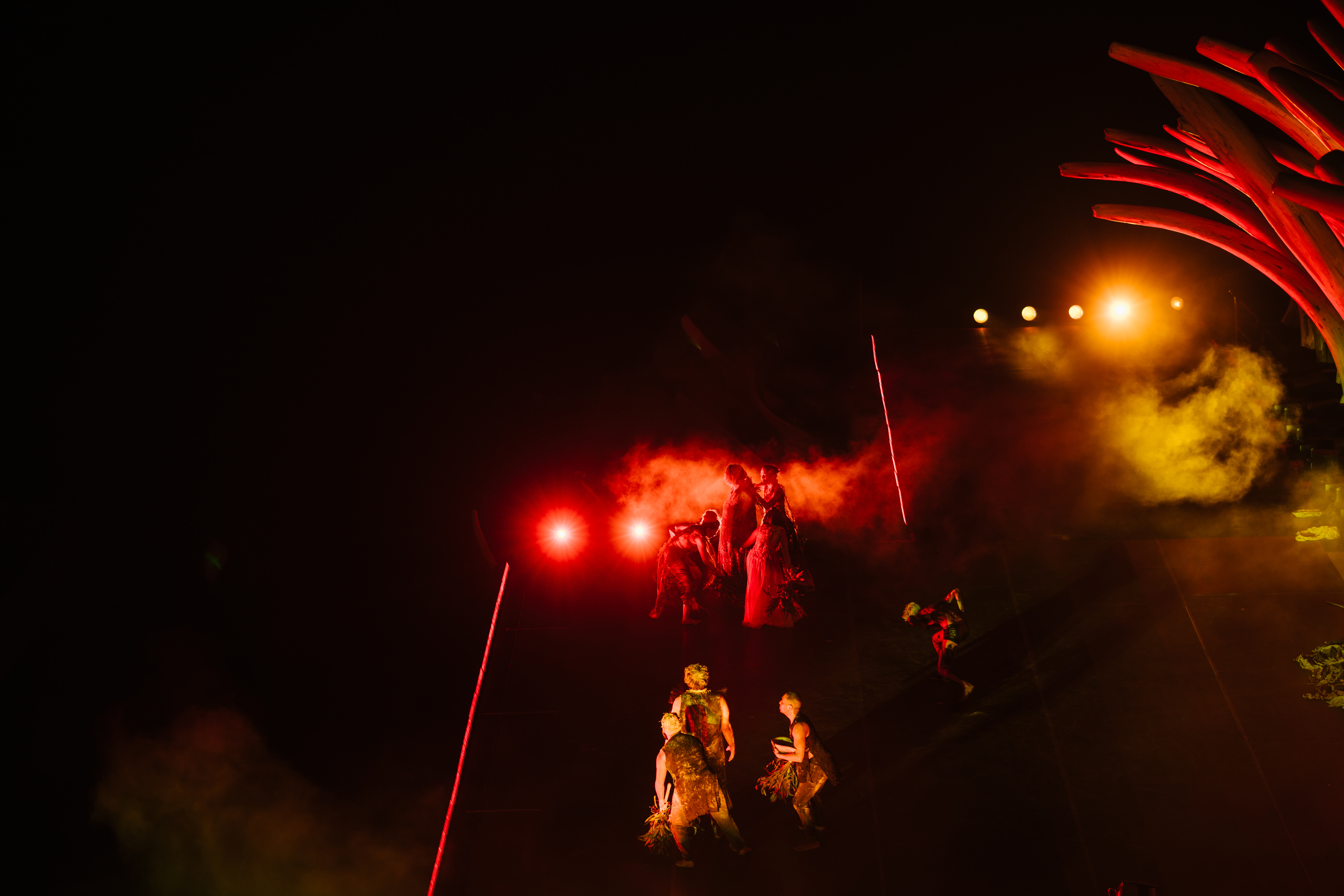
Lighting design by Damien Cooper included moments of vivid colour, evoking fire as well as water, and stark white lighting that emphasised the bone-like backdrop. The flames flickering in barrels, minor pyrotechnics, and powdered pigment that mingled with the smoke added to the strong sense of atmosphere and operatic grandeur.
Composition and sound design by Steve Francis, with Musical Director Paul Mac, brought together disparate sounds of nature with amplified modern instruments played live onstage by DOBBY, Jorjabelle Munday, and Taj Pigram. Crackling fire, bubbling water, and distant whale calls contrasted against screaming electric guitar and a thundering drum kit. Even the rush of traffic on the Riverside Expressway, directly behind the seating bank, blended into the beat of the music and might have been mistaken for crashing waves.
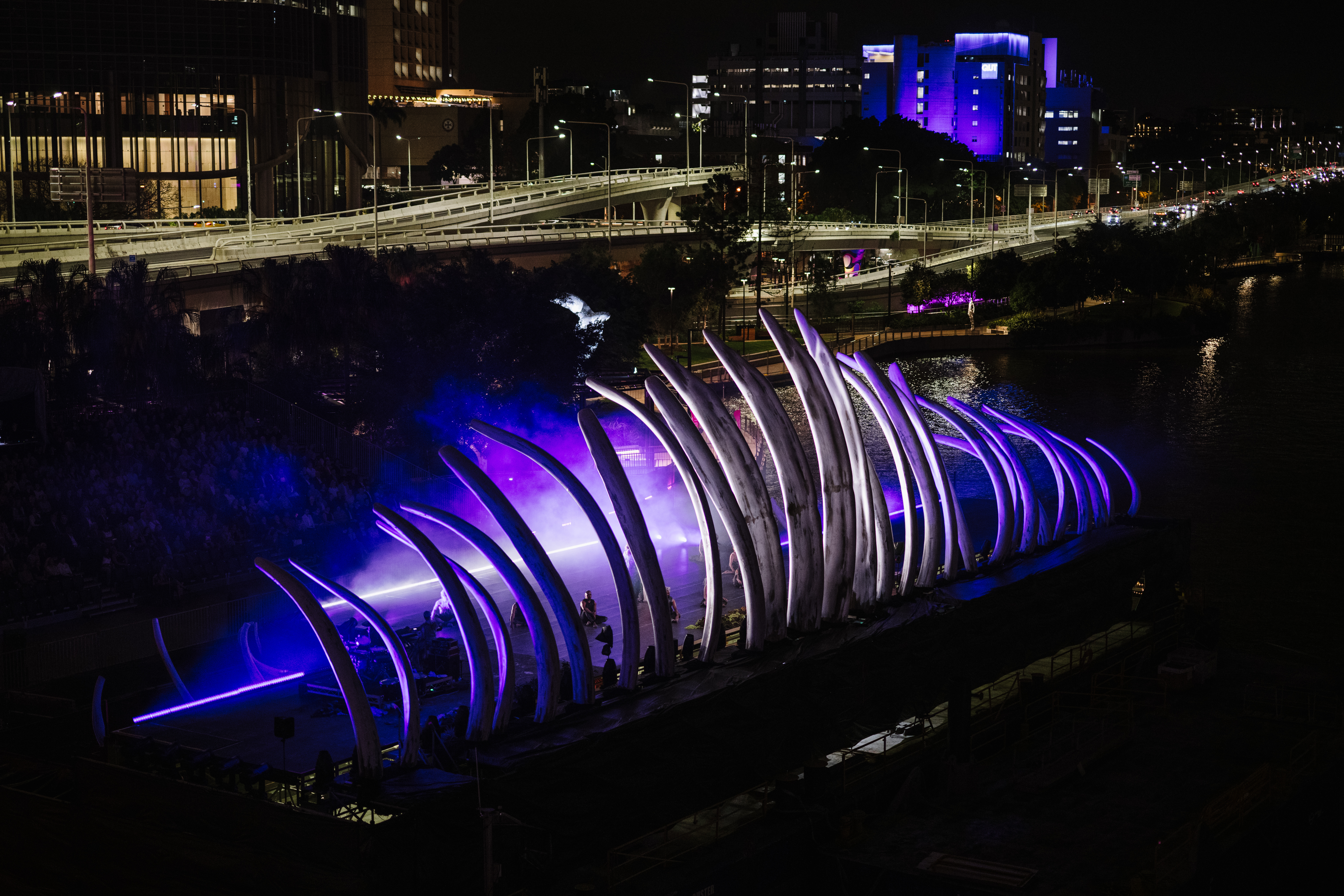
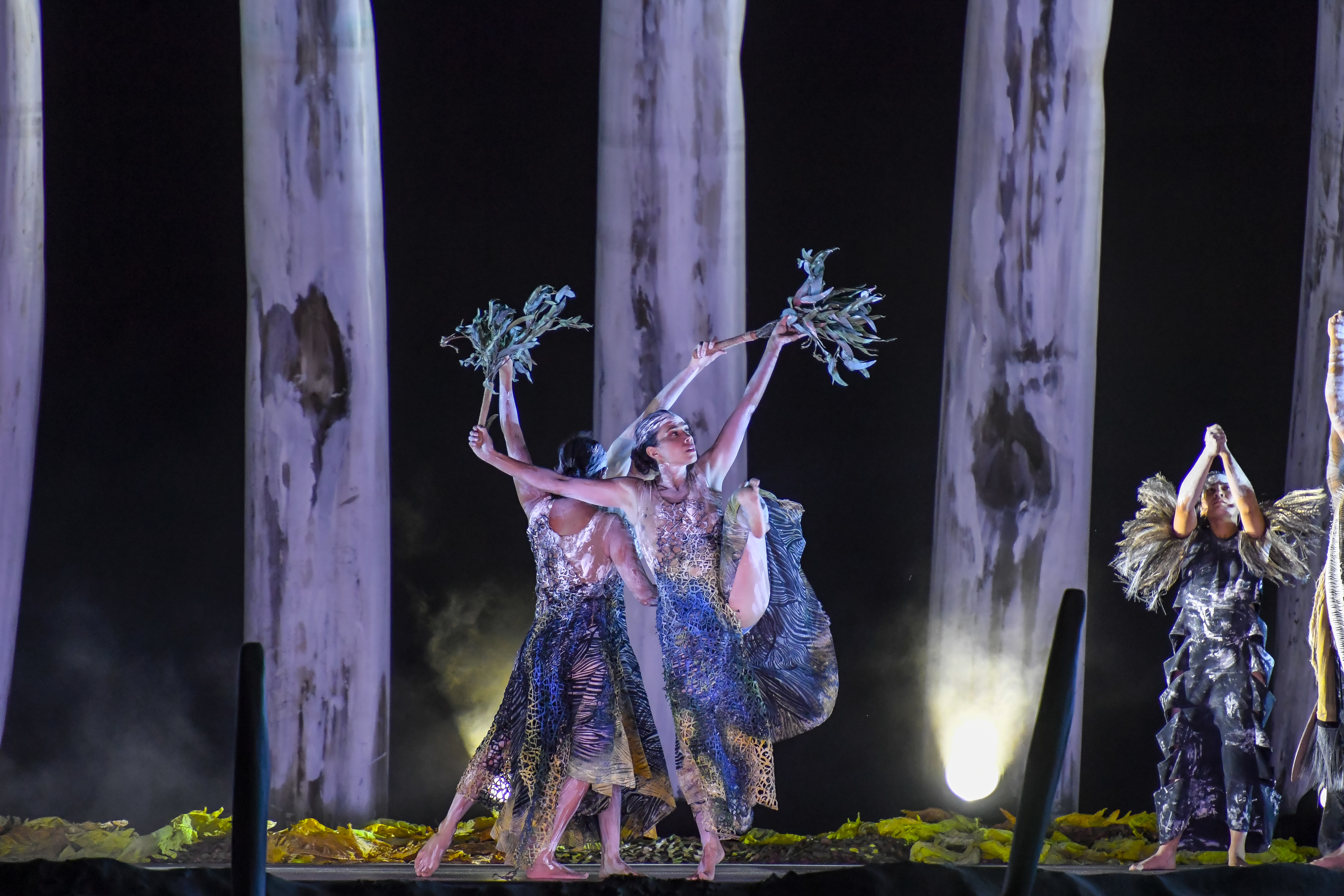
Page’s dynamic choreography blended cultural and contemporary dance into swirling group sequences, acrobatic solos and lifts, languid floorwork, articulate isolations in the waving strands of sea kelp, and the incorporation of props and body paint that was applied onstage.
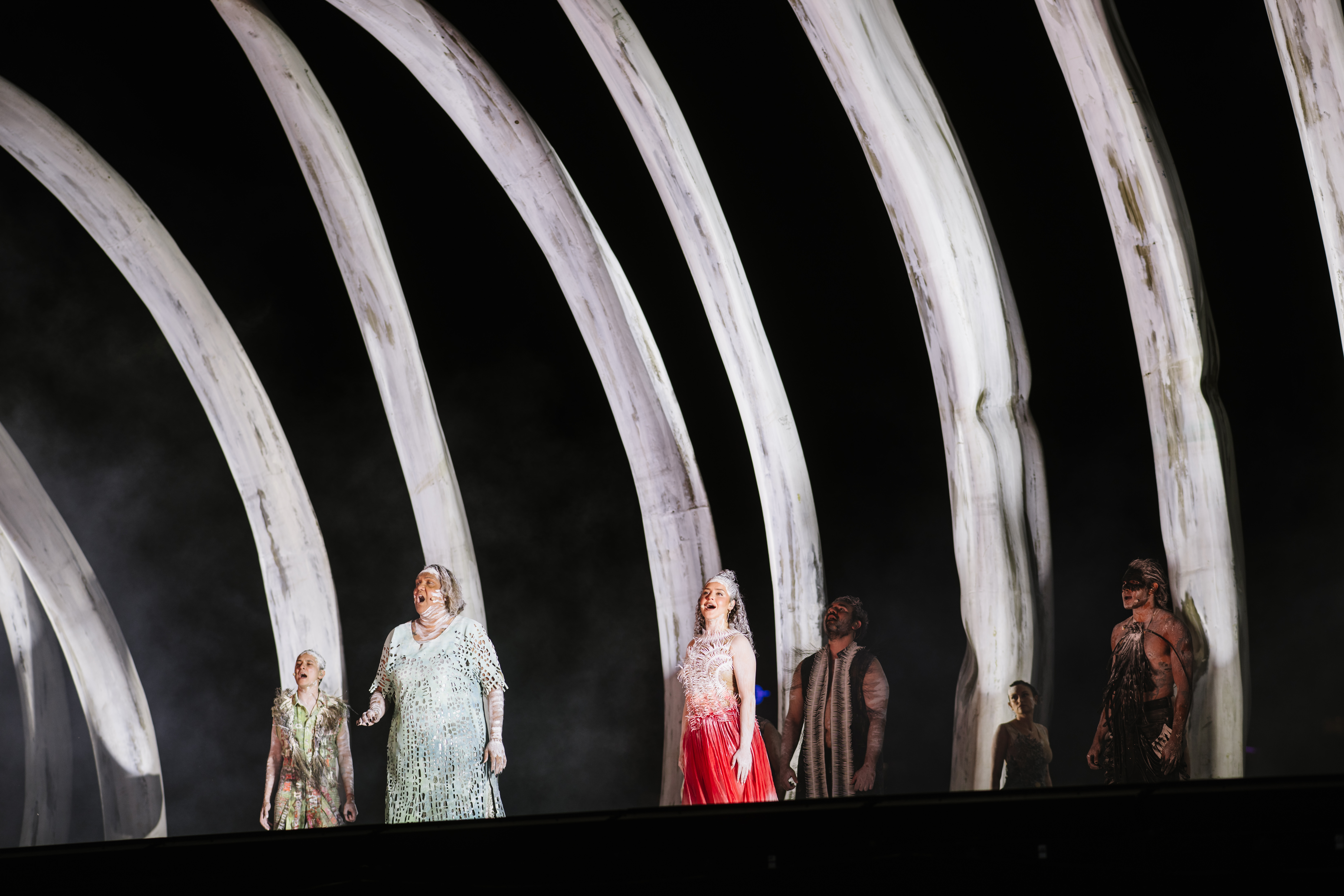
The ensemble of six dancers wore costumes designed by Jennifer Irwin, which flowed outward or swished back in a continuation of their movements. The costuming of the singers also suggested marine life, from vibrant coral colours to soft sea-green and feathery fishbones.
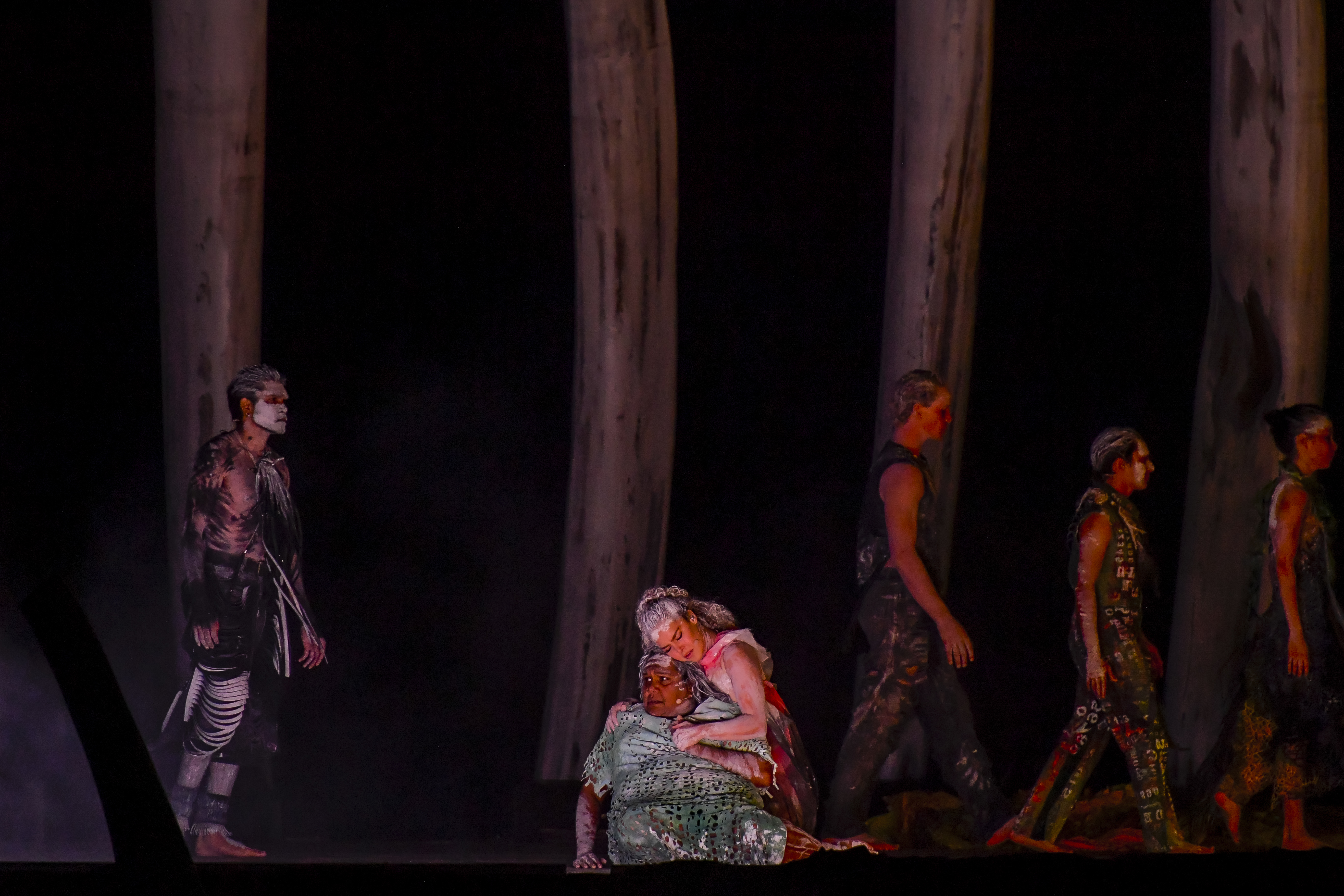
Elaine Crombie brought her magnificent voice and powerful stage presence to the role of Gindara, with Zipporah Corser-Anu holding her own as Nundigili. DOBBY’s clear articulation and unfaltering energy as the Narrator – as well as playing drums and piano throughout – injected the storytelling with hip-hop cadence and Brendon Boney embodied the Spirit of Yallingbillar (the whale). The singers also participated in some of the movement sequences.
Although Baleen Moondjan swelled to a surging crescendo, the conclusion of the performance felt tentative. Perhaps this was because I was trying to follow the scene list in the program and misjudged the ending, but the long pause before applause suggested that others were also uncertain. Then again, this feeds into the themes of the work itself – at what moment does a wave stop flowing to shore and begin to recede? At what exact point does life become death?
Rich with oceanic imagery about loss and the inevitable, essential tidal rhythm of life and death, Baleen Moondjan was a breathtaking spectacle that celebrated and educated about First Nations beliefs and connection to Country through totems.
Baleen Moondjan was performed on the Brisbane River from 18 – 21 September 2025
For further information, visit the Brisbane Festival website
 Backstreet Brisbane
Leave a comment