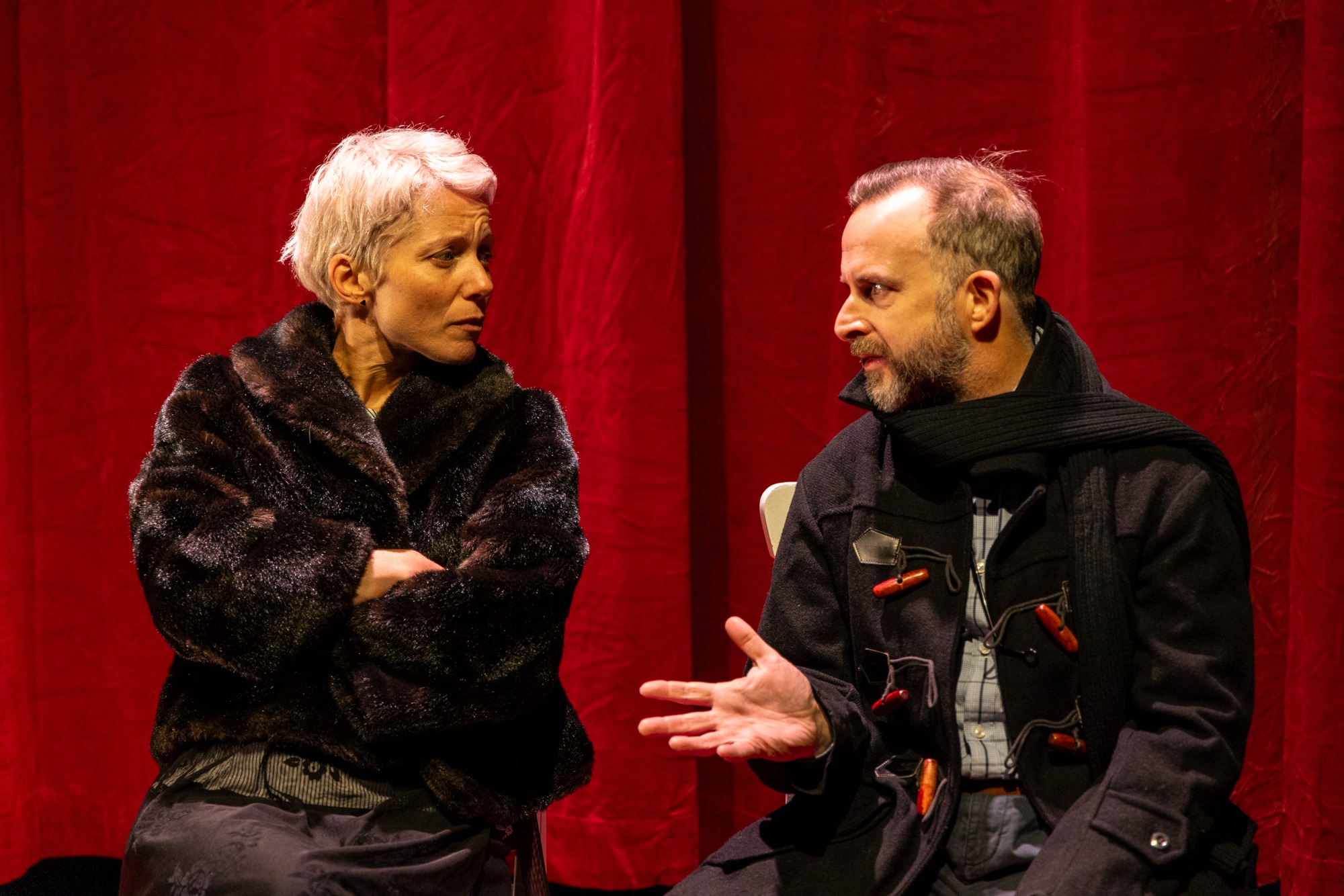
Francis Greenslade’s The Platypus is a metatheatrical two-hander that puts a genre-hopping spin on the kitchen sink drama.
Jessica and Richard’s marriage is crumbling. Richard is healing from a vasectomy, and resents Jess for suggesting it. Jess feels unwanted, and seeks excitement in an affair with a colleague. There are money troubles, and demanding elderly relatives, and their nine-year-old son Jack is caught in the middle as they fight in the kitchen and deliberately undermine each other’s parenting.
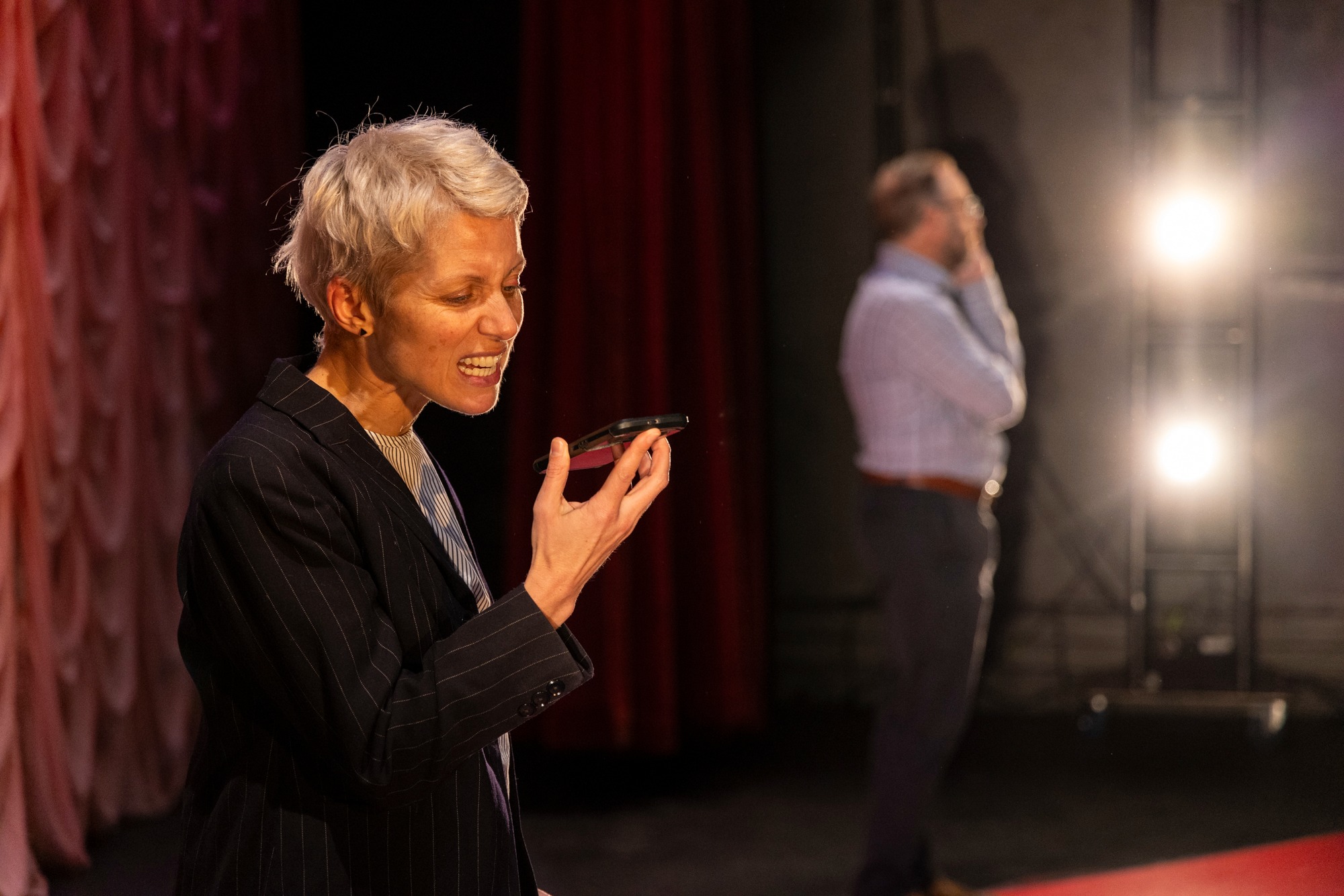
Written and directed by Greenslade, The Platypus uses a naturalistic style of acting whenever the two main characters are together, but veers into other genres when they speak to someone outside their relationship. The structure comments on the way that we shift and reframe narratives when we tell other people about our lives. The characters themselves comment on this, through a metatheatrical framing of a couple attending the play, although explicitly explaining the concept around the halfway point doesn’t demonstrate much faith in the audience’s intelligence.
Rebecca Bower and John Leary delivered skillful performances across the wide range of genres that The Platypus demanded, from musical theatre, period drama, and ventriloquism to the varied rhythms of limericks, stand-up comedy, and Shakespeare. While the characters often briefly brought these playful sides of themselves home, they soon faltered and fell back into naturalism. Bower and Leary also played the counterpart characters in scenes outside the home, such as parents at school, old friends, or work colleagues.
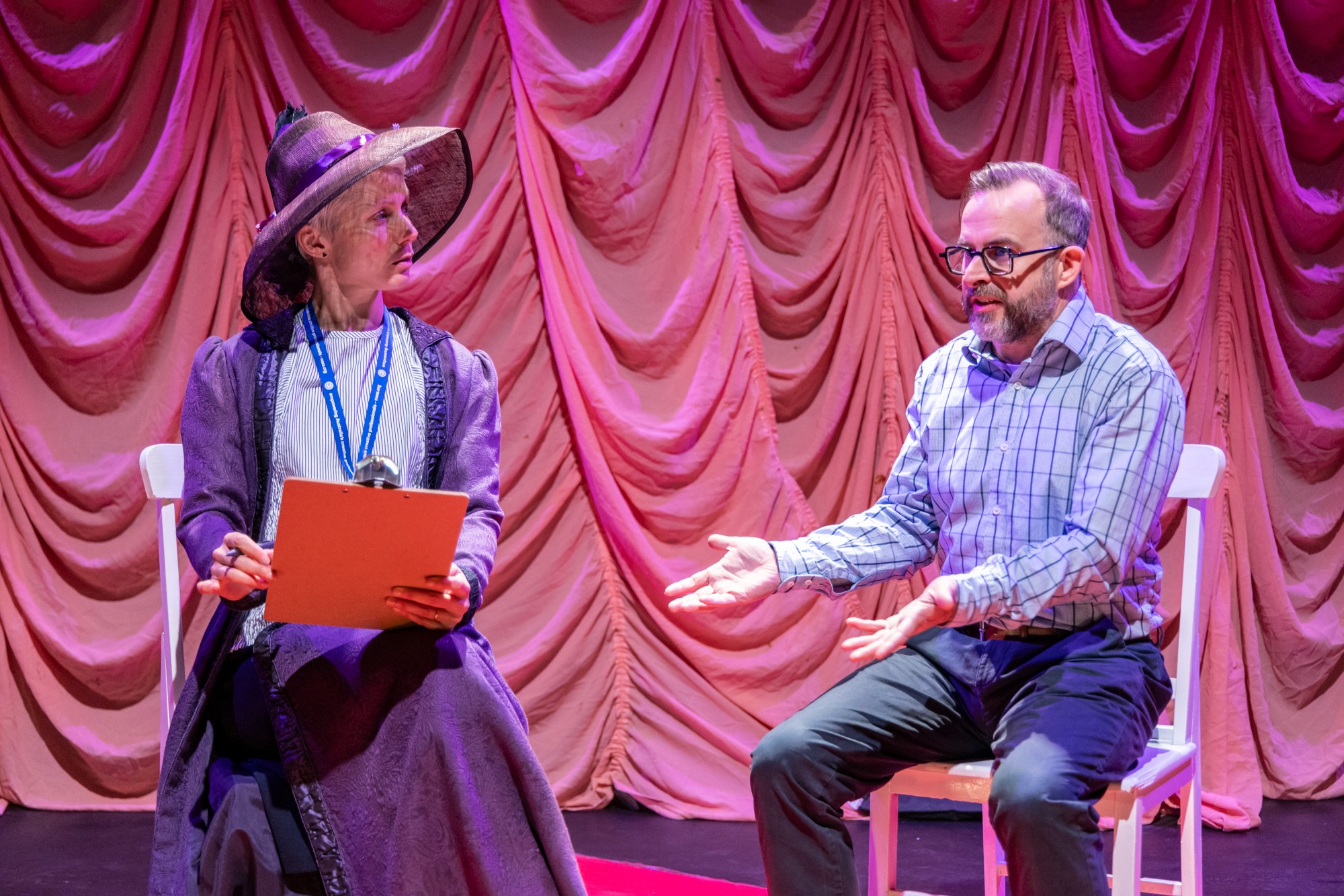
Greenslade’s script emulates the styling of his chosen playwrights and genres in quick succession and is peppered with more niche references to each point of inspiration as well. The Platypus is billed as a black comedy, but despite the jokes and the humour of the incongruous genres the play depicts two selfish, bitter adults who are increasingly setting out to hurt each other at the expense of their child. These characters are only given a glimmer of redemption through the strong and nuanced performances of the actors; even then, between Richard’s anger issues and homophobia, and Jessica’s malicious lies and attempted violence, The Platypus painted a bleak picture of family life and the childhoods of Jack and his classmate Freddy.
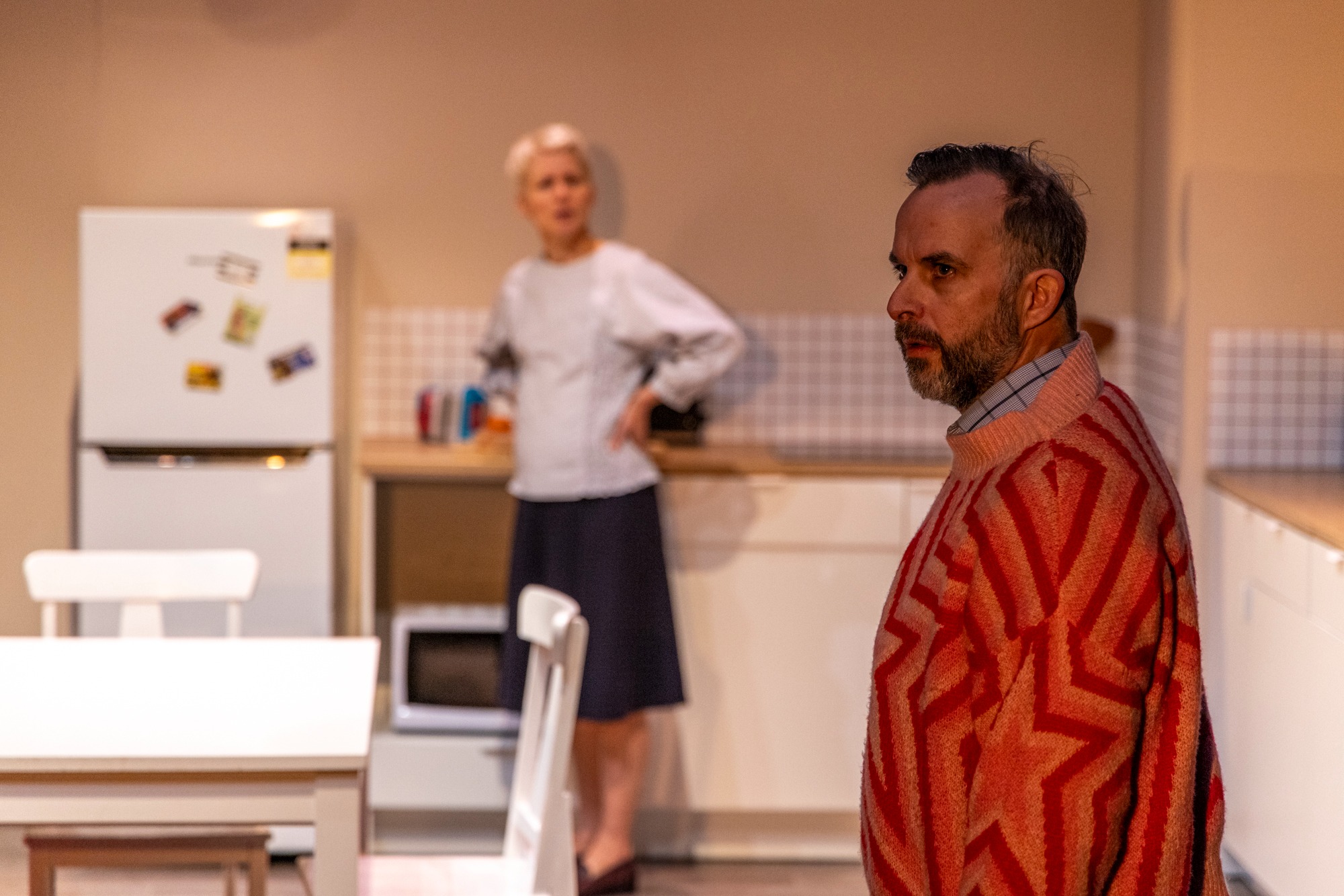
Set and costume design by Sarah Tulloch created the contrast between an ordinary kitchen, where most of the action took place, and the framing of a traditional theatre with red velvet curtains and shell-shaped footlight covers. The wheeled table and several chairs were shifted by the actors to build other settings – a café, a workplace break room, a psychologist’s office – throughout the play.
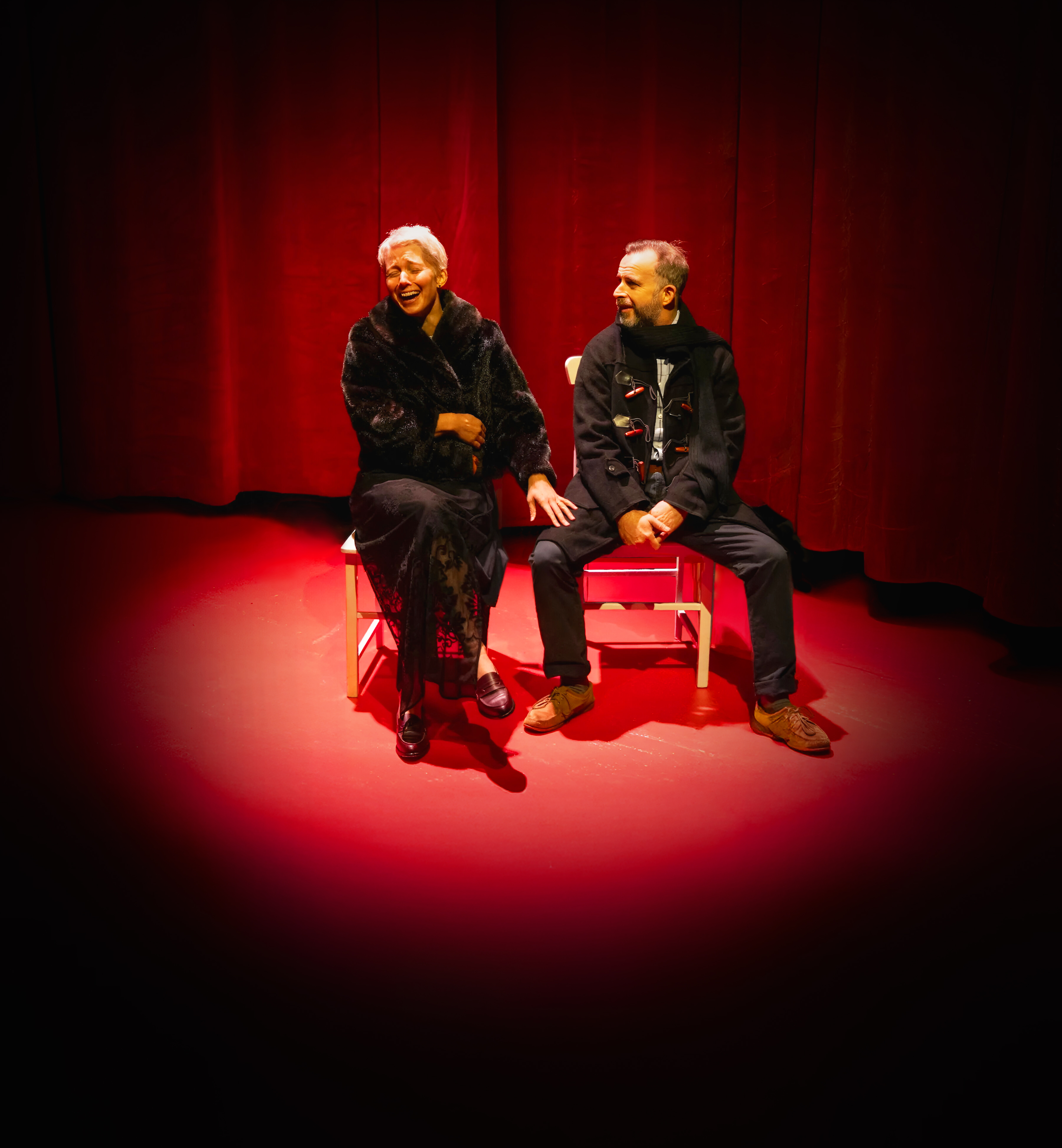
Lighting design by Clare Springett clarified the transitions between scenes and styles, from the warm light of the living room and double spotlights of monologues to neon LEDs in the fridge that represented Jess’ affair. Sound design by David Franzke further signposted these, and expanded these settings, including appropriate music during set changes and the jarring laugh track in the Sitcom scene.
The Platypus is built from seemingly incongruous pieces, like the monotreme of its title, but it revisits a well-worn story in a stylistically fresh way and is carried by strong leading performances.
The Platypus was performed at the QPAC Cremorne Theatre, South Bank, from 10 – 13 September 2025
For further information, visit the Brisbane Festival website
 Backstreet Brisbane
Leave a comment