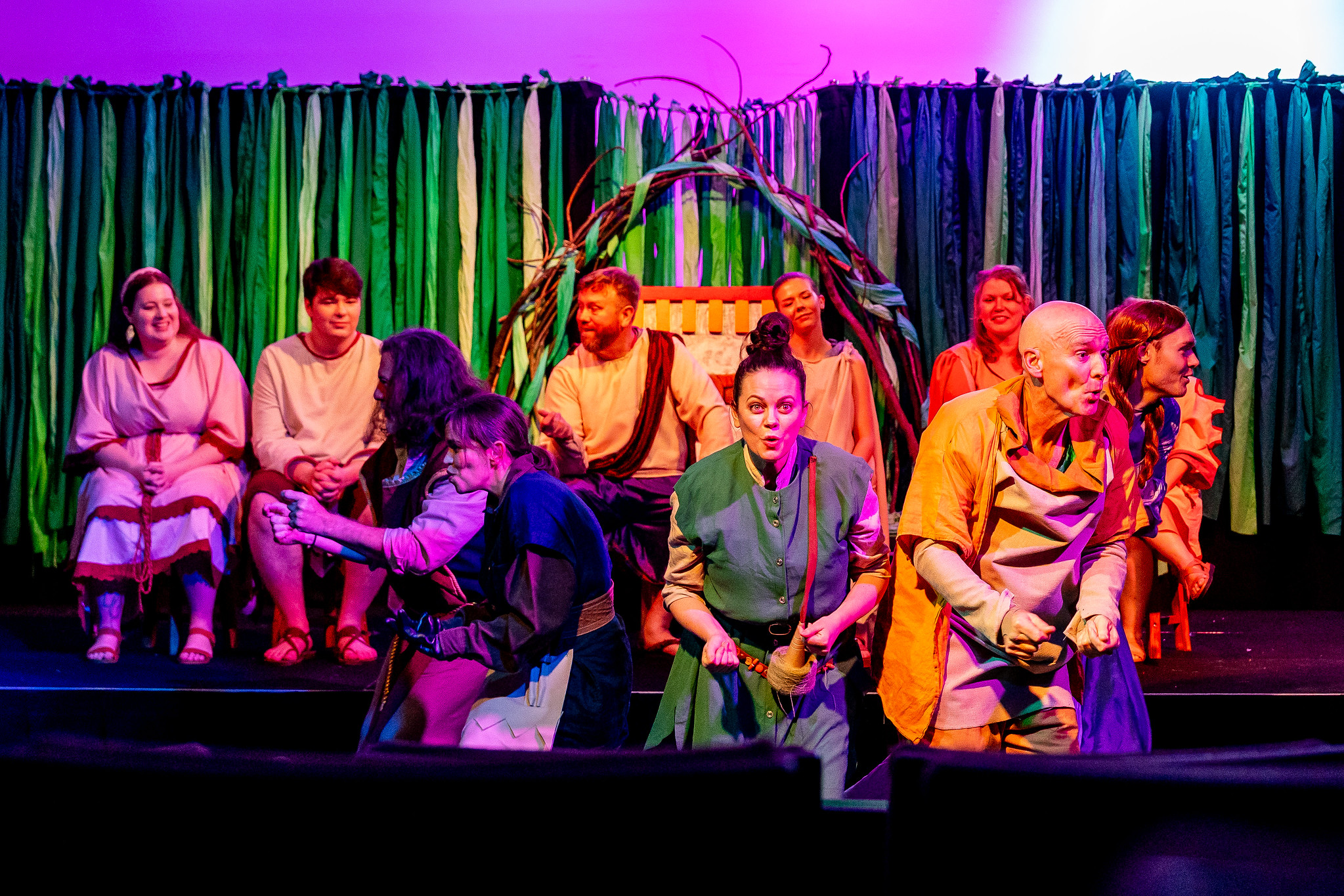
Lose yourself in the enchanted forest of A Midsummer Night’s Dream, brought to life with music, mischief, and magic by the Queensland Shakespeare Ensemble.
In this Shakespearean comedy, four young lovers find themselves in the forest outside of Athens – Hermia loves Lysander (reimagined in this production as Lysandra) but is promised to Demetrius; Helena loves Demetrius, but he rejects her affections and pursues Hermia; Lysandra and Hermia run away to be married, but Demetrius and Helena follow them. Unseen, the fairies of the forest make mischief with these interlopers – at the bidding of his master Oberon, the sprite Puck makes both Demetrius and Lysandra fall in love with Helena, and plays a similar trick on the fairy queen Titania. Meanwhile, a group of craftspeople and amateur actors rehearse their play nearby and accidentally become entangled in the magic.
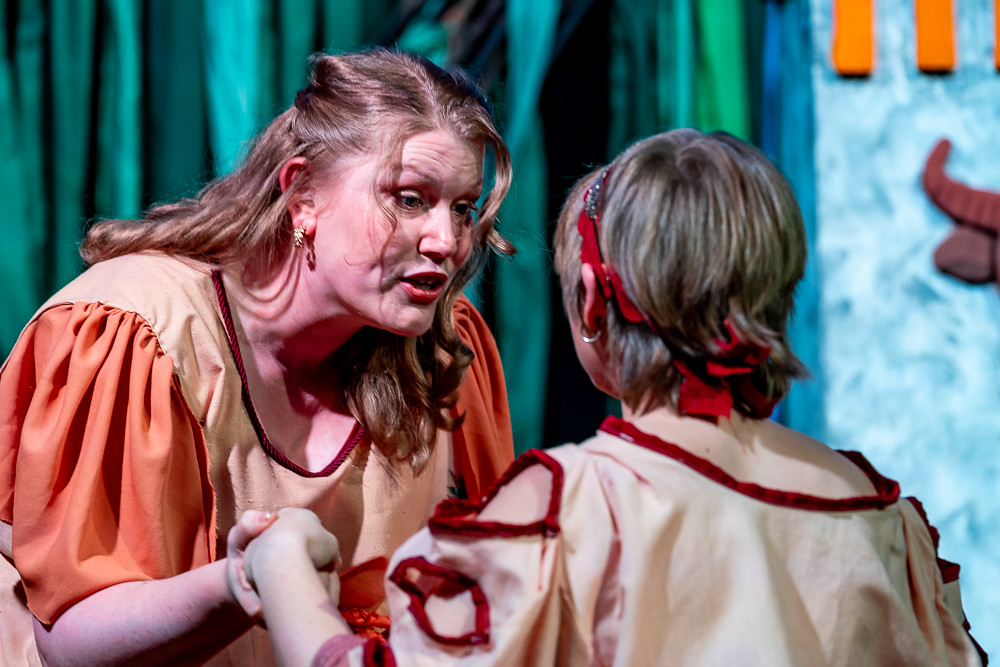
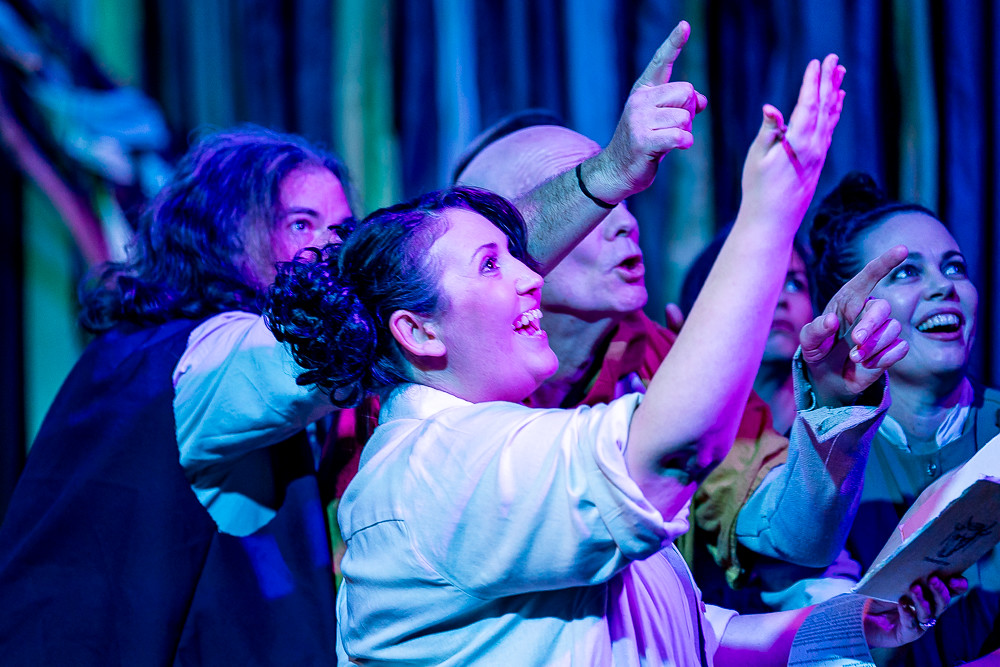
Core Ensemble member Angus Thorburn made his directorial debut for QSE with this production, with assistant direction and choreography by Rebecca Murphy. The actors moved across the stage but also made full use of the space in front of it, reversing the orientation for the wedding entertainment at the end of the play. Thorburn’s direction made excellent use of physical comedy, especially as Lysandra and Demetrius competed for Helena’s affection and spurned Hermia. The Mechanicals’ performance of the myth of Pyramus and Thisbe at the Duke’s wedding, usually a lengthy diversion from the main plot, was an unexpected comedic highlight in this production – Claire Pearson’s performance as Snout, playing the wall that separates the lovers, was especially funny.
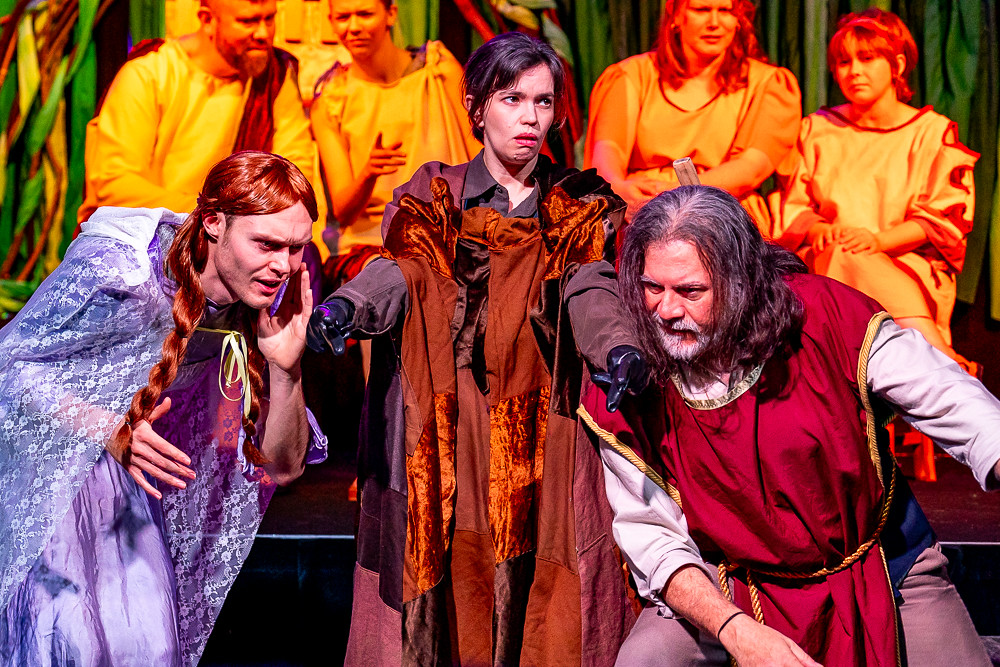
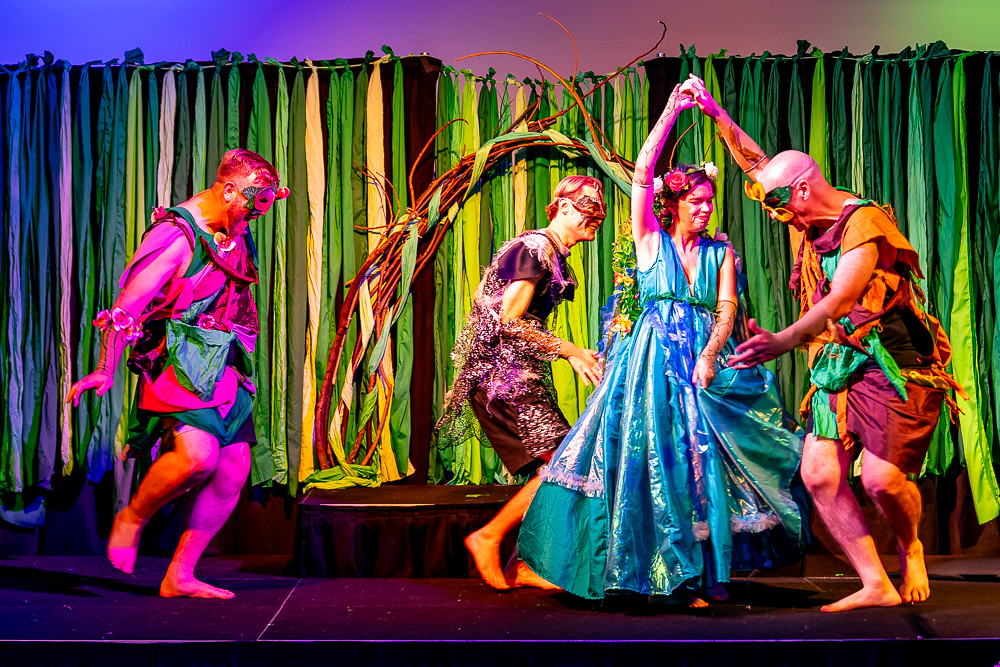
Most of the actors played two or more roles, especially between The Mechanicals and the fairies, with shifts in characterisation between the two. James Enwright, Dom Tennison, Jason Nash, and Paris Lindner were each a masked member of the fairy queen’s court, often with a playful intensity, as well as Athenians with a more upright manner.
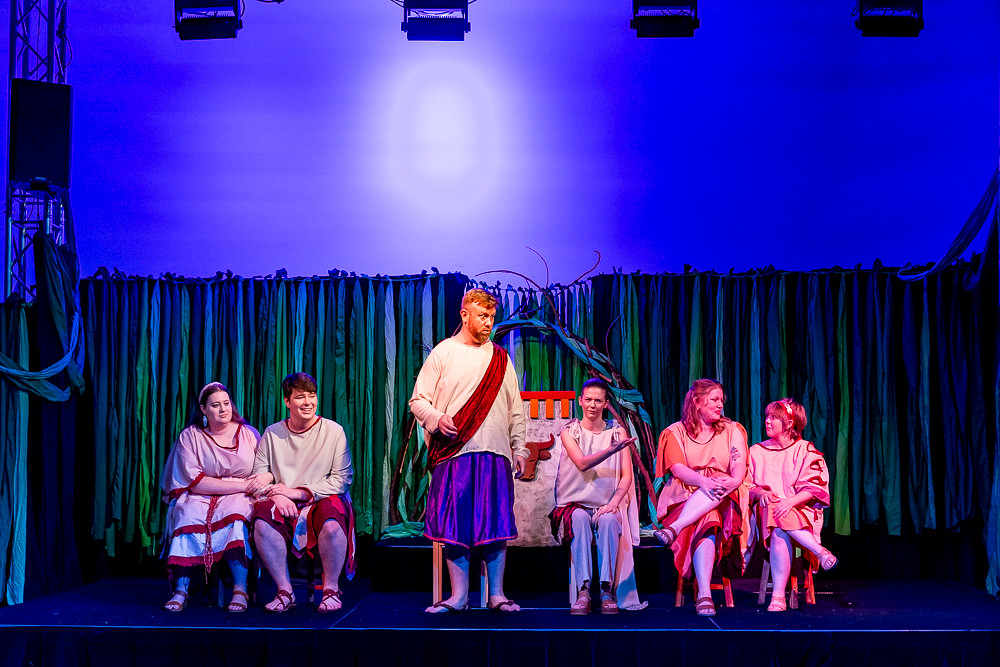
Leah Mustard and Meg Bennett had a wonderful chemistry as young lovers Hermia and Lysandra, and with Mikala Crawley and Eamon Langton as Helena and Demetrius there were many exchanges of combative energy and quick-witted banter, with fight coordination by Jason McKell.
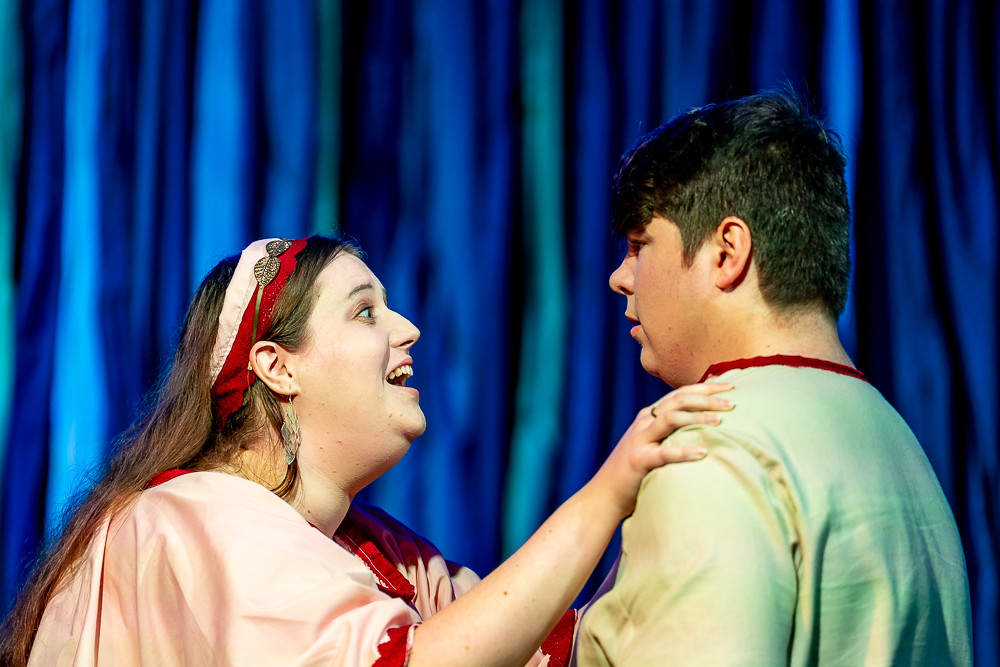
Claire Pearson was a graceful, beatific Titania and a determined Snout. Rebecca Murphy was a commanding presence as Oberon, the fairy king, with Emily Croft playing a gleeful and mischievous Puck.

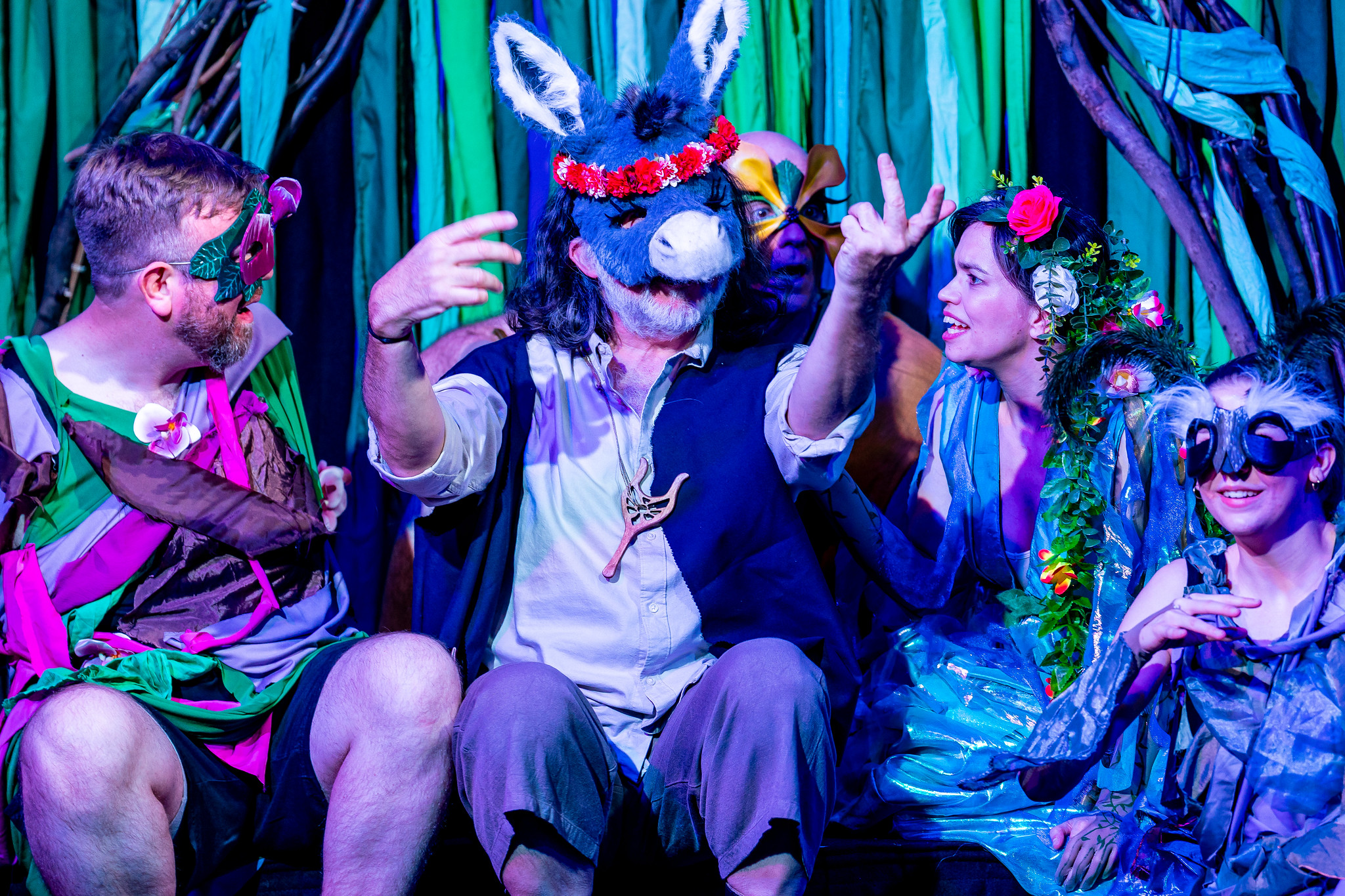
Liliana Macarone was the exasperated director and leader of the acting troupe, Quince, and held an excellent tension with Rob Pensalfini as the overly confident amateur actor Nick Bottom and his many creative ideas and interjections. It was a shame that the full-face donkey mask hid Pensalfini’s comic facial expressions during his transformation into the donkey-headed love of the fairy queen, but his physical performance maintained the momentum of his character.
Musical direction and composition by Macarone and Pensalfini added another element to the comedy and Macarone played an impressive array of instruments as Quince during The Mechanicals’ wedding performance, which contributed significantly to the humour and energy of the work.
Set and prop design by Josh Murphy was simple and effective, with a backdrop of green fabrics to conjure the forest and an archway of interwoven branches to house the fairy queen and frame the centre of the stage, mimicked in Oberon’s regal crown.
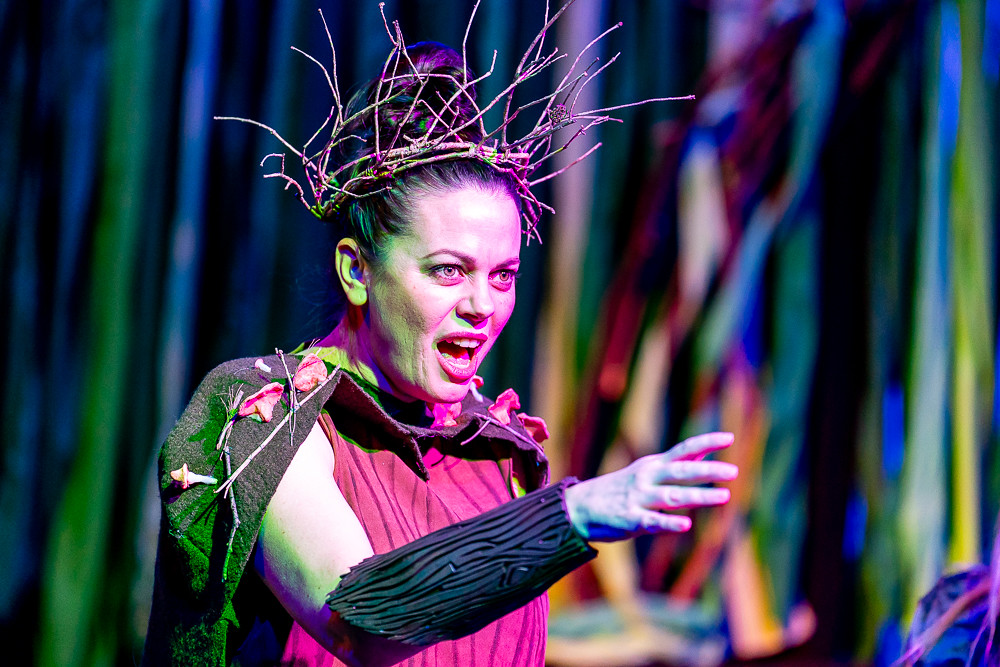
The colourful lighting design by Ziggy Enoch added to the dream-like atmosphere and shifted audience focus around the performance space. Costumes designed and constructed by Harmony Barath also helped to differentiate characters and settings. The Athenian nobles wore warm shades of peach, pink, and red, with the working-class actors in cooler tones of green and blue. Titania and her fairies shimmered in bright colours, while Oberon and Puck were earthier, and all the fairy costuming included textures that suggested bark, cobwebs, blossoms, and other elements of the forest.
Bringing their significant skill and stagecraft to Shakespeare’s fairyland comedy, Queensland Shakespeare Ensemble’s A Midsummer Night’s Dream was energetic and highly entertaining.
A Midsummer Night’s Dream played at PIP Theatre, Milton, from 15 – 30 August 2025
For further information, visit the PIP Theatre website
 Backstreet Brisbane
Leave a comment