Presented by The Curators’ Theatre, The Dragon Queen of Argos sets the stage ablaze as it tells an ancient story of vengeance with magnetic new energy.
Written, directed, and designed by Michael Beh, with dramaturgy by Maureen Todhunter, The Dragon Queen of Argos is the second in The Curators’ Post Dramatic Troy Disorder play cycle. Earlier in 2025, Ode to Women: A Peace Play was staged in the same venue, drawing on Euripides’ Women of Troy and Charles Mee’s (Re)making Project.
The Dragon Queen of Argos draws on Mee’s Project and Aeschylus’ play Agamemnon, first performed around 458 BC, which follows the titular character home to his wife after the Trojan War. Winding through this material is excerpts from The Waste Land, TS Eliot’s 1921 foundational modernist poem. Like The Waste Land, The Dragon Queen of Argos is an assembly of fragments, juxtaposing style, structure, and imagery in distinct sections (declared onstage by The Angel of the Century of God) to offer a vision of a world left emptied after war and violence.
The Greek general Agamemnon arrives back in Argos with the Trojan princess and priestess, Cassandra, in tow as a war prize and concubine. Agamemnon expects that his life, and his marriage, will resume as it was 20 years ago, but his wife has other plans. Clytemnestra has been waiting for two decades to avenge their daughter Iphigenia, sacrificed by Agamemnon to summon a wind to carry the warships to Troy, and she kills both her husband and Cassandra in a calculated act of vengeance. In mythology, this murderous act only furthers the curse of their family line, the House of Atreus – Clytemnestra’s son will eventually kill her, to avenge his father – but it is where The Dragon Queen of Argos draws to a close.
The Dragon Queen of Argos shifts the focus of Aeschylus’ play from Agamemnon to Clytemnestra, who is accompanied by the shade of their daughter Iphigenia. The Angel of the Century of God watches over them all. This Agamemnon postures and preens, styling himself as a paragon – or a parody – of masculinity, while his wife embodies a consuming, passionate desire for revenge.
The work also draws on wider cultural artefacts, with references spanning from Shakespeare to Game of Thrones. One scene casts Agamemnon and Cassandra as Rothbart and Odette in a brief interlude of balletic movement, while The Angel of the Century of God plays an excerpt of Tchaikovsky’s Swan Lake suite on the violin. Most of the play is performed in English but there are moments where the characters speak German, French, and Sinhalese.
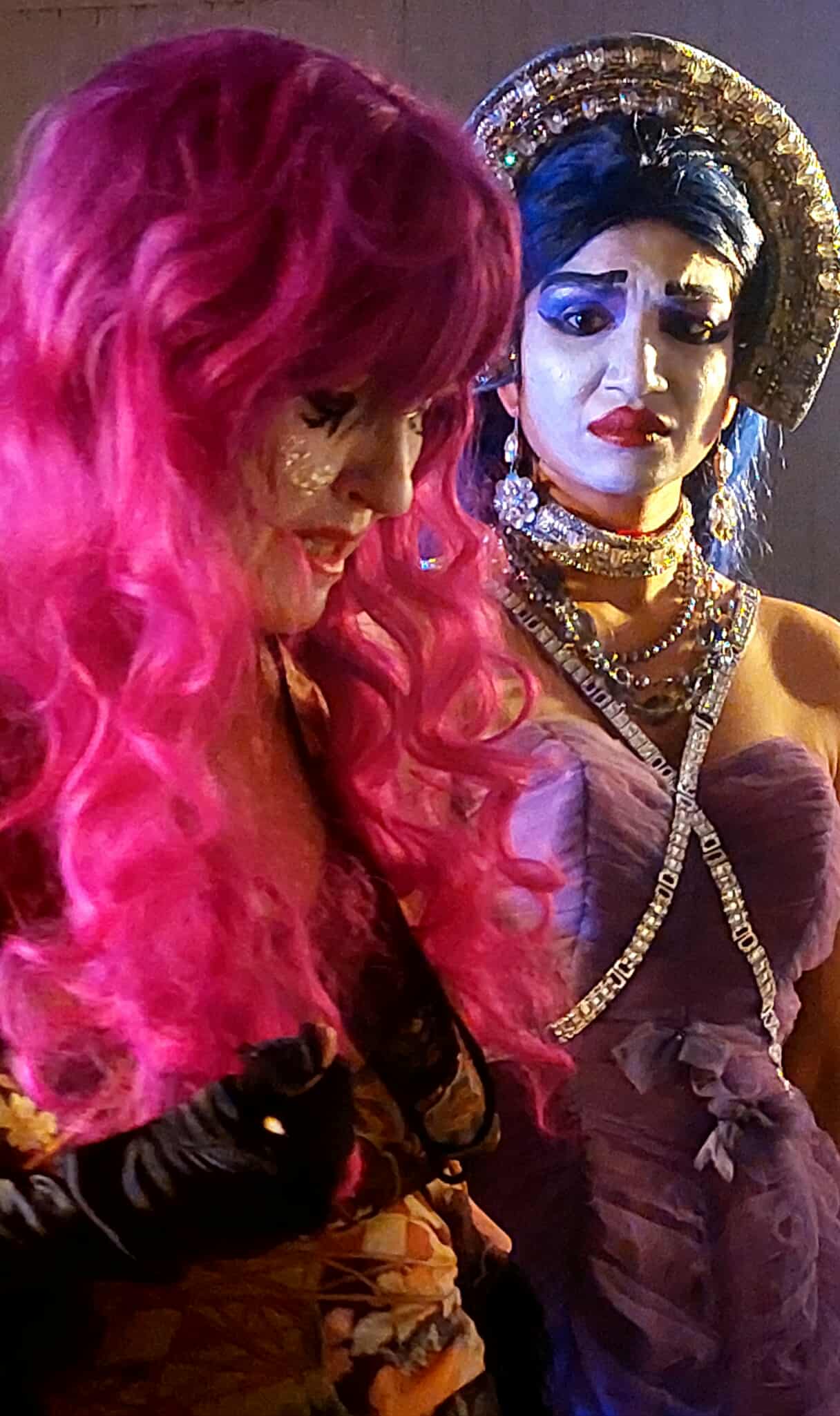
As the second play in a cycle, The Dragon Queen of Argos calls back to Ode to Women where Cassandra (played by Sherri Smith) also appeared, and The Angel of the Century of God was played with cheeky energy by Bronwyn Naylor.
The performances of The Dragon Queen of Argos on 15 and 16 August were prologued by The Last Veil, an adaptation of the Salome story devised and dissected by Beh in a similar style. The Sublime Ensemble, a collective of emerging older artists, performed The Last Veil with gravity and conviction. There were thematic echoes across both plays, and Ode to Women, of history repeating and a kind of stasis. All three works used modern references to draw lessons of ancient myth and history alongside us in the present moment.
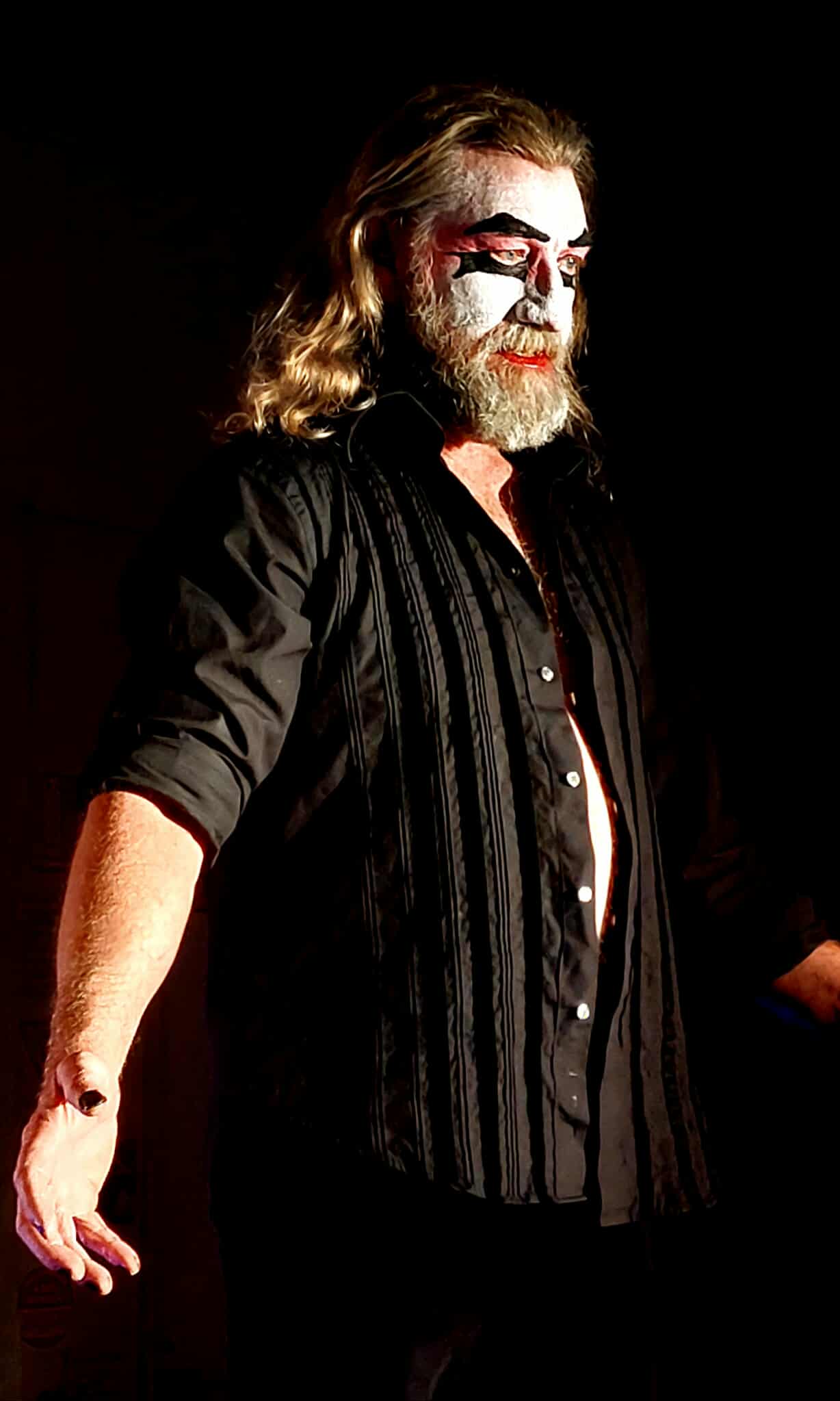
The Dragon Queen of Argos is staged in The Barney, at St Barnabus Anglican Church, with the audience seated on two sides and the performers raised on tiered platforms in the centre. Structurally, The Dragon Queen of Argos takes a post-dramatic approach, with scenes and sequences that bleed across storytelling, song, and stylised movement. Monologues reveal character and progress themes rather than plot, in a traditional sense.
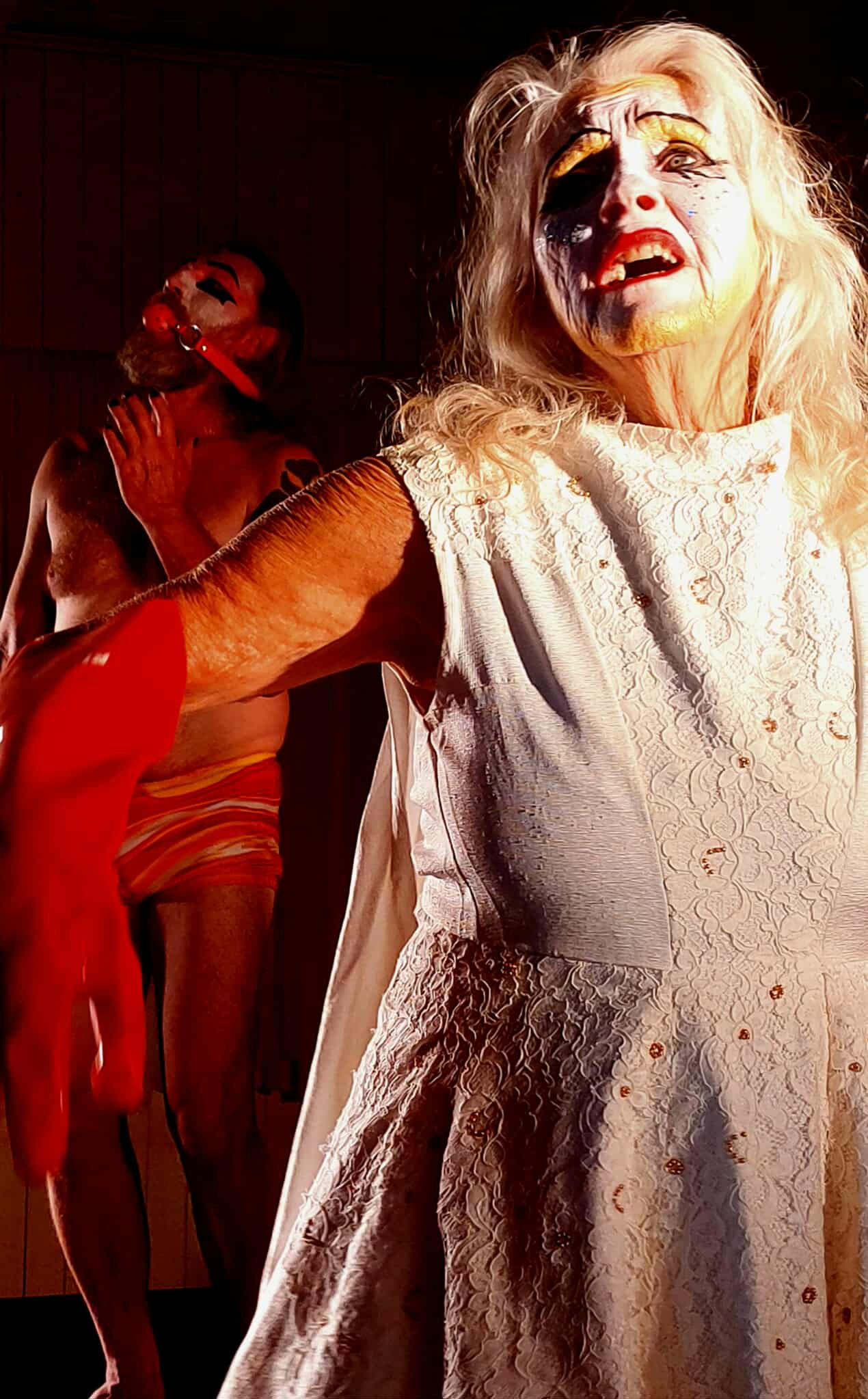
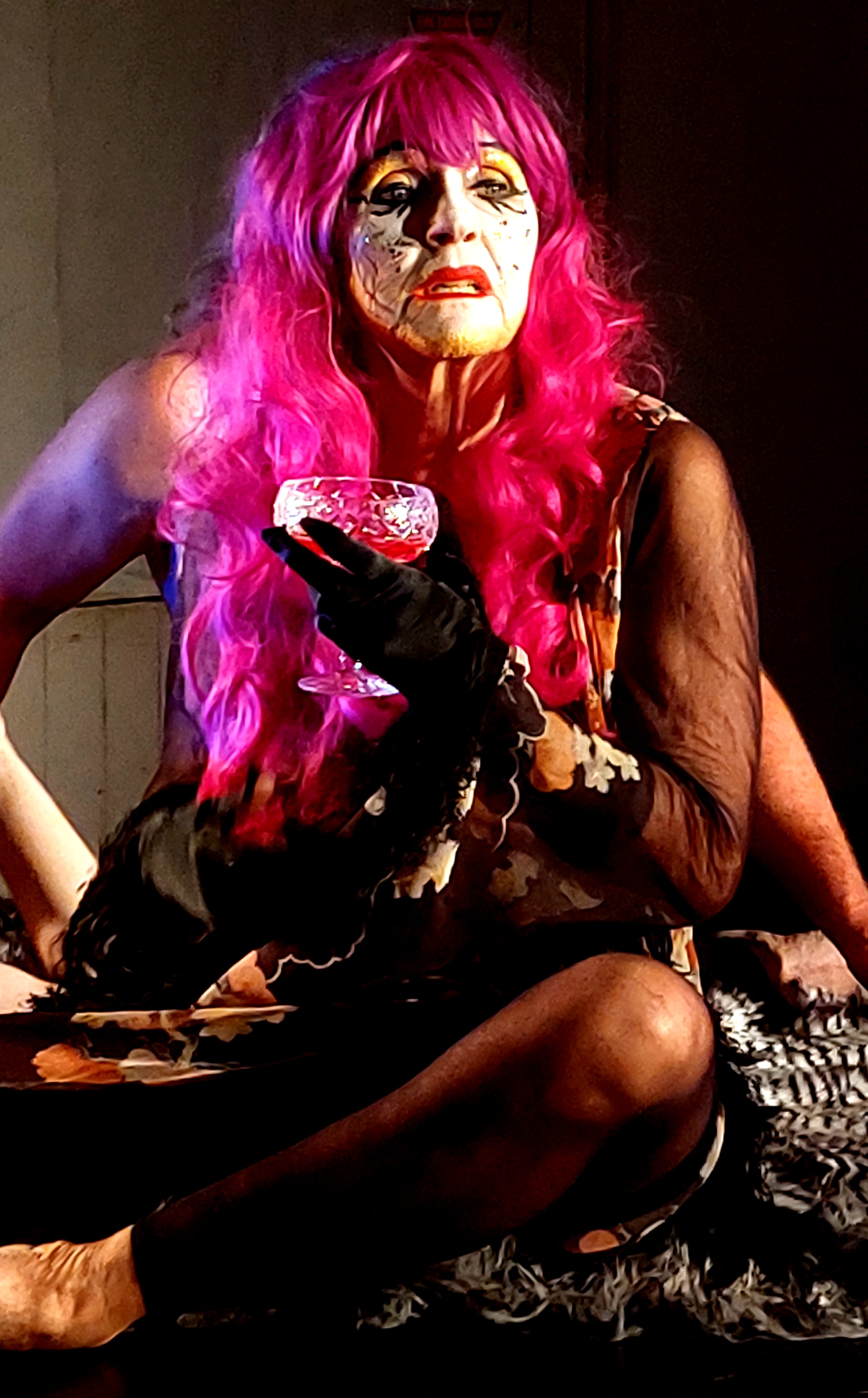
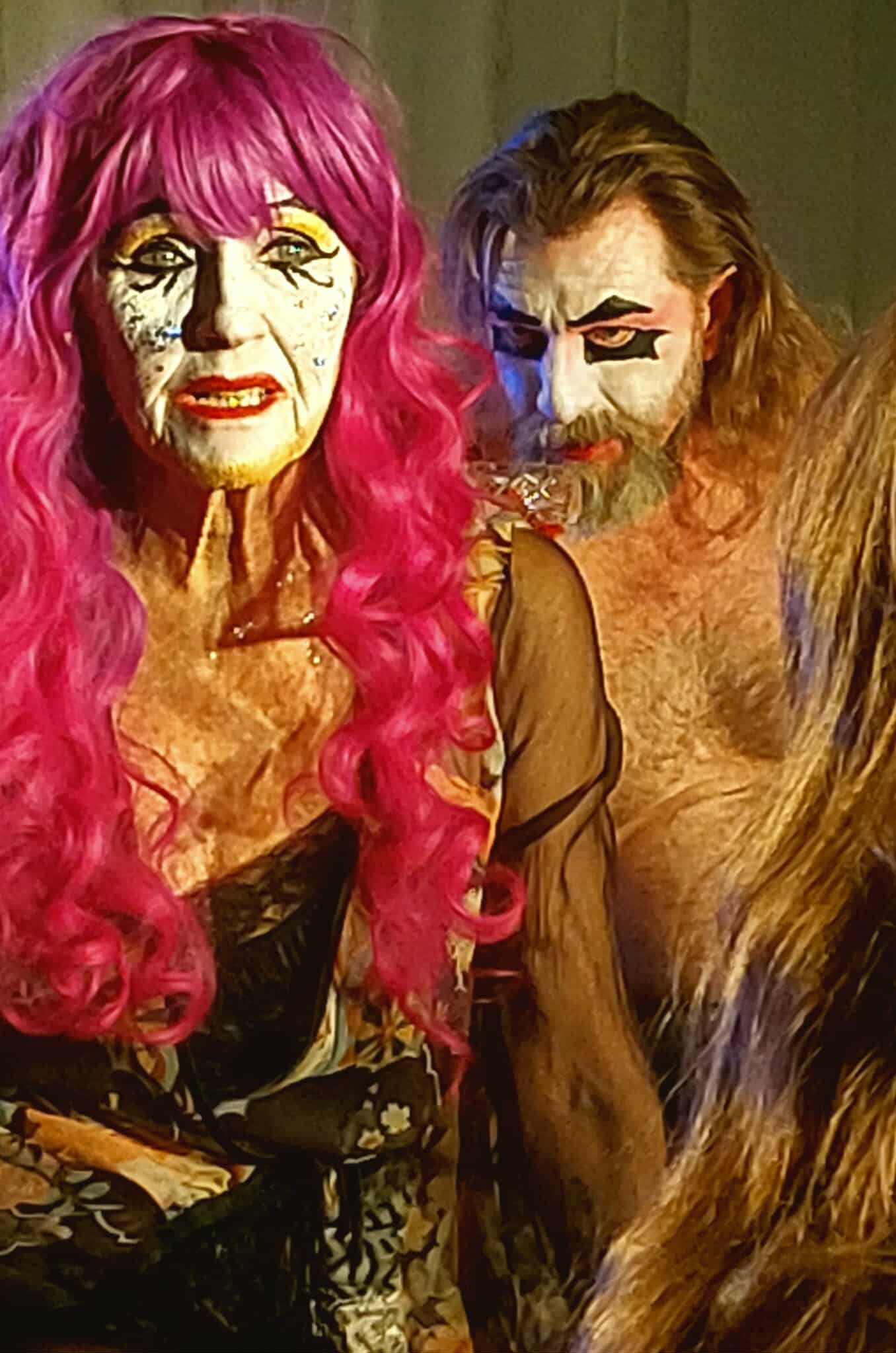
Rainee Skinner was a lightning rod as Clytemnestra, with a commanding and powerfully grounded energy that reverberated through the space. Skinner delivered a multifaceted portrayal of Clytemnestra as a scorned and abandoned wife, a grieving mother, and a woman out for blood.
Brent Dunner held his own against this energy as an arrogant and self-assured Agamemnon, and Rebecca Munasinghe consistently drew the eye as Iphigenia, fully present in her character even when she lingered silently in the background.
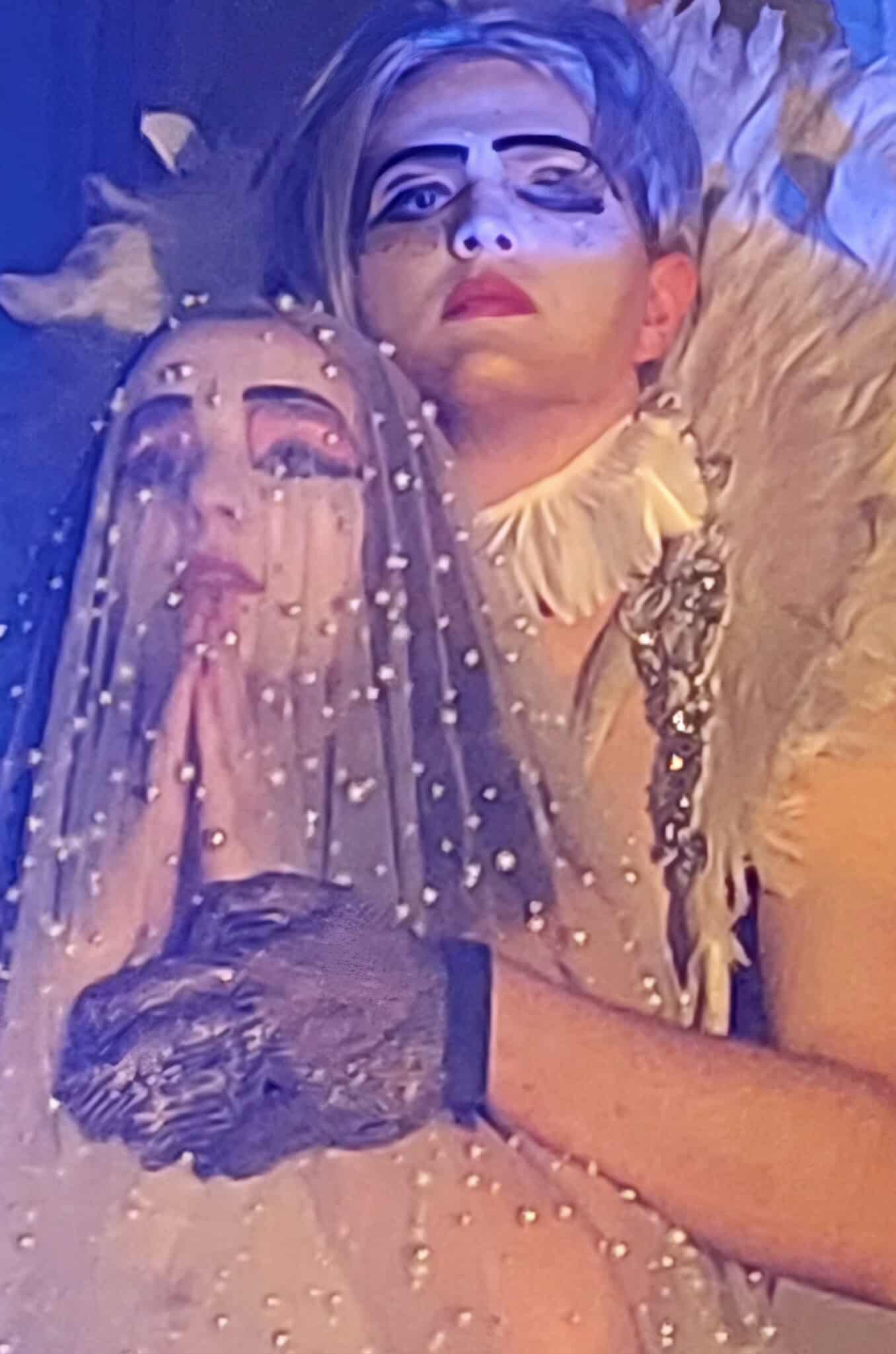
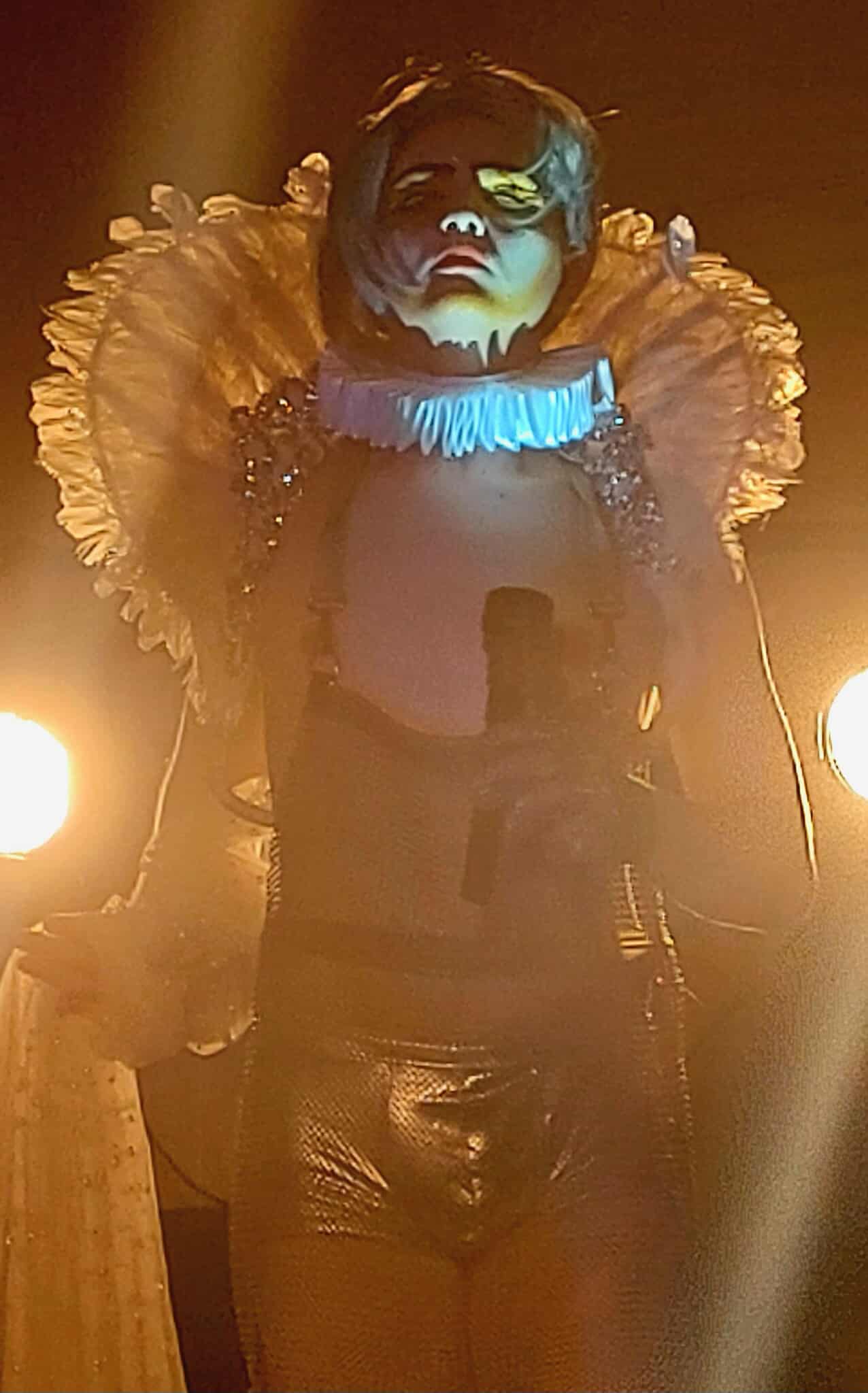
As The Angel of the Century of God (Eros), Lachlan Mills made falsetto proclamations that delineated sections of the work, lurked languidly alongside Agamemnon and Clytemnestra, and also played the violin. Amelia White brought a dignified, trembling courage to the role of Cassandra, abducted from her home in Troy after the war and resigned to her fate as it entwines with Agamemnon’s – her death was an especially haunting scene.
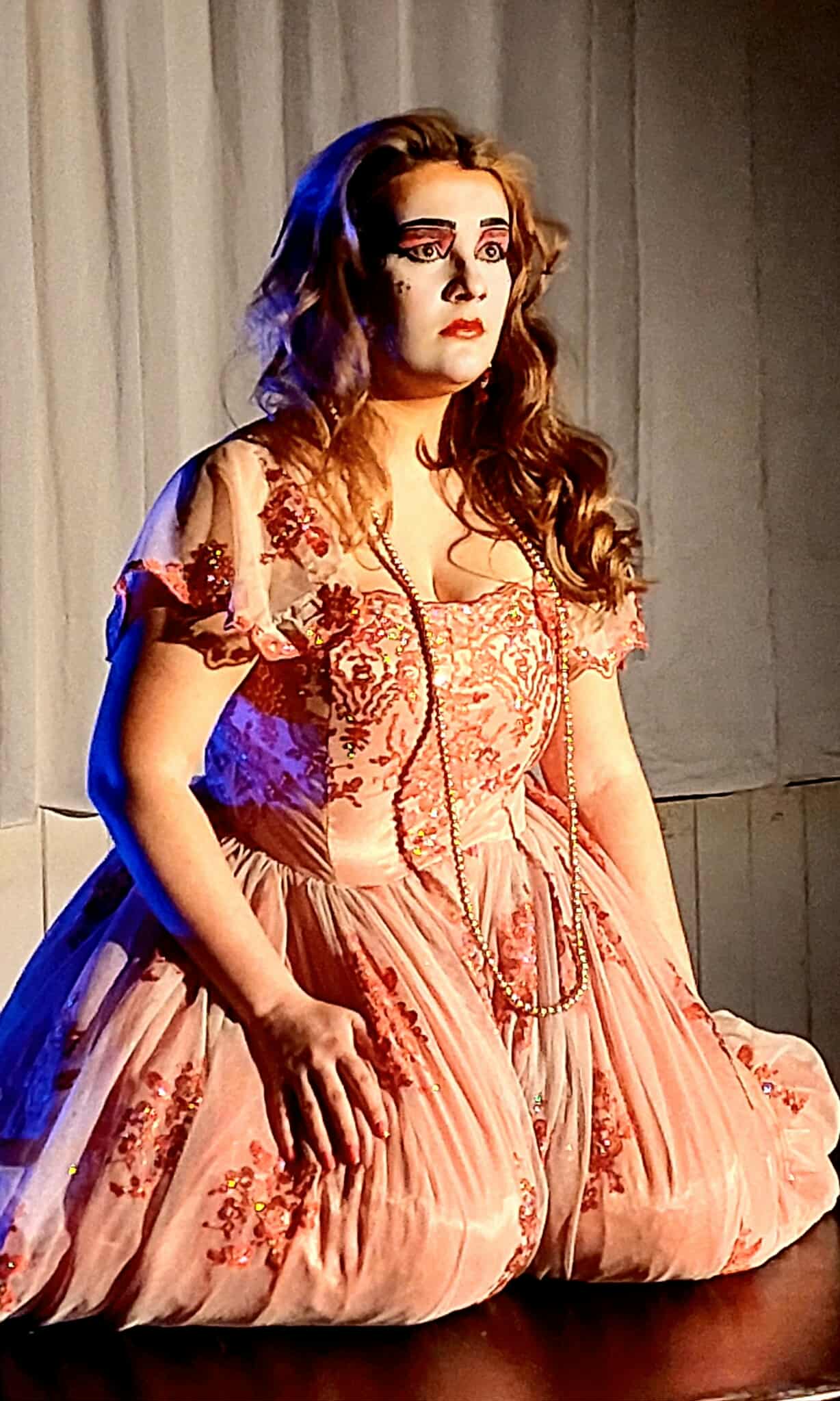
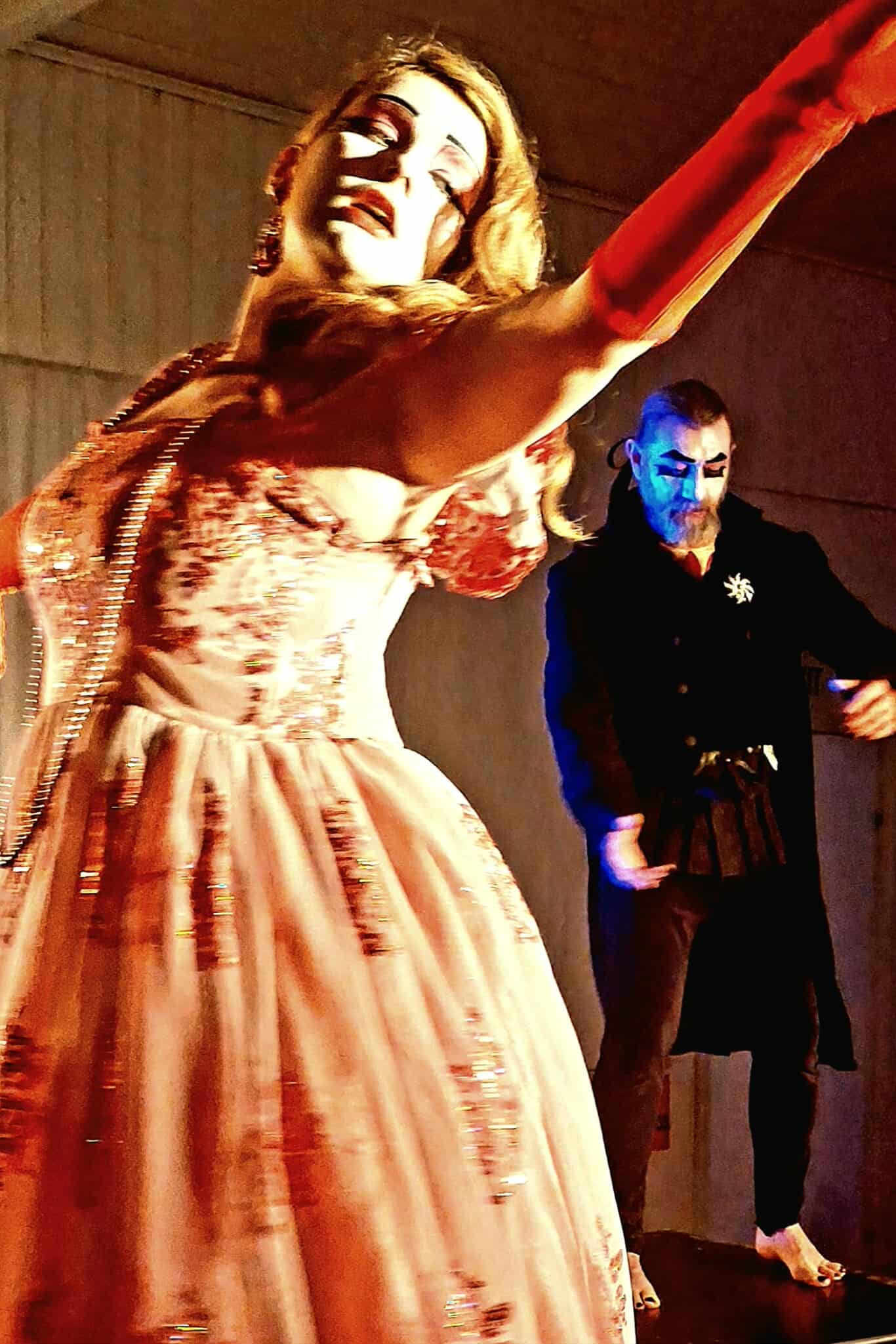
Each of the characters wore dramatic makeup that emphasised their features and there were several striking changes in costume, from ball gowns and bare feet to the whisper of tulle and clatter of pearls.
Creative lighting design included handheld lights and a single bulb on a stand evoking both a ghost light and a microphone. Torches scattered shimmering reflections off sequinned costuming and created dramatic chase scenes that played out in shadows against the walls.
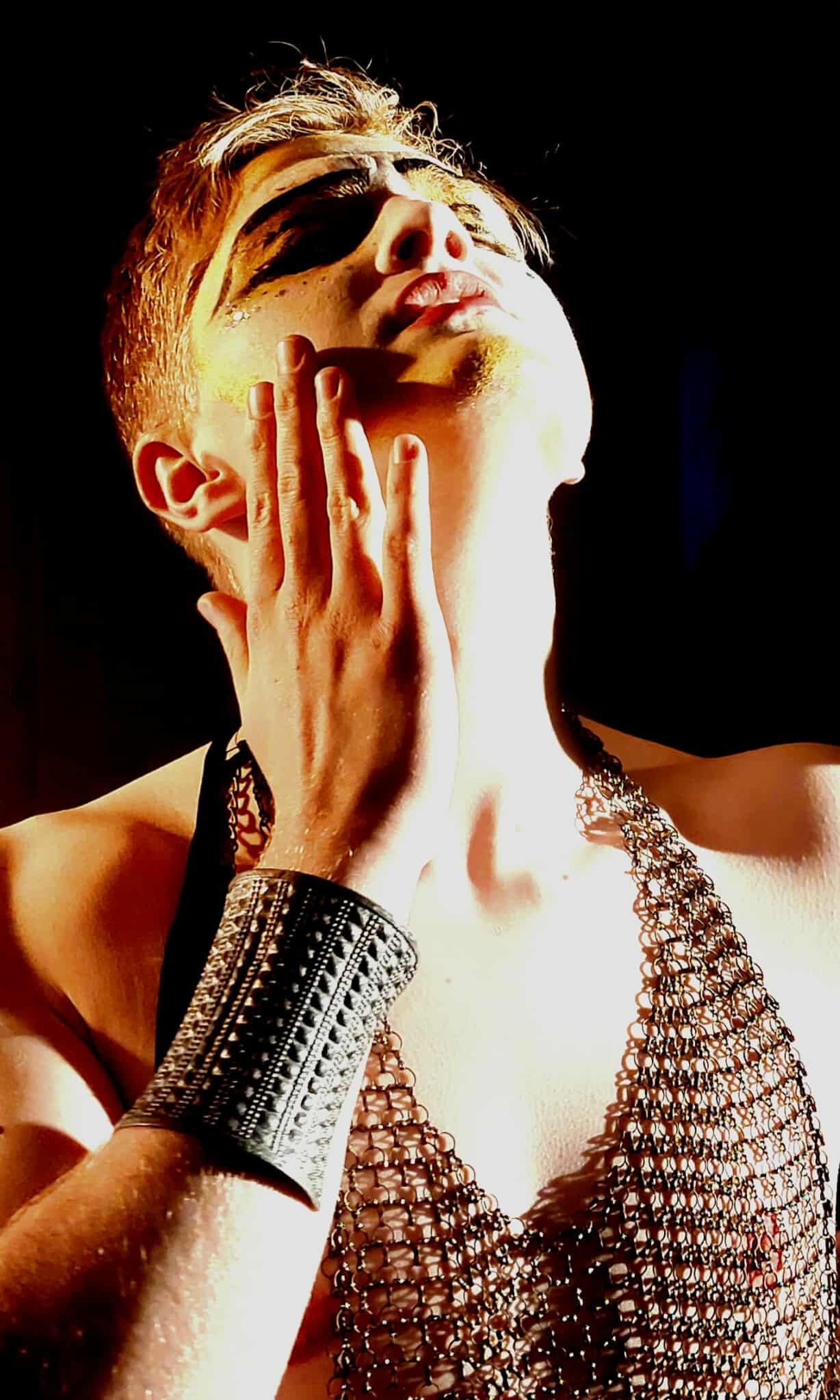
The Dragon Queen of Argos is a densely layered and highly theatrical work of eccentric glamour. Performed with thrilling intensity by a committed cast, The Dragon Queen of Argos draws together mythology, music, and poetry from a wide range of sources to weave a complex tapestry that shifts and glitters in the light.
The Dragon Queen of Argos is playing at The Barney, Red Hill, from 15 August – 6 September 2025
For further information, visit The Curators’ Theatre website
 Backstreet Brisbane
Leave a comment