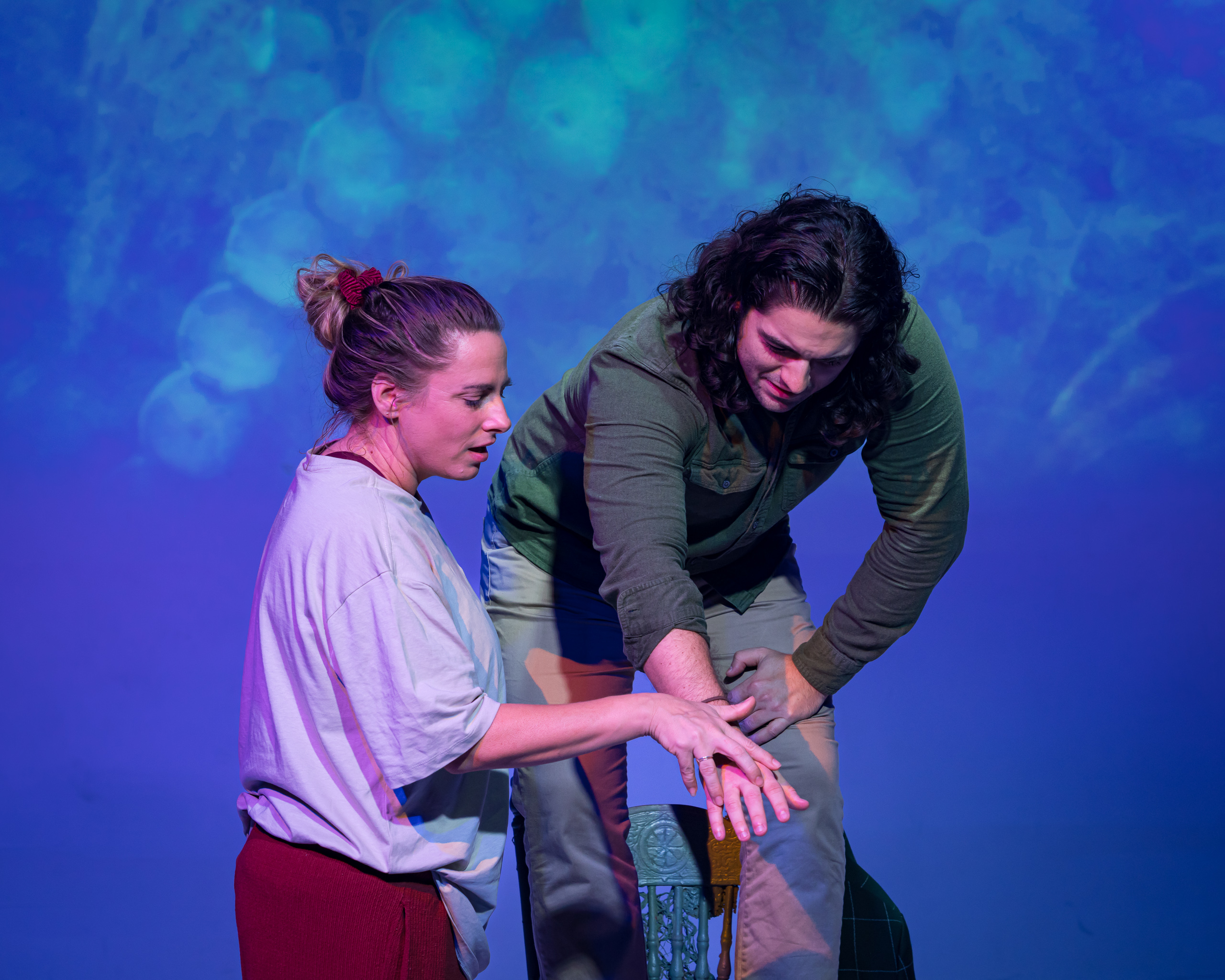
Octopolis is a two-handed drama about academics and an octopus trying to co-exist in close quarters, bubbling with intellectual, emotional, and existential tensions.
Written by UK playwright Marek Horn and first produced in 2023 at Hampstead Theatre, this co-production between Observatory Theatre and PIP Theatre marked the Australian independent premiere of Octopolis, directed by Bronwyn Nayler.
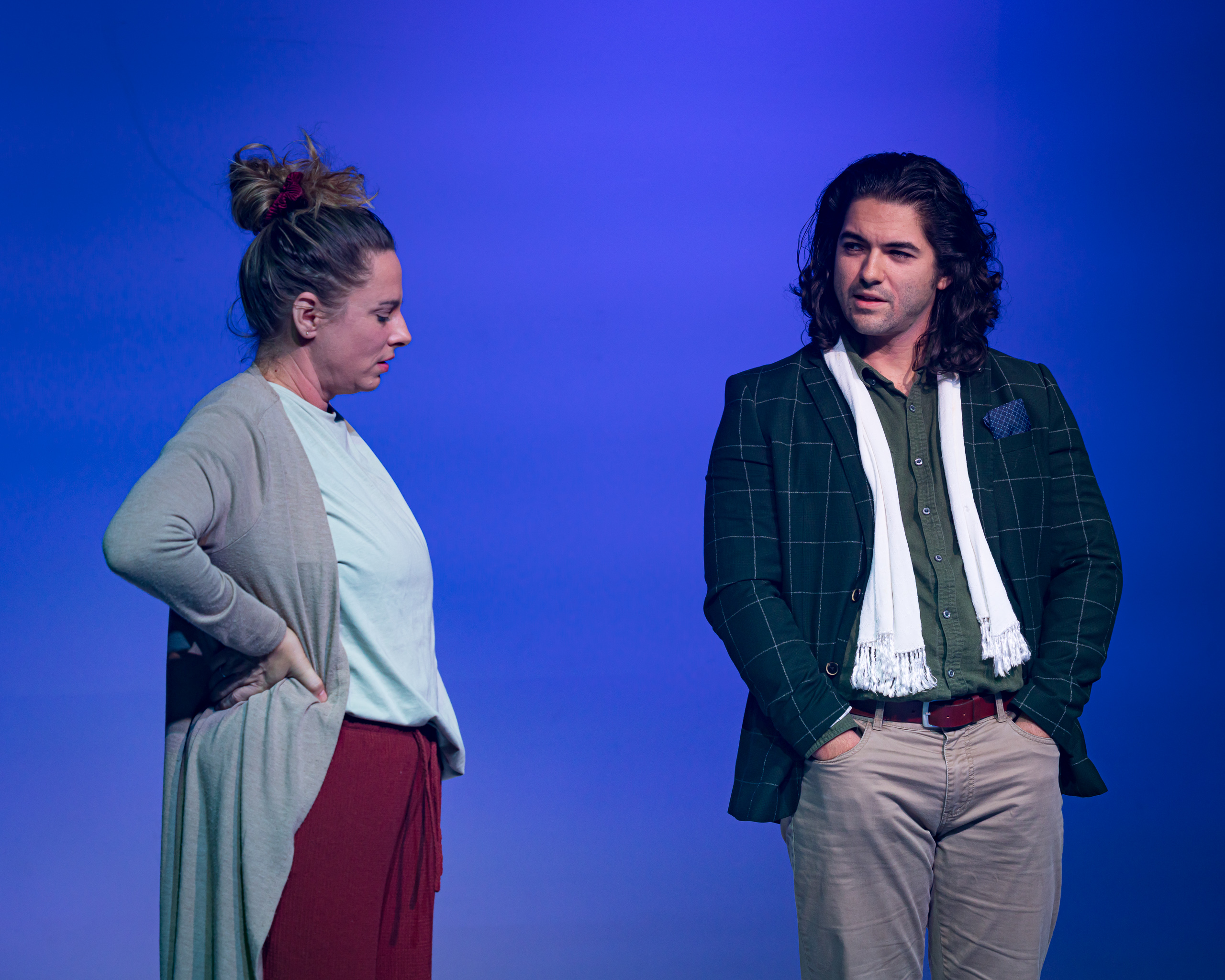
Professor George Grey has become a recluse, grieving the death of her husband in the university lodging they had previously shared. Her only companion is Frances, the octopus she and her husband have been studying, until Harry arrives on her doorstep. Unexpected and unwelcome, Harry is an anthropologist who has been approved by the university to study Frances and the progress the Greys had made with her. While Harry is reserved and polite, George is cynical and stubborn. She has no interest in changing her routine or her space to accommodate Harry, and his presence intrudes on her grief even as she desperately seeks to avoid it.
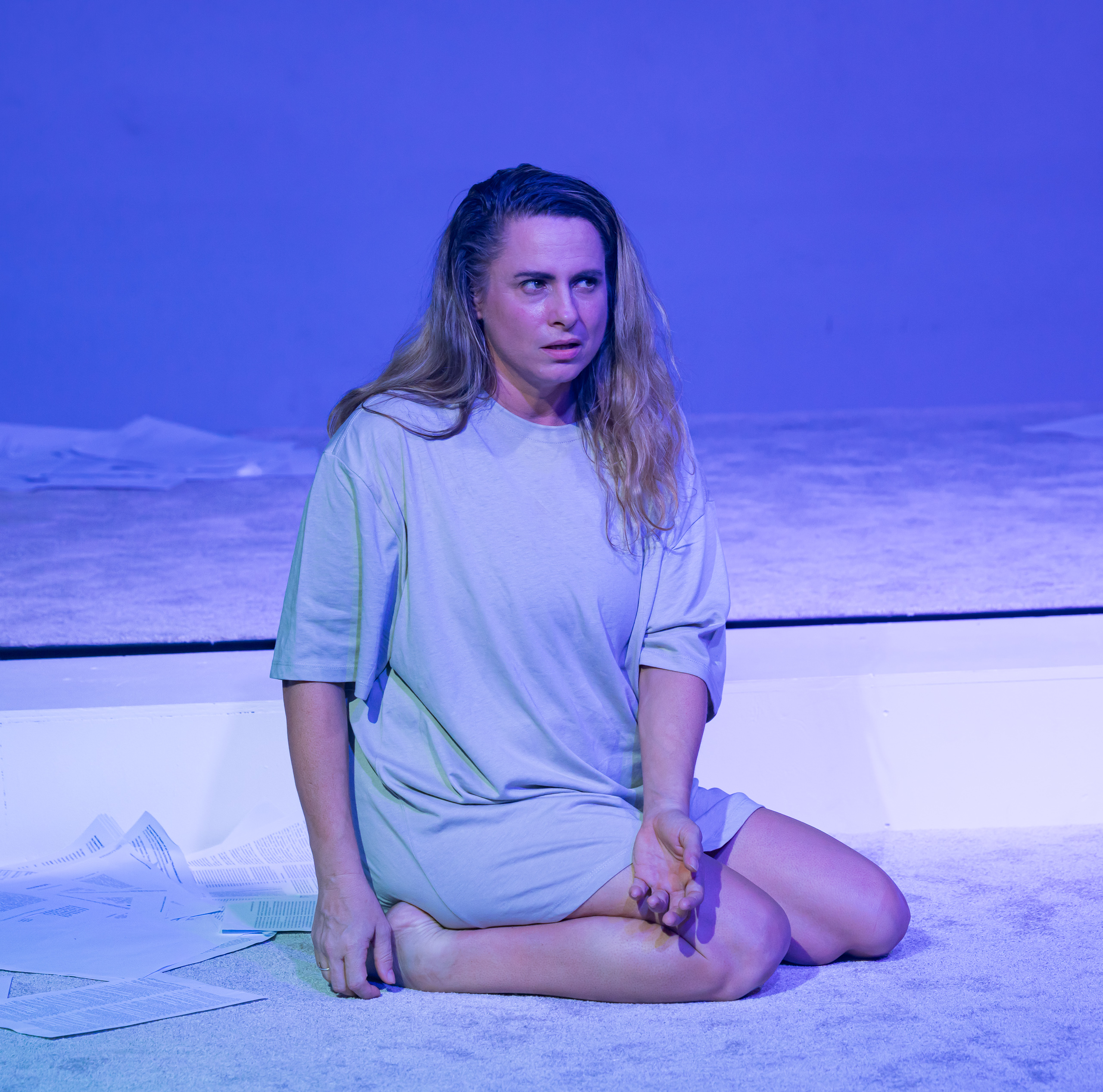
The thematic interests of Horn’s play are wide-reaching, dealing with brains, bodies, and behaviour. Octopolis asks juicy questions about religion and faith, animal sentience, and emotional intelligence: do animals believe in a higher power? If so, what truly separates us from them, and what implications would this have for our society? Parallel to this intellectual thought experiment are the visceral, messy human behaviours that surround grief, attachment, and vulnerability.
George is emotionally volatile while Harry is reserved and practical, viewing himself as an observer and outsider rather than a social or cultural participant. Gradually, his interest in George and Frances shifts from academic curiosity to something more personal.
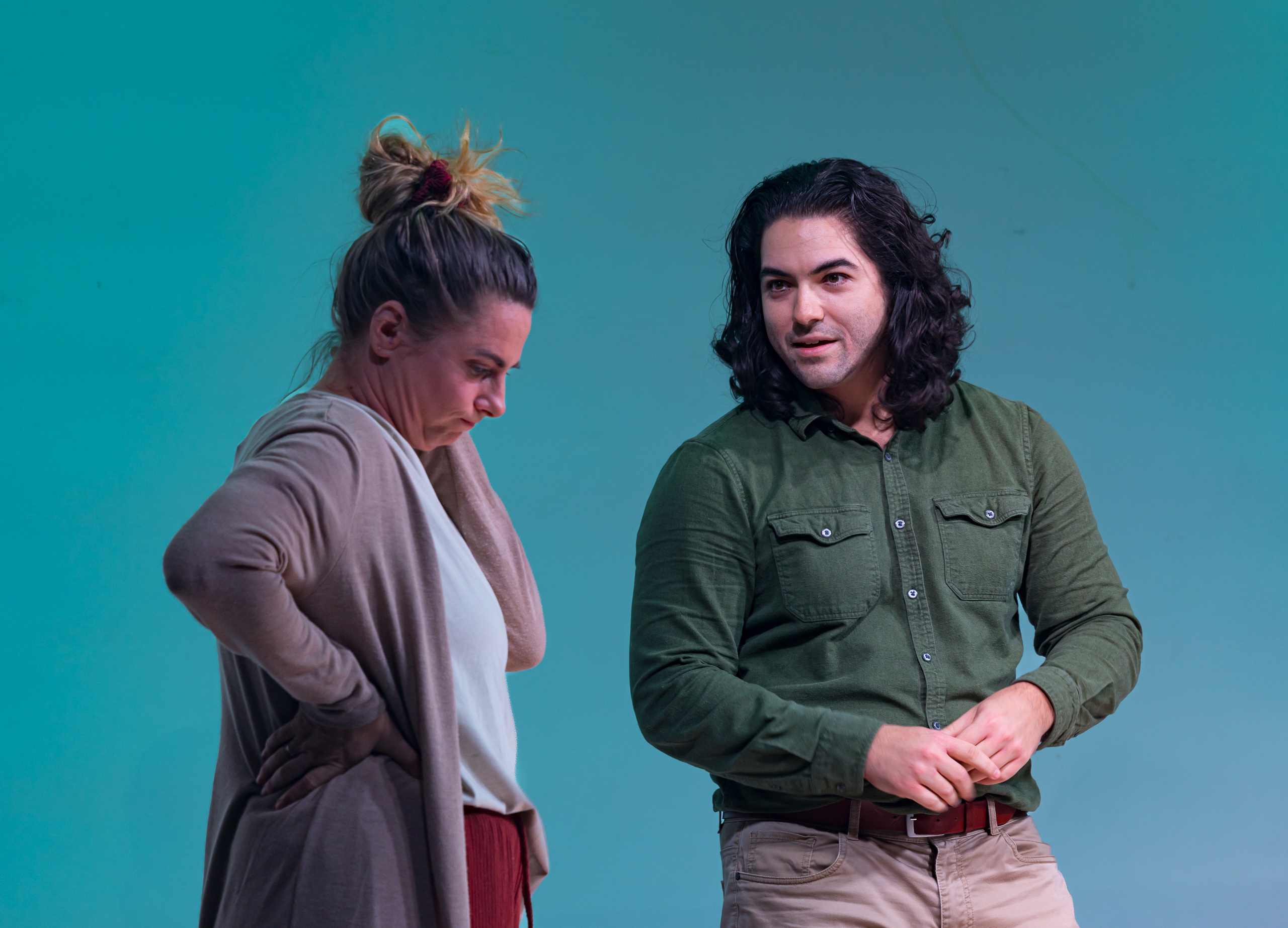
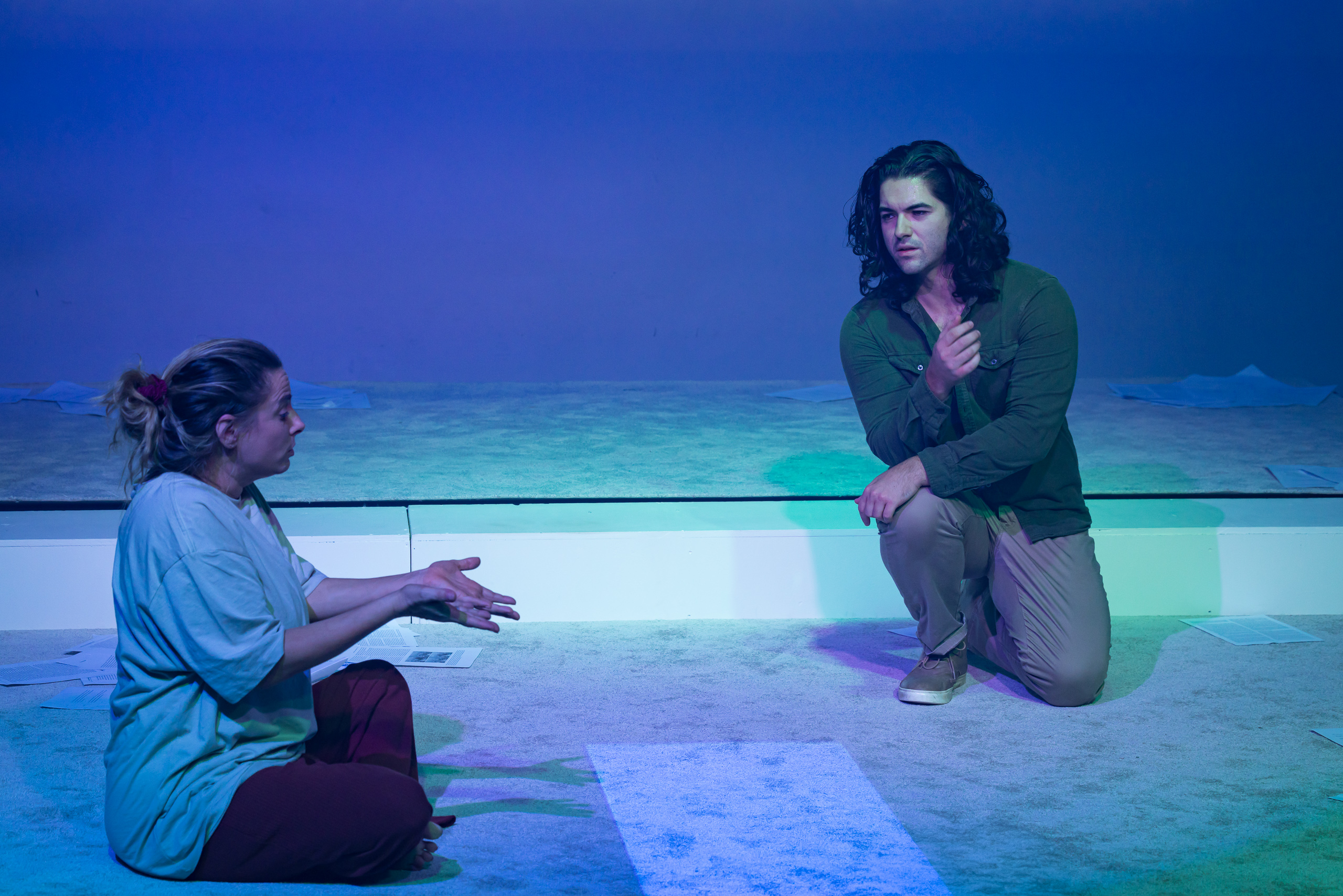
It might be more correct to call this play a two-and-a-half-hander, as the presence of Frances is pivotal. A small cast and sparse set design means that Octopolis relies on the actors to conjure the play’s setting as well as its emotion. The carpeted stage at PIP Theatre was bare, except for a single chair, and Frances’ aquarium was suggested by a rectangle of light in its centre. The actors and director did an admirable job of conjuring the tank, and the octopus within, through their blocking and movement sequences. However, the actors walked directly through the light more than once, which cracked the illusion.
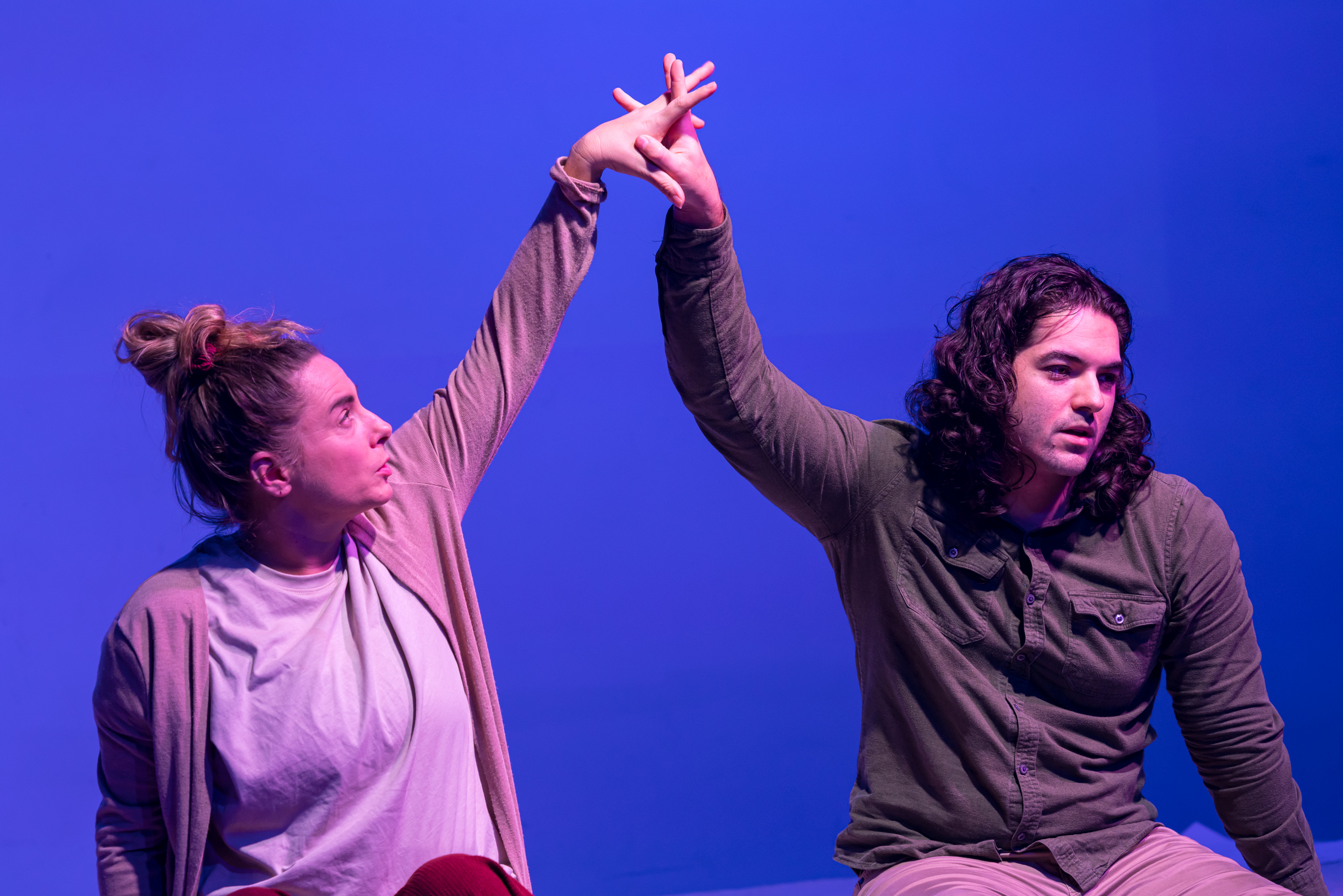
Horn’s script acts as a kind of retelling, vacillating between the drama of the past and a possible future filled with dancing (and soundtracked by David Bowie). There is narration as well as dialogue, delivered alternatingly by the actors, vividly co-creating the scene with the audience’s imagination on the bare stage. In the slippery timestream of the play, the actors mimed gestures like opening drawers or chewing food, memories of a past movement.
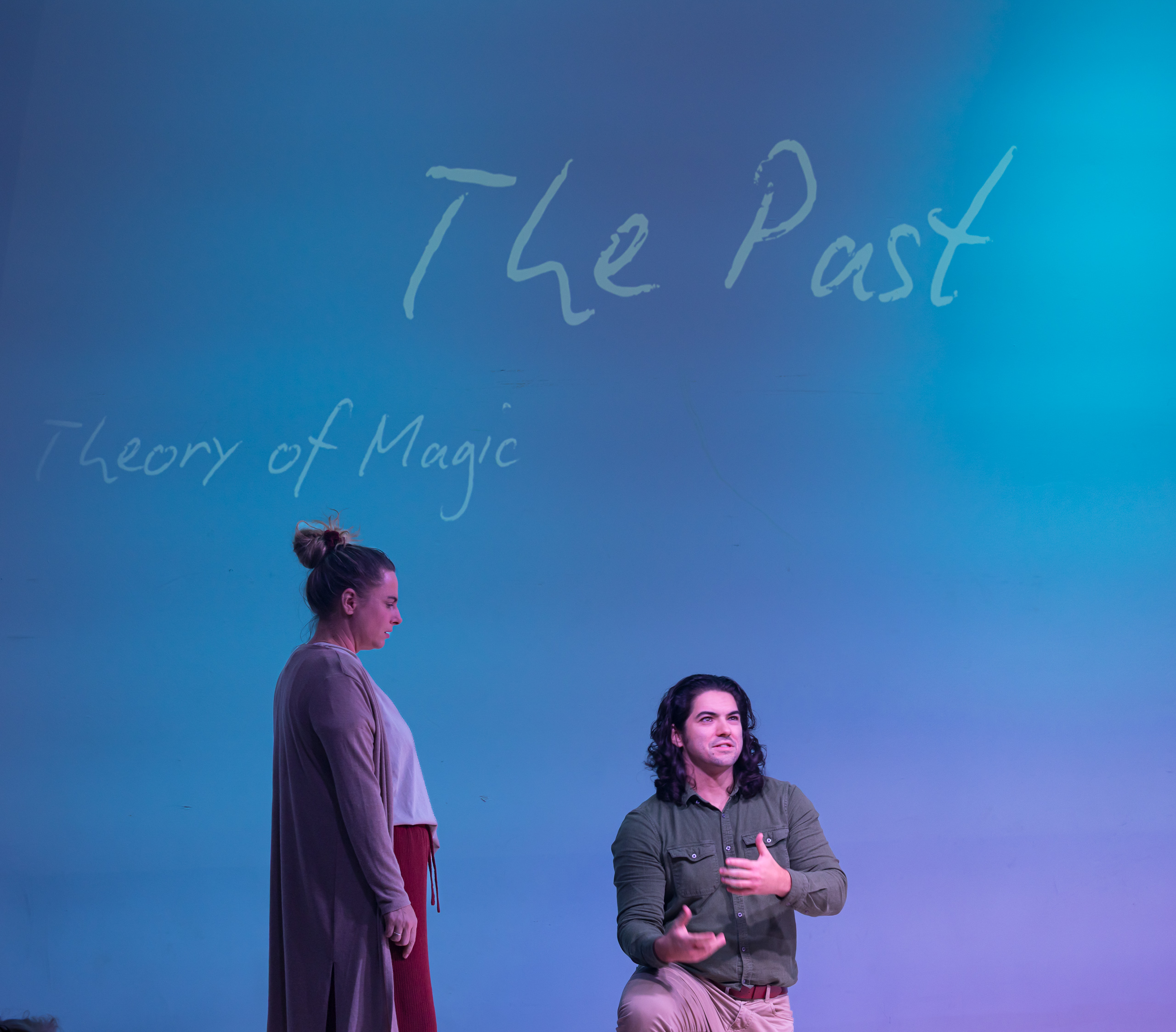
Sound design by Lachlan Driscoll, who was also the dramaturg, underscored scenes of high emotion and quiet intensity, featuring a back catalogue of Bowie hits. Choreography and movement and intimacy coaching by Sherri Smith created some of the play’s most tender and memorable moments, as well as the energetic dance sequences. Lighting and video design by Teddy Waddingham included projections that shifted the play across timelines, as well as the conditions of Frances’ tank, and dappled the stage with the suggestion of sunlight through water.
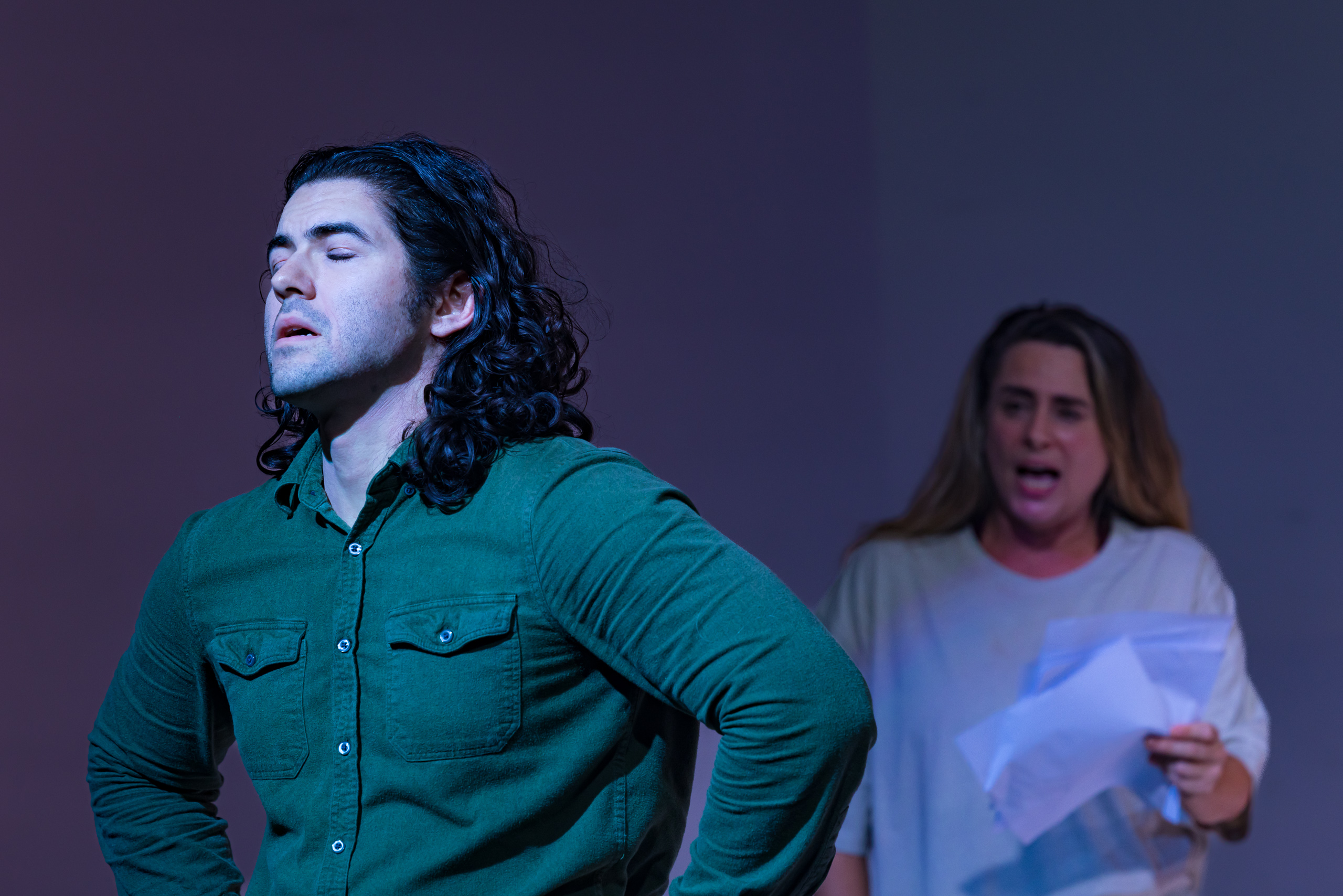
The audience was seated on three sides of the stage and Nayler’s direction ensured that the characters could be seen and heard from all seats without prolonged periods facing away. The effect was a sense of voyeurism, peering in at George, Harry, and Frances in their own kind of enclosure.
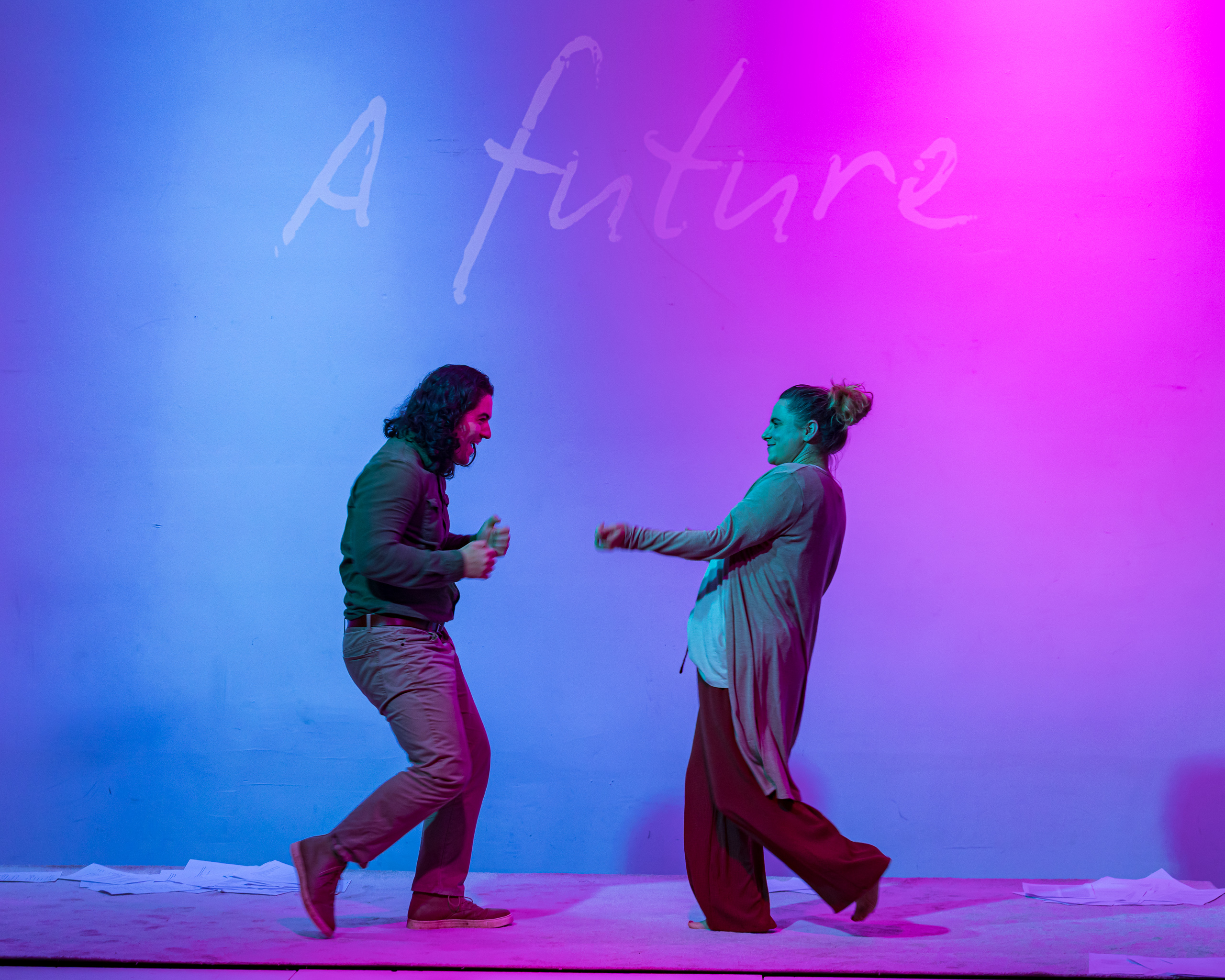
Dudley Powell and Caroline Sparrow starred as Harry and George, a superb and subtle performance full of tangible chemistry. PIP Theatre is an intimate venue for such an emotionally charged performance and this, with Nayler’s direction, allowed for every twitch of a hand or quirk of an eyebrow to be seen and felt. Horn’s script is dense but the actors manoeuvred it with feeling and imbued even academic jargon with conviction and meaning.
Minimalist staging and considered technical design choices allowed the actors’ skill and sensitivity to shine in Octopolis, a charged and chewy play about the ways we make meaning in pursuit of certainty and connection.
Octopolis will be performed at PIP Theatre, Milton, from 14-24 May 2025
For ticketing and further information, visit the PIP Theatre website
 Backstreet Brisbane
Leave a comment