
Queensland Symphony Orchestra curated a program of “life affirming music” for their ninth Maestro concert of 2023, Heartland Classics, including works by renowned composers from Central Europe: Kodály, Mendelssohn, and Dvořák.
Heartland Classics was conducted by Dutch conductor and Music Director of Vancouver Symphony Orchestra Otto Tausk, who commanded the orchestra with graceful, languid gestures. Acclaimed Armenian violinist Sergey Khachatryan made his debut with Queensland Symphony Orchestra as guest soloist for the Mendelssohn Violin Concerto.
Speaking to the audience before the concert began, violinist Sonia Wilson commented on the lush melodies of Dvořák that audiences could look forward to. Wilson also acknowledged that this was the final performance of her colleague Brynley White, who was performing with QSO for the last time after 36 years as a violinist with the Queensland Symphony Orchestra.

Hungarian composer, conductor, researcher, and teacher Zoltán Kodály is known for his approach to musical education (the Kodály Method) and his compositions draw from the folk music traditions of his homeland. Queensland Symphony Orchestra opened their Heartland Classics concert with his Dances of Galanta, divided into sections to represent different traditional Hungarian dances and shifting suddenly but smoothly between these. Premiered in 1933, Dances of Galanta draws especially from the verdunkos, a traditional dance performed by senior military figures and their inferiors to encourage others to enlist with them. The short piece was full of deep colour, passion, and richness. The role of the clarinet was particularly prominent as it is intended to imitate a tárogató, a woodwind instrument traditionally used in Hungarian folk music.

Kodaly’s dances were followed by Felix Mendelssohn’s Concerto in E minor for Violin & Orchestra, with violinistSergey Khachatryan as the soloist. The lyrical concerto felt like a conversation between soloist and orchestra and the speed, certainty, and single-minded focus with which Khachatryan performed was astounding. He seemed to be completely absorbed by the music. In the quietest moments or softest notes of the concerto, there was a sense that the Concert Hall was holding its collective breath; at other times, the audience was swept up in the pace and vigour of the music.
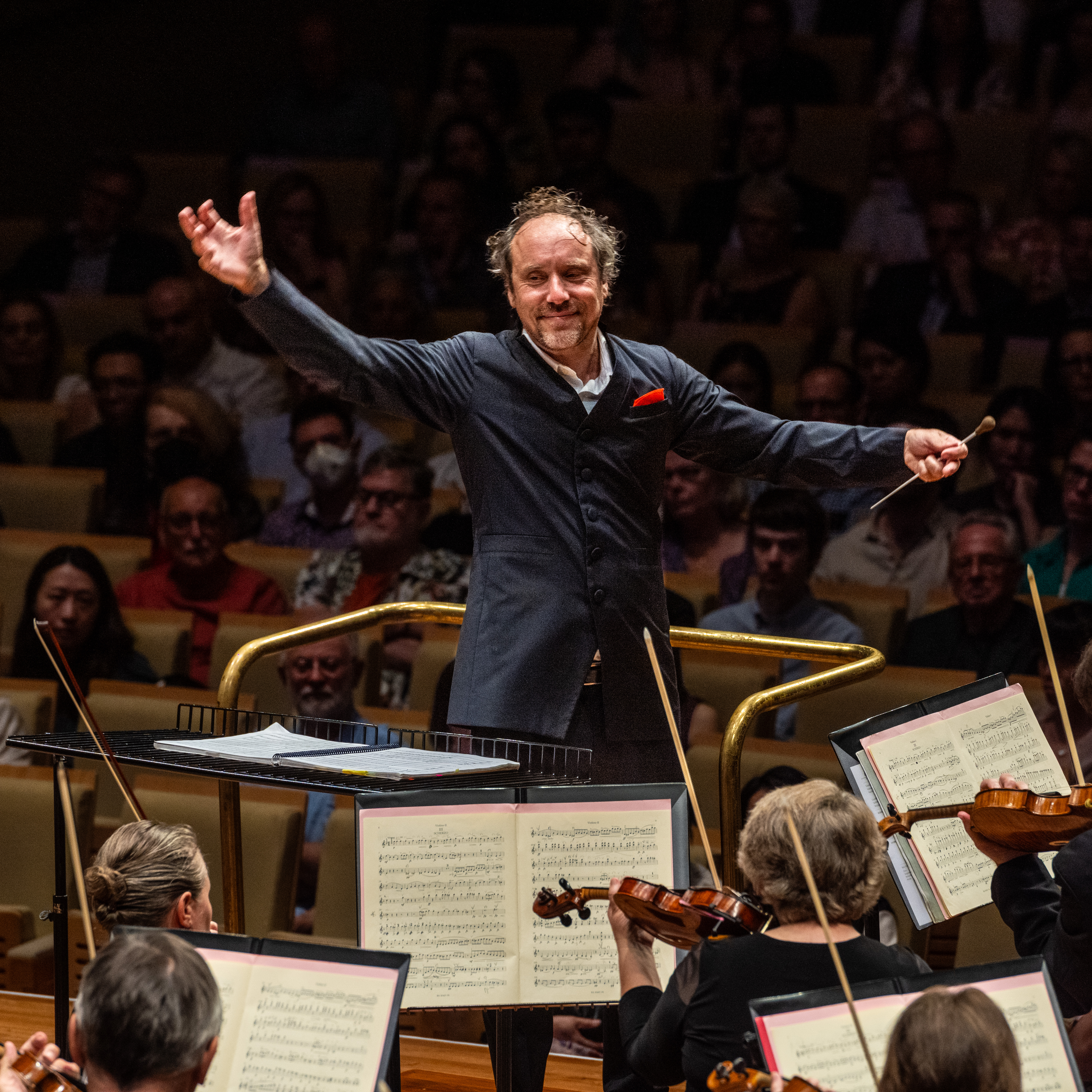
Following an interval, the concert concluded with Dvořák’s majestic Symphony No.7 in D minor, premiered in London in 1885 just four months after he began writing it. Inspired by Brahms’ third symphony, which he had heard in Berlin, Dvořák’s seventh symphony was commissioned by the London Philharmonic Society but retained the influence of his homeland of Bohemia. The symphony built from the ominous Allegro maestoso through to the steady, gentle blossoming of the second movement, Poco adagio, with the flute and violin calling back to each other. The third movement leapt back into high tensions with a vast and dramatic Scherzo: Vivace, and the symphony ended in the patriotic soundscape of the Finale: Allegro. This fourth and final movement reflected Dvořák’s pride in his home country and support of his countrymen’s political struggles, concluding with a Picardy third that ended the symphony on a triumphant major note – signalling a happy ending – where it was otherwise in a minor key.
Queensland Symphony Orchestra drew together a rich trio of works from Central European composers in Heartland Classics, welcoming talented guest artists Otto Tausk and Sergey Khachatryan to the stage alongside them.
Heartland Classics was performed at the QPAC Concert Hall from 13 – 14 October 2023.
 Backstreet Brisbane
Leave a comment