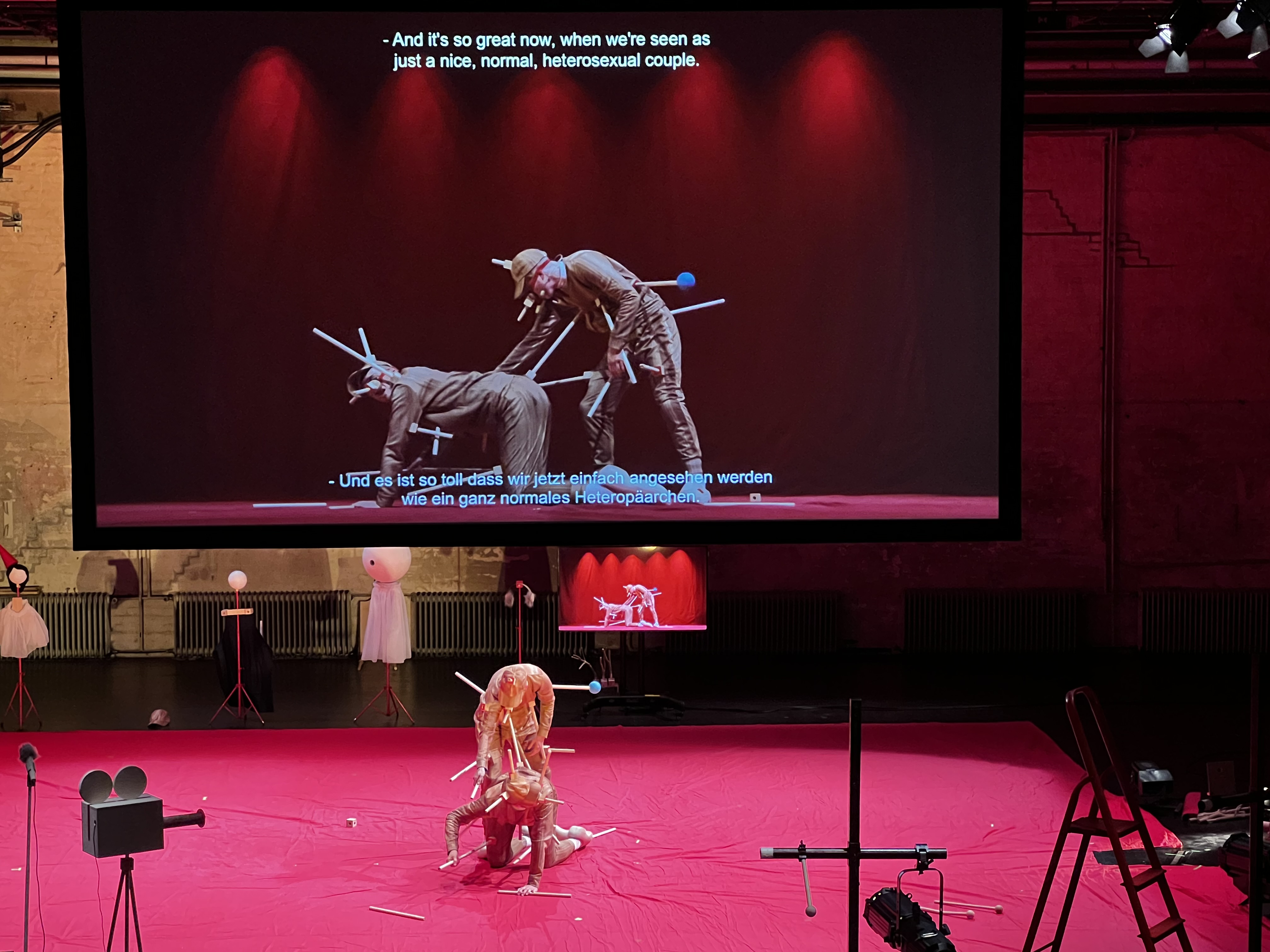
Content warnings: adult themes, full frontal nudity, coarse language, sexual references, depictions of sex acts, discussions of lived trans experiences.
The Making of Pinocchio had its world premiere as part of the 2022 London International Festival of Theatre but artists, lovers, and creative collaborators from Glasgow, Rosana Cade & Ivor MacAskill have been creating this work since 2018 alongside and in response to Ivor’s gender transition. Using the story of Pinocchio as a framework, this evolving and innovative piece of theatre blended film, theatre, puppetry, and more to explore love, creativity, and transformation.
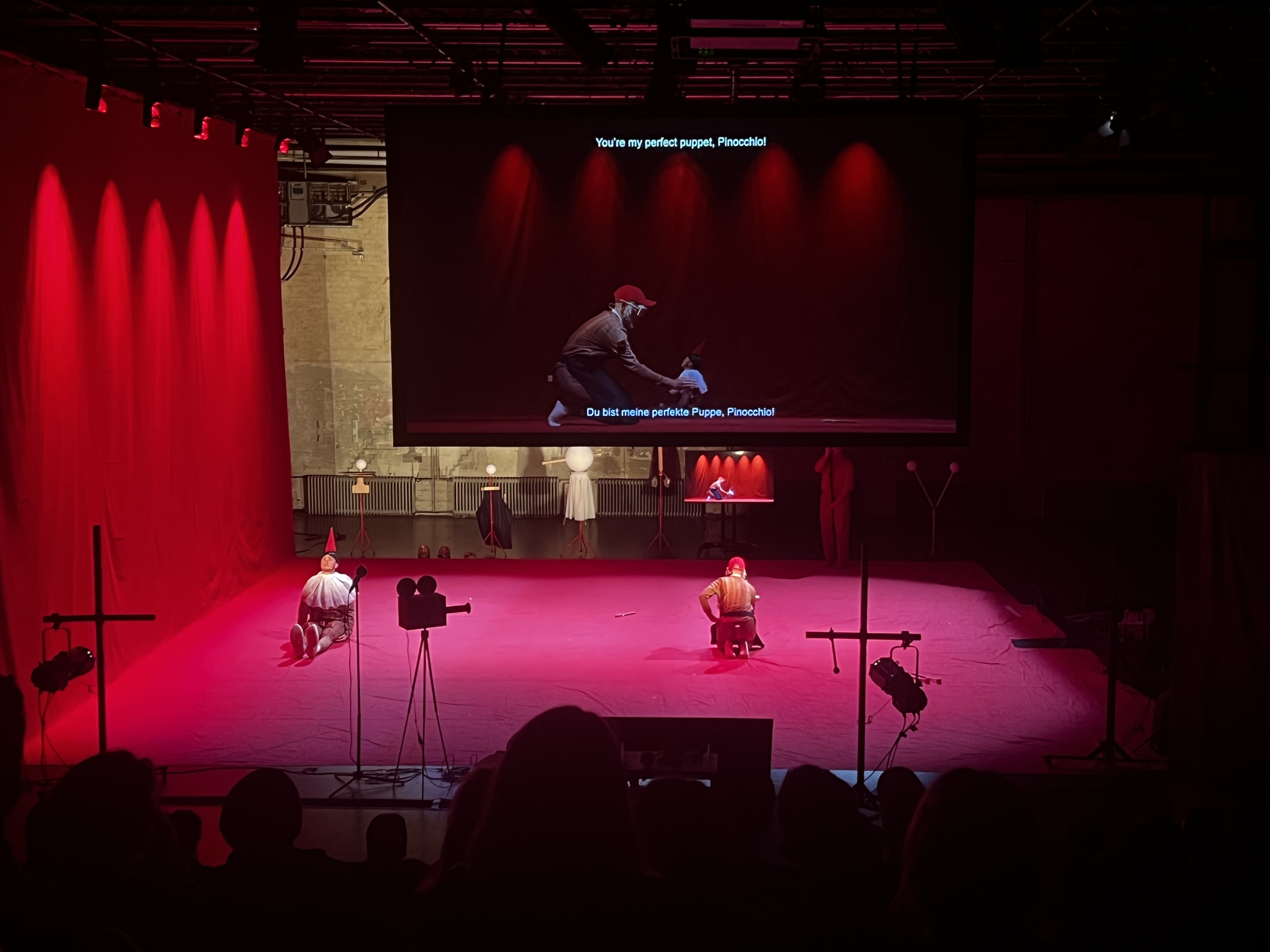
Through the shifting of perspectives and camera angles, Cade and MacAskill became smaller and larger, interacting with props and with each other. Jo Hellier and Tim Spooner were also onstage performing more minor, although critical, roles in shifting props and set pieces and adjusting camera angles; Spooner also designed the set, props, and costumes, and Hellier managed the cameras.
The theatrical and filmic elements of the show were completely intertwined; camera feeds from different angles, which could be seen across a number of screens on and around the stage, allowed for these shifts in perspective. There was an element of metatheatre to the performance, presenting the show as a work in development. Ivor and Rosana spoke to each other, and to the audience, in addition to playing out the story of Pinocchio in character.
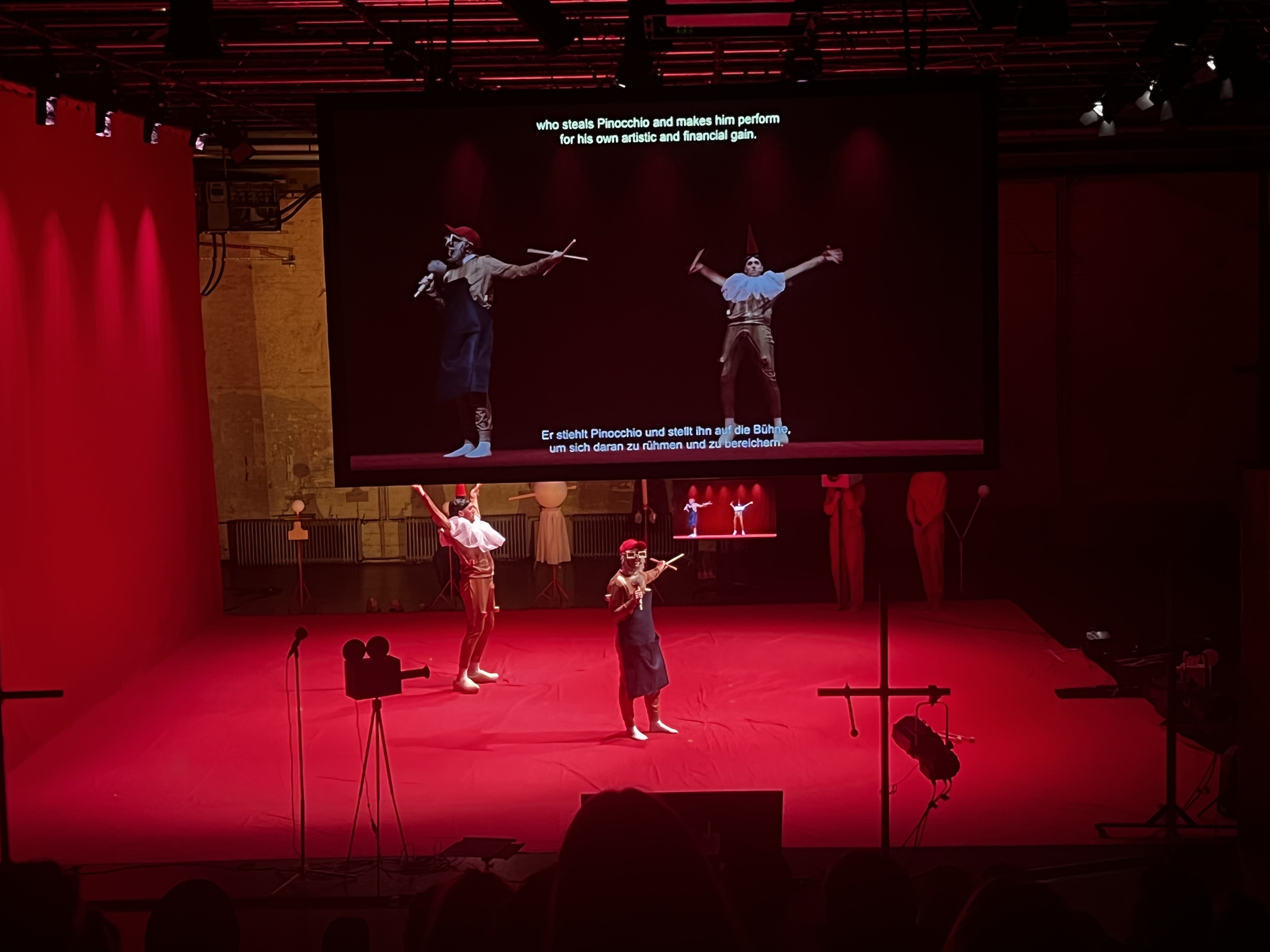
Narrated by a cricket in a box at the edge of the stage, the overarching narrative saw Ivor’s transition juxtaposed against Pinocchio’s journey to becoming “a real boy”, hitting each of the key plot points; Pinocchio’s creation by Geppetto, his visit to Pleasure Island, his transformation into a donkey, and eventually being swallowed by a whale.
In conversational dialogue, Rosana and Ivor as themselves offered different perspectives on the transition and its impact on their relationship. They also spoke about their creative process from inside their creation, mused on artistic integrity and getting caught up in the artistic process, and the emotional complexities of making a work about something so deeply personal.
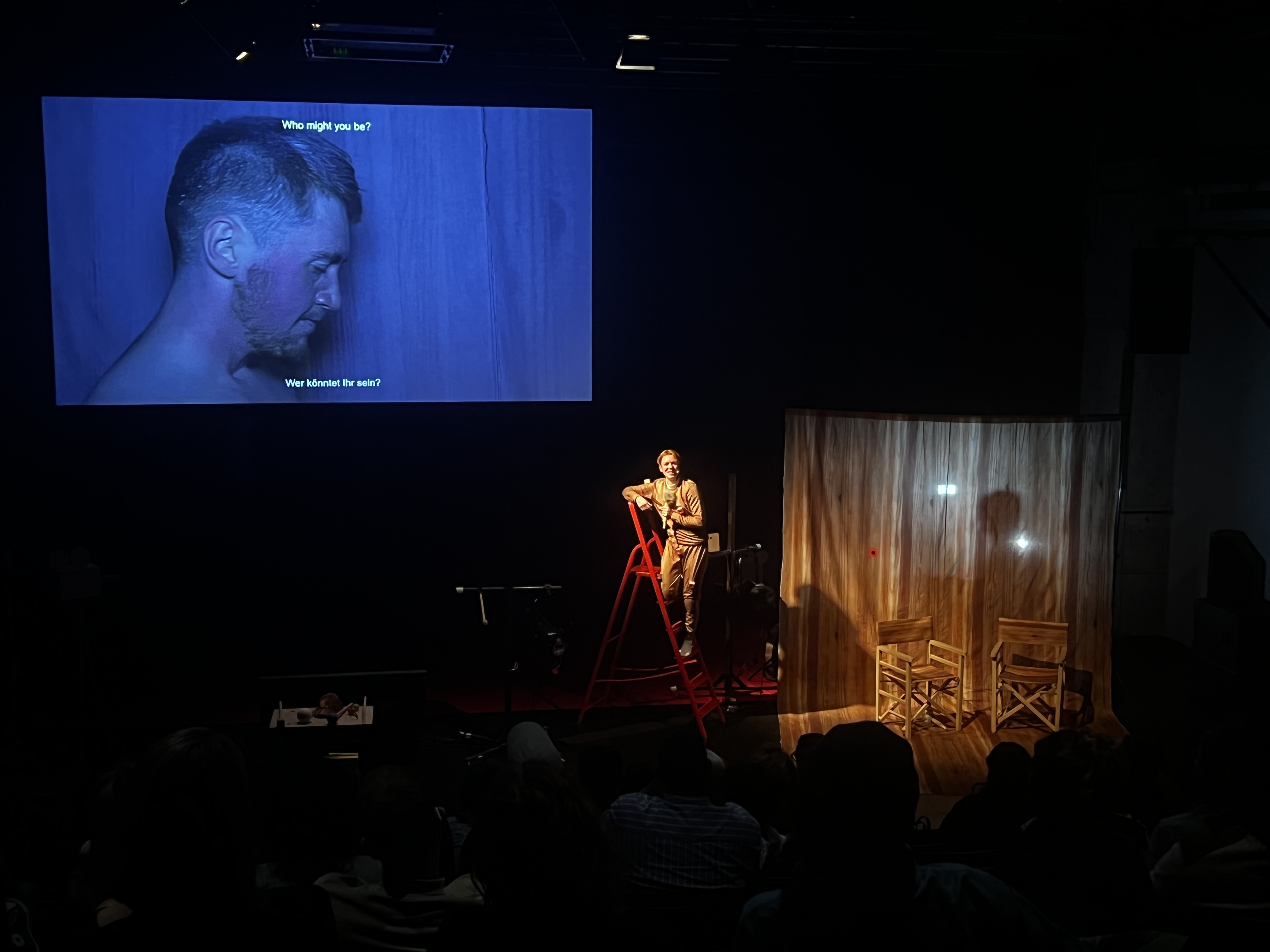
There was a focus on accessibility and audience care – the entire performance was captioned, with subtitles projected on the largest screen, and a pre-show voiceover emphasised that this was a relaxed performance, that the audience could leave or move at any time, and that a wellbeing practitioner was available onsite.
The Making of Pinocchio had many layers to peel back, and Cade and MacAskill managed all of these different levels with ease and enthusiasm. The Making of Pinocchio explored desire, sexuality, and intimacy; it reminded that transition is complex, individual, and non-linear, and that regardless of gender we are all in a constant and messy state of becoming ourselves. Pinocchio’s visit to the theatre, after selling his schoolbook to buy a ticket, honoured the theatre as a place of belonging and authentic expression. The Making of Pinocchio is a work about creation – creating theatre, and creating the self, and ideas of truthfulness in both. At the point in the fairytale where Pinocchio and his friend Candlewick are turned into donkeys, Cade and MacAskill simultaneously constructed the donkey and demolished the binaries of man/woman, gay/straight, real/not real.
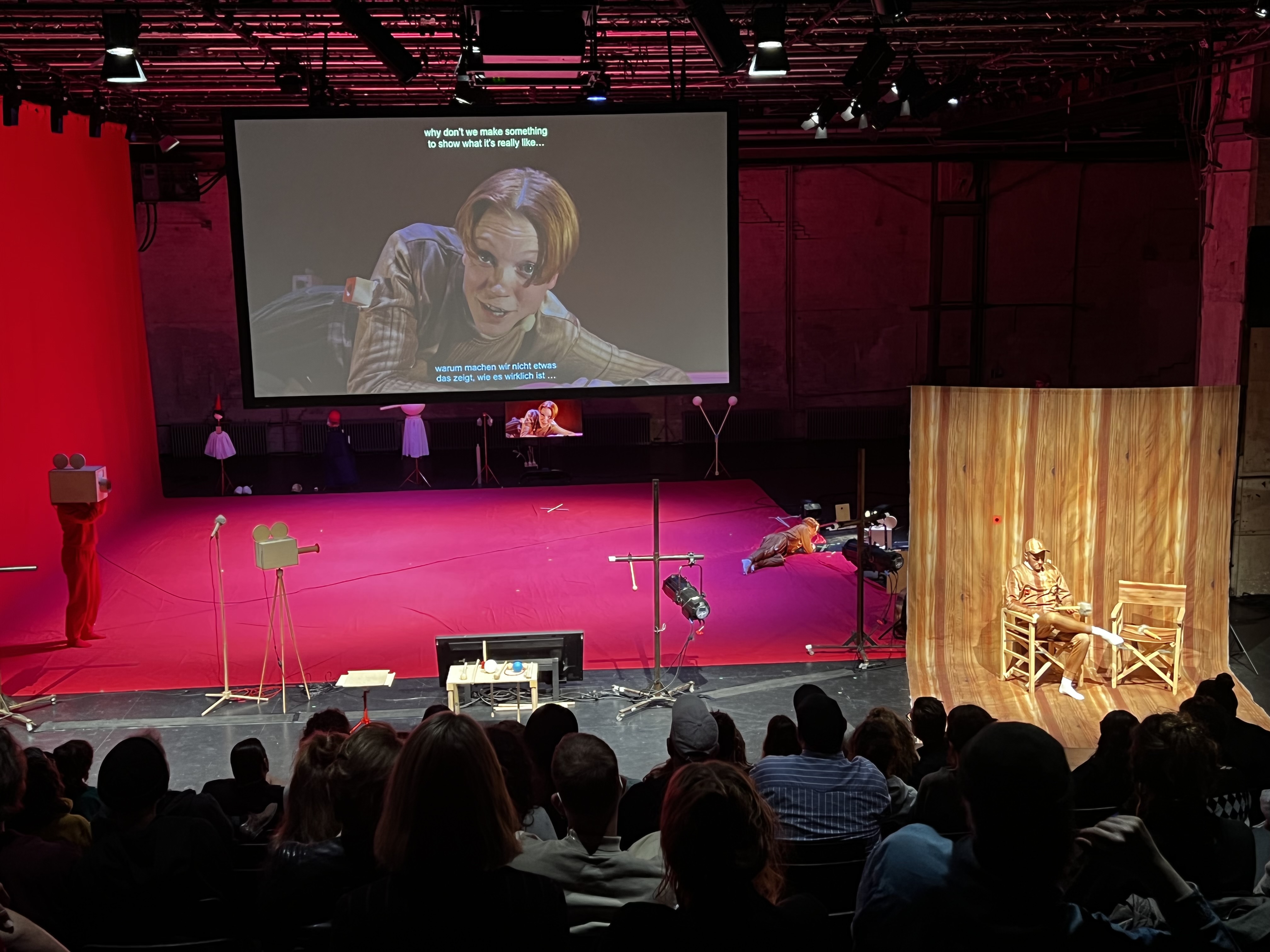
The show’s content veered from the serious – like the role of privilege in accessing gender affirming care, not to mention the hoops that individuals must jump through before making it to the long waitlist – and existential to the comically absurd and risqué, such as an erotic diversion featuring the festival’s Artistic Director as a Christian-Grey-esque character.
One of the most poignant moments in the work, for me, was Ivor singing a duet with a projected video of himself from the early stages of transition, juxtaposing his body and voice between present and past. Behind its carefully constructed work-in-progress framework, The Making of Pinocchio was a highly polished performance that could shift suddenly from laughter to tears.
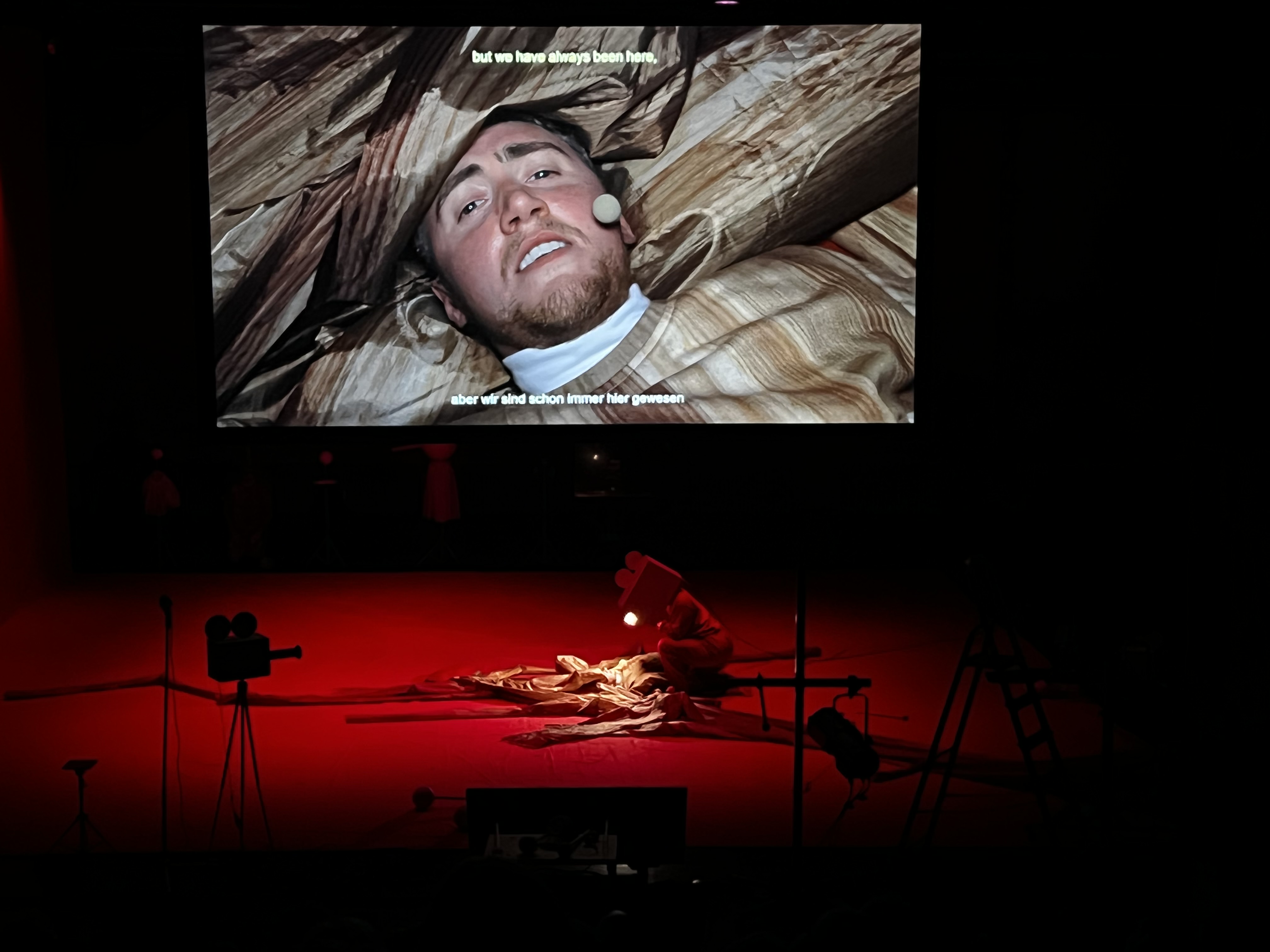
Cade and MacAskill told their story with vulnerability and humour, holding contradictions and complexity without offering an answer or a neat conclusion. The Making of Pinocchio was a tender and beautifully constructed theatre piece, framed within a well-worn story of transformation, about queer love and the ways in which we are constantly in the process of becoming ourselves.
The Making of Pinocchio was performed at the Powerhouse Theatre, New Farm, from 13 – 16 September 2023
For further information, visit the Brisbane Festival website
 Backstreet Brisbane
Leave a comment