
The sublime voices of the Choir of King’s College came from Cambridge to QPAC as part of their national tour. In their most characteristic formation, the choir accompanied by an organ, the performance was conducted by Director of Music Daniel Hyde.
This is the ninth tour of the Choir of King’s College, Cambridge presented by Musica Viva Australia. One of the most well-known choral groups in the world, The Choir was founded in 1441 by King Henry VI, who envisioned daily singing at church services at the King’s College Chapel. This remains the primary purpose of the Choir, which is comprised of 17 boys who become choristers at the ages of 8 or 9, as well as 14 undergraduate choral scholars and 2 organ scholars. The King’s College Chapel, the home of the Choir, took over a century to build and boasts the largest fan vault in the world and some of the finest medieval stained glass. Each year, the Christmas Eve service A Festival of Nine Lessons and Carols is broadcast to millions of viewers around the world and is the longest established international broadcast in history, celebrating 95 years last year.
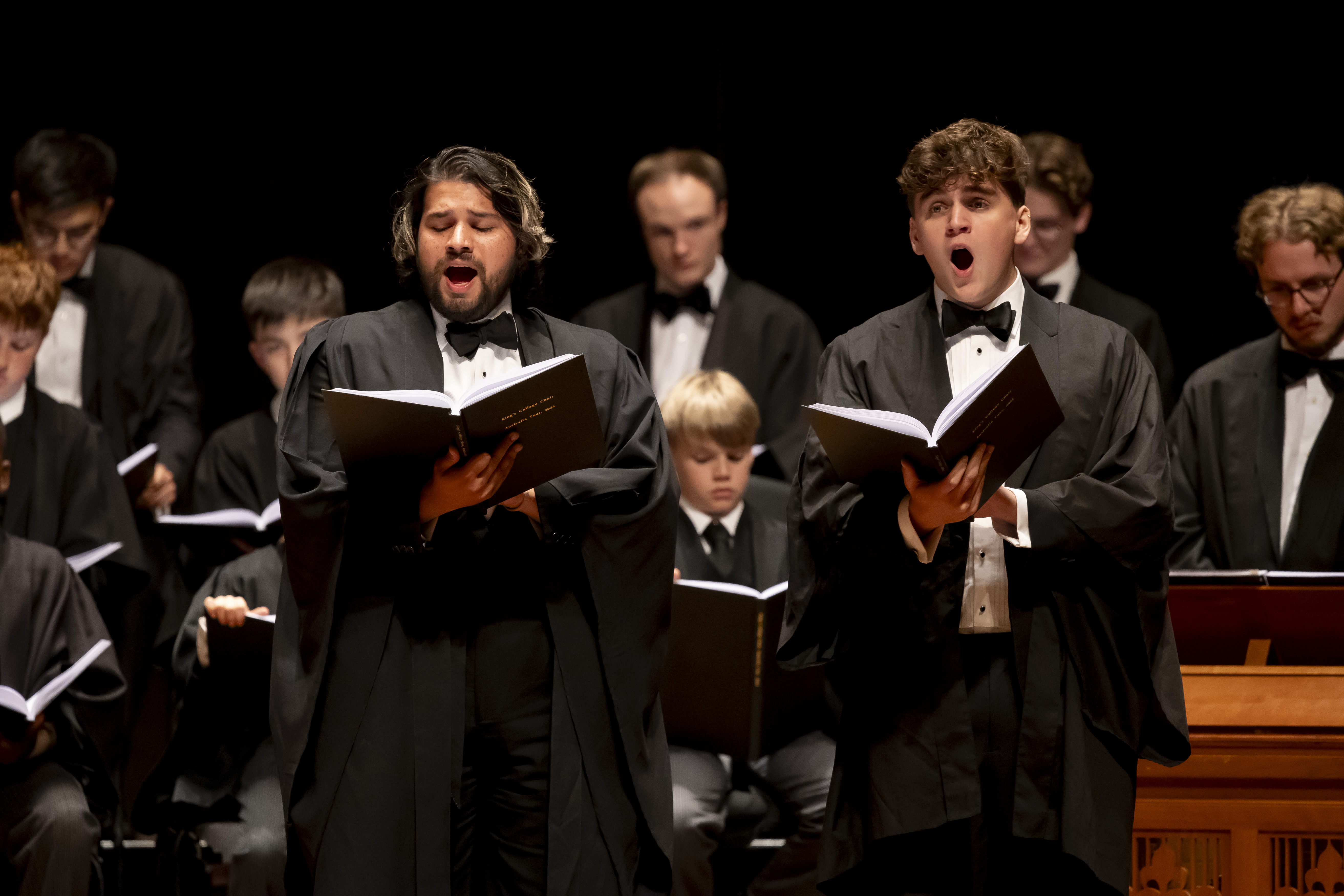
As part of their Australian tour, the Choir performed two (2) slightly different programs, depending on whether the concert venue had an organ. As Christmas music is such a big part of the choir’s annual traditions and performances, it featured strongly in both programs. This Brisbane concert was the first performance of Program 1, which included works from Handel, Messiaen, and Bainton that did not appear on Program 2, accompanied by Organ Scholars Harrison Cole and Paul Greally in QPAC’s Concert Hall.
The concert began with George Frideric Handel’s Zadok the Priest, composed for the coronation of King George II in 1727 and performed at every monarch’s coronation since then, including the recent coronation of King Charles III. The energetic, proclamatory piece would be sung right as the monarch was anointed.

A century before Handel composed Zadok the Priest for Westminster Abbey, Giovanni Gabrieli was composing music for an equally imposing church in Venice. Gabrieli was the principal organist and, after the death of his uncle Andrea, also the principal composer for St Mark’s Basilica. The Choir of King’s College, Cambridge performed his joyful and upliftingO magnum mysterium, with text drawn from the traditional liturgy held before dawn on Christmas Day and joyfully celebrating the birth of Jesus. Gabrieli frequently used a polychoral technique, with two or more choirs positioned on opposite sides of the church to give a stereophonic effect. Although Gabrieli did not invent the technique, during his tenure at St Mark’s it became strongly associated with Venetian sacred music.
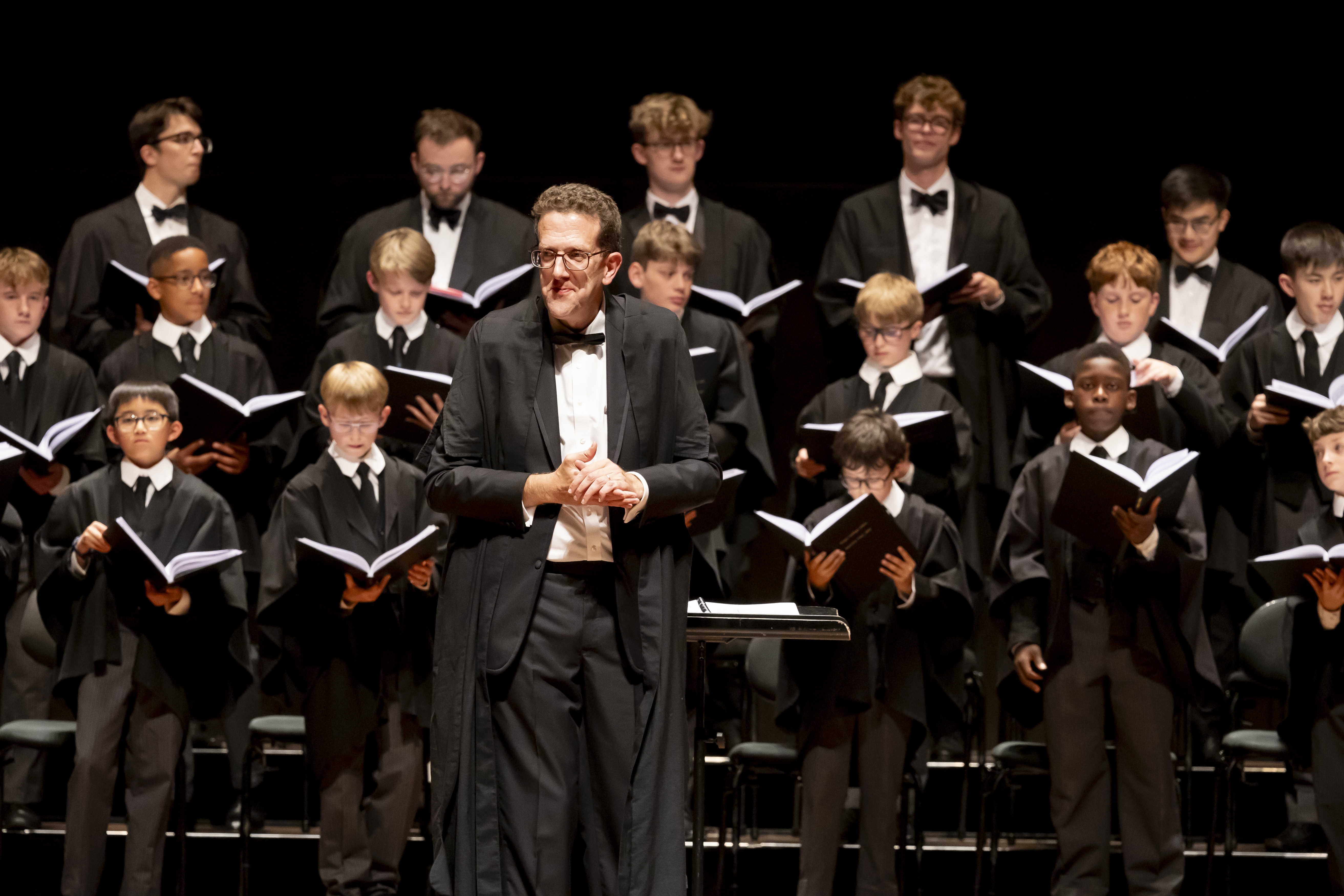
The concert continued with a solo piece for organ by French composer and organist Olivier Messiaen. Les anges – from the composer’s meditations on the Christmas story, La nativité du Seigneur – was full of frantic energy and felt harsh and erratic in contrast to the buoyant choral piecethat preceded it. The Choir then returned to O magnum mysterium, performing a gentle, lulling, acapella setting by American organist Morten Lauridsen from 1994, and then back to Messiaen with his bold, dramatic Transports de joie from L’Ascension. This was followed by Edgar Bainton’s And I saw a new Heaven, a setting of a text from the Book of Revelations that promises consolation to believers.

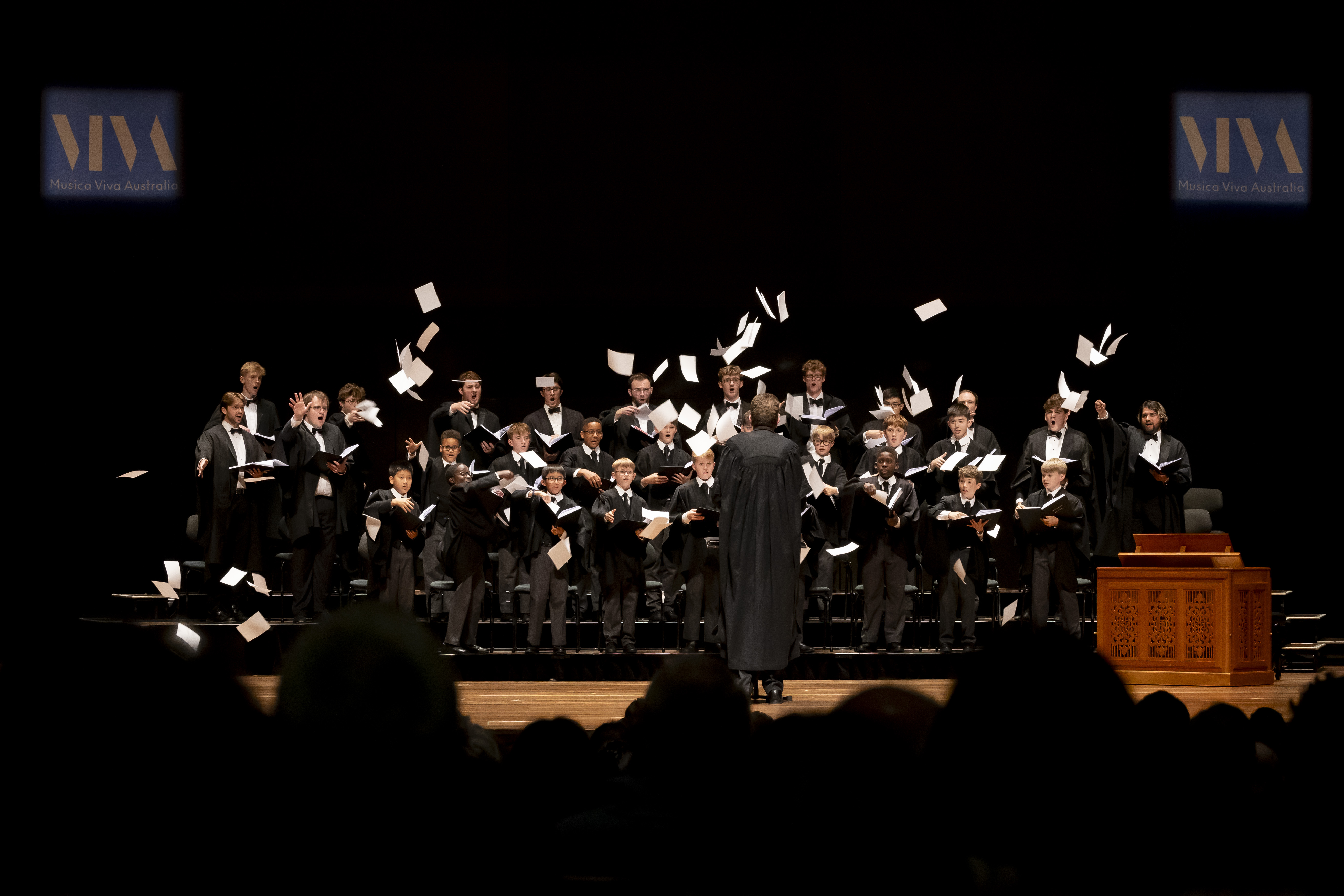
This tour also marked the world premiere performances of Charlotte, composed in 2023 by Australian artist Damian Barbeler after Judith Nangala Crispin’s poem On Finding Charlotte in the Anthropological Record. Crispin’s poem, which reflects on her search for her Aboriginal heritage, was awarded the 2020 Blake Poetry Prize and the piece was commissioned for Musica Viva Australia by Richard Wilkins. The layering of verse and voice was mesmerising, and the contrast between the quintessentially English medium and the colonial violence of the poem’s subject matter leant a further tension to the piece. Charlotte ended with the choir throwing their sheet music into the air, although this proved to be more of a distraction than a dramatic conclusion.
Following an interval, the concert finished with Maurice Duruflé’s Requiem. Inspired by Gregorian plainchant, developed as early as the sixth century, Requiem takes its thematic material from the Mass for the Dead. The many voices came together in a rich, cohesive sound, and it was incredible to witness the power of the Choir in this lengthier piece – they were an impressive force, without the voices ever seeming strain.

It was easy to forget that a majority of the performers onstage were children, although it was nice to see that individual expression was maintained with differences in stance, posture, and gesture. The Choir also performed an encore of two songs from the Evensong service, which is traditionally held near sunset and focuses on the singing of psalms and other biblical canticles.
Through the clarity and purity of their voices, which blended together in such an exquisite, expansive way, The Choir of King’s College, Cambridge conjured images of soaring stone ceilings and stained glass windows, and left a lasting feeling.
The Choir of King’s College, Cambridge performed for one night only at the QPAC Concert Hall, South Bank, on 25 July 2024 as part of a national tour
For ticketing and further information, visit the QPAC website
 Backstreet Brisbane
Leave a comment