Content warnings: Adult Themes, Mild Coarse Language, References to Sexual Assault, References to violence, Strobe Lighting Effects
Dance Masala’s contemporary dance theatre work ITEM is both a love letter to and an indictment of the multibillion-dollar institution of Bollywood film, as joyful and energetic as it is engaging and intellectually provocative.
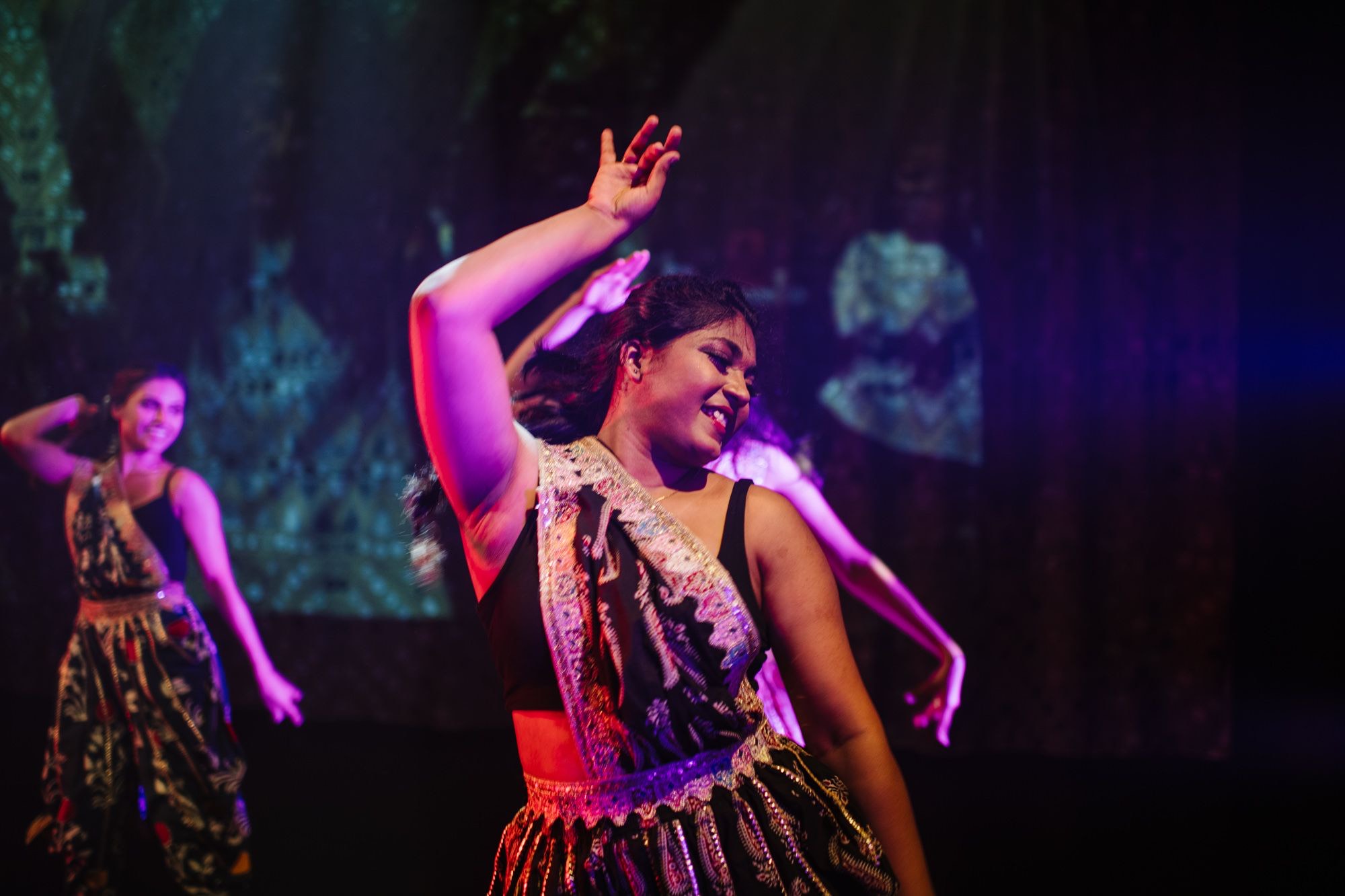
Directed by Lisa Fa’alafi, ITEM was performed by the Nakhre Crew of Brisbane-based Bollywood dance company Dance Masala – Angela Nair Skinner, Ashwin Singh, Drea Lam, Janaki Vishvakarman, and Mugdha Khatavkar – with choreography by Drea Lam with Angela Nair Skinner. Combining dance, theatre, video, and spoken word, ITEM covers significant ground and finds impressive depth in only 60 minutes, snapping from one key theme to the next but leaving nothing unfinished.

A portmanteau of ‘Bombay’ and ‘Hollywood’, Bollywood refers to Hindi cinema and the film industry based in Mumbai, with the most popular films often being musicals but also blending comedy, romance, drama, and action with their musical numbers. The show’s title refers to the ‘item number’ of a Bollywood film, a musical number which often holds little importance to the plot and features an ‘item girl’ – an attractive and entertaining female performer who may not otherwise appear in the movie. ITEM uses this as a play on words, with the dual meaning of ‘item’, in its exploration of the objectification of women in Bollywood.
Not being very familiar with Bollywood personally, I’m sure there were references or parts of the performance that went over my head but may be more meaningful to fans of the genre. Having said that, there was no need to have a certain level of Bollywood knowledge to enjoy the performance and engage with the ideas in ITEM.

The work spoke to the joy of Bollywood – the costumes, the music, the romance, the sweeping stories – but also the negatives of the industry: colourism, nepotism, misogyny, and a focus on thin, white, straight actors and stories, with women over 30 disappearing from the screens. Video interviews collected over a number of years showed women speaking to their own experiences – and love-hate relationship – with Bollywood, from the sense of connection and representation that it gave them to the damaging impacts of only seeing fair-skinned actresses cast in lead roles (and then also advertising skin whitening creams).
The dancers of Nakhre Crew brought a vibrant presence to the stage. Group choreography was performed with earnest energy and enjoyment, interspersed with a series of pieces performed in smaller groups. The audience was also engaged in the performance directly, repeating Hindi words back to the performers and learning a few seated Bollywood dance moves.
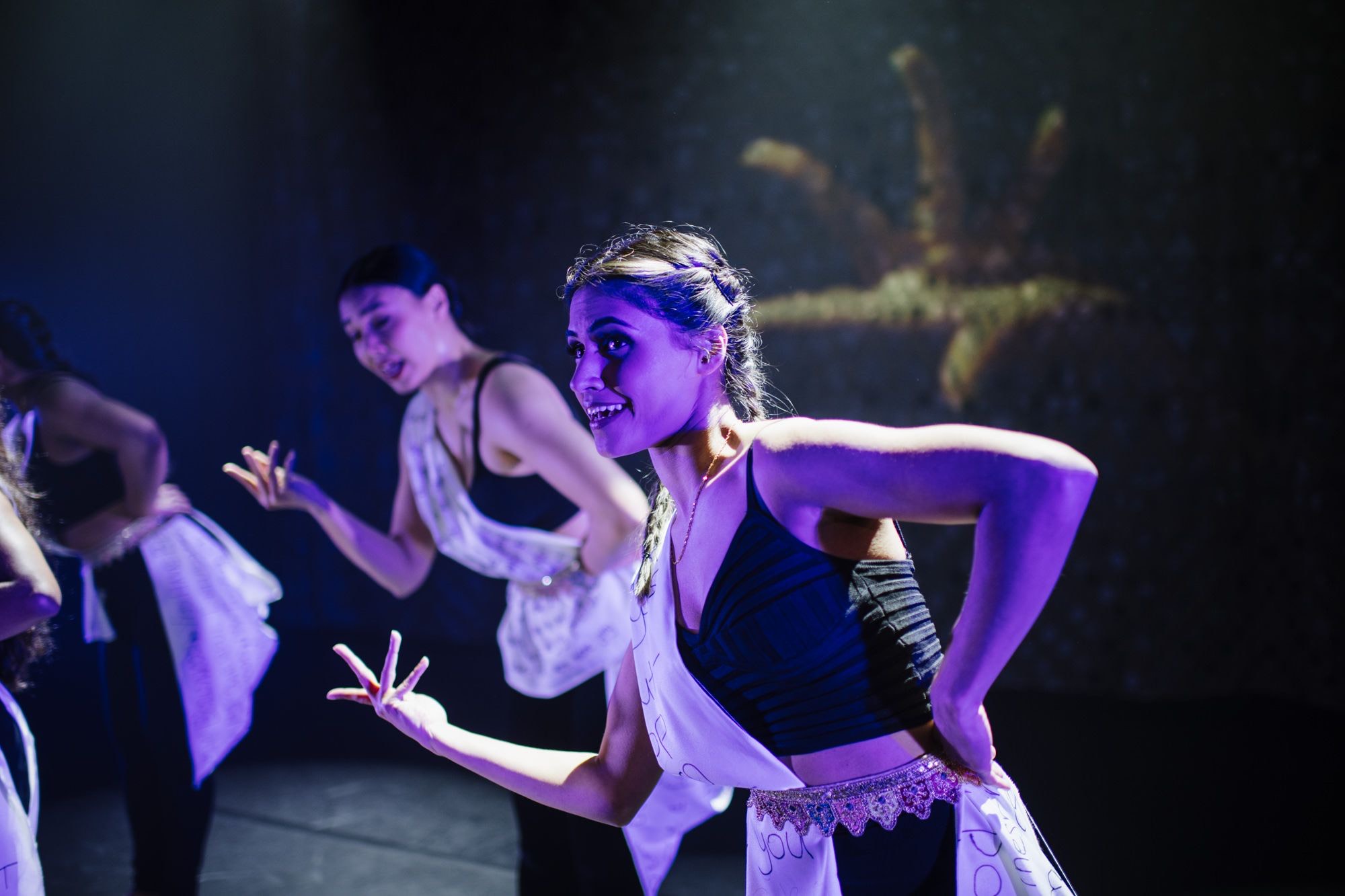
ITEM challenged and satirised the tropes and stereotypes that women in Bollywood film – characters, actors, and fans – are subjected to, and the ways that these impact on cultural and social norms. Naturally, there is some overlap with issues in Hollywood such as the veneration of whiteness, thinness, and youth, the lack of diversity in casting, and the misogyny and homophobia that limits both opportunities for performers and positive representation for audiences.
ITEM spoke to our complicated relationship with media, especially those that we have a nostalgic connection to, and how we can continue to love them while also untangling the harm they can cause. It highlighted the impact of platforms like TikTok, which offer other avenues for connection and sharing but also create comparisons, unrealistic expectations, and warped self-image through the use of filters and other alterations. The show also touched on heavier themes around sexual assault, cycles of violence, toxic masculinity, and the normalisation of abusive or manipulative behaviour through media, and the way that patriarchy causes harm to everyone, regardless of gender. In one of the video interviews that played as part of the performance, founder and director Drea Lam asked herself whether Dance Masala Bollywood Dance Company was perpetuating these ideas in any way, and these questions were the impetus for creating a work like ITEM.

Lighting design by Steven May was excellent, bringing a fresh creativity and colour to the stage that highlighted the dancers and added to the overall aesthetic without distracting from the performers. The projection of video interviews and bold lettering was visually effective, although the captioning was not always correct, and the patterned backdrop occasionally made the video subtitles difficult to read. The performers changed through an impressive array of costumes in different styles, colours, and textures throughout the performance and a large number of props, from chairs to electric gardening tools, were also used onstage.
ITEM engaged the audience on physical, intellectual, and emotional levels, being both an earnest celebration and provocation of the iconic institution of Bollywood.
ITEM was performed at Metro Arts’ New Benner Theatre from 17 – 19 August 2023.
For ticketing and further information, visit the Dance Masala website
 Backstreet Brisbane
Leave a comment