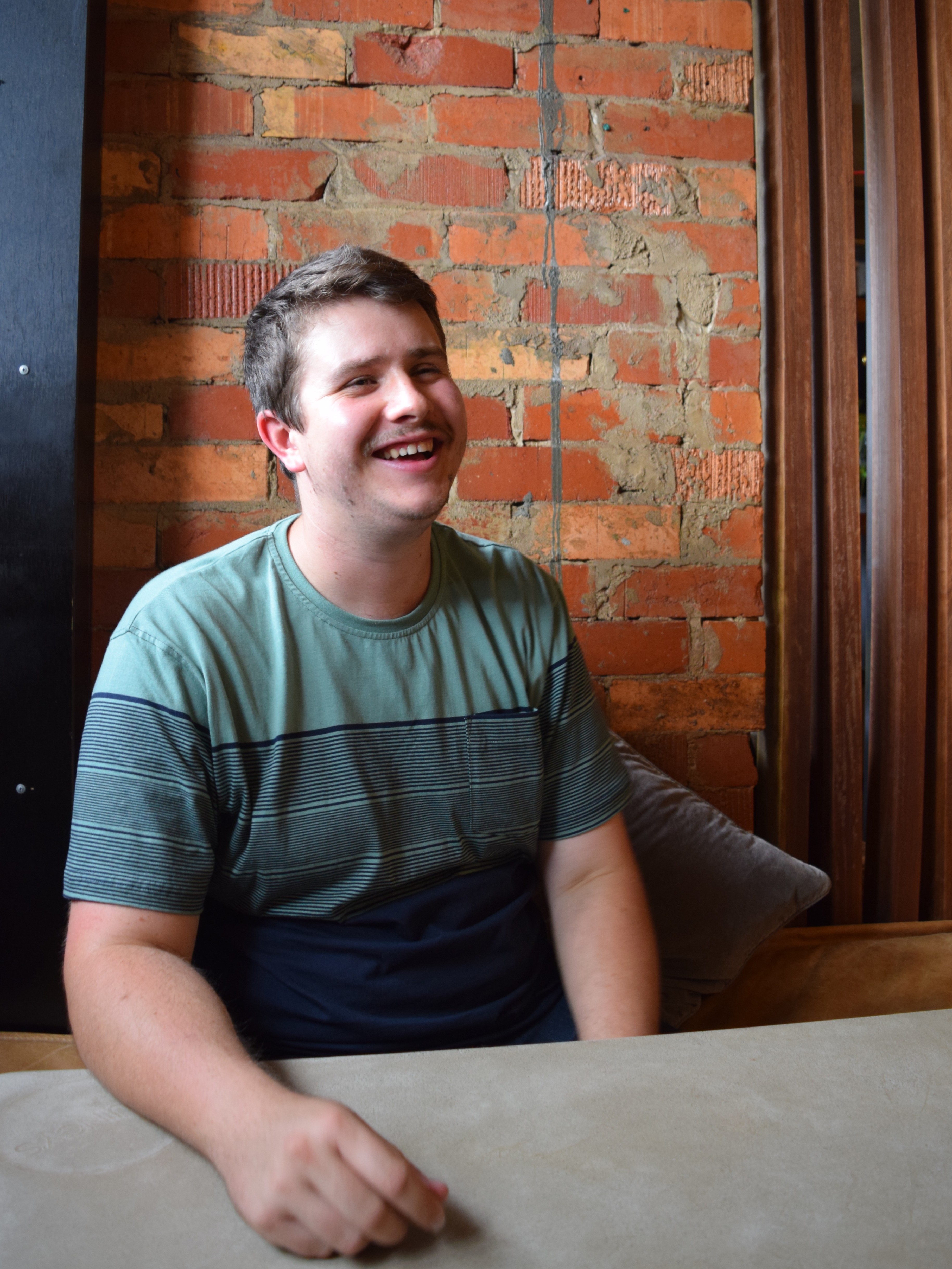
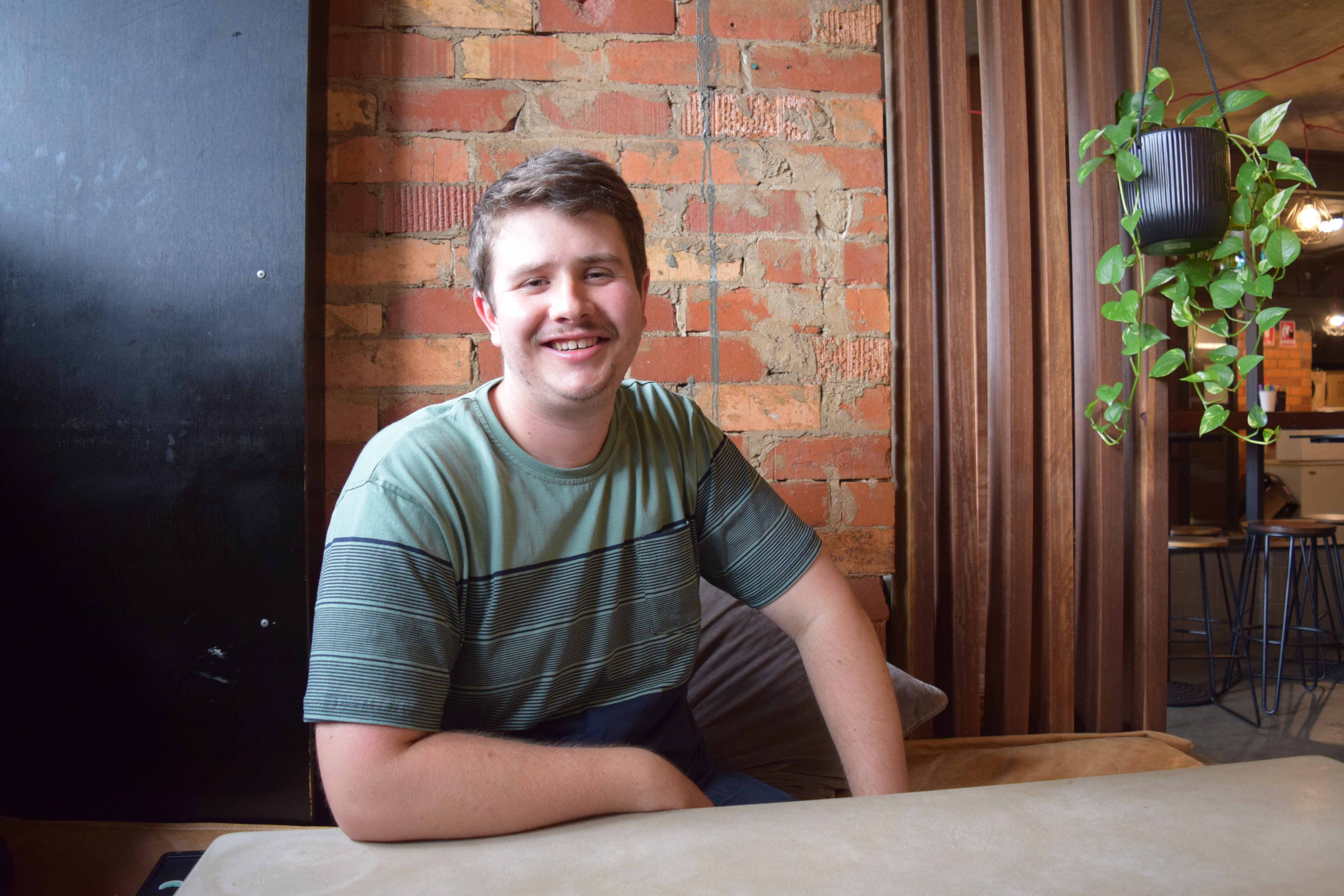
Ahead of Observatory Theatre’s 2026 season launch, I sat down with Artistic Director & Producer Lachlan Driscoll to discuss Act 1 of the programming, nurturing new stories, and taking Observatory and audiences to new heights and new worlds while sharing distinctly local stories.
What will 2026 look like for Observatory Theatre?
In 2026 we’re really tapping into…what is an observatory? For us, it’s a place to imagine, create, explore, discover. We do that through supporting new stories, new perspectives, new voices. You use an observatory to look at planets and worlds. A play or a show is a world, when you go and see it on stage, its own contained universe. It’s a microcosm of life.
In 2026, we invite you to come on that journey with us, to come and discover these worlds with us, these stories.
What kinds of stories can audiences expect in the coming year?
So, the season! 2026 is a year of new works by emerging writers, all new works, which we’re very, very proud to do.
It kicks off with Dead Bat on the Night Shift, which we’ve been developing through our Telescope program. Telescope supports emerging playwrights; we commission new stories and we work with them over several years to bring the work to life, then we stage it in a premiere production.
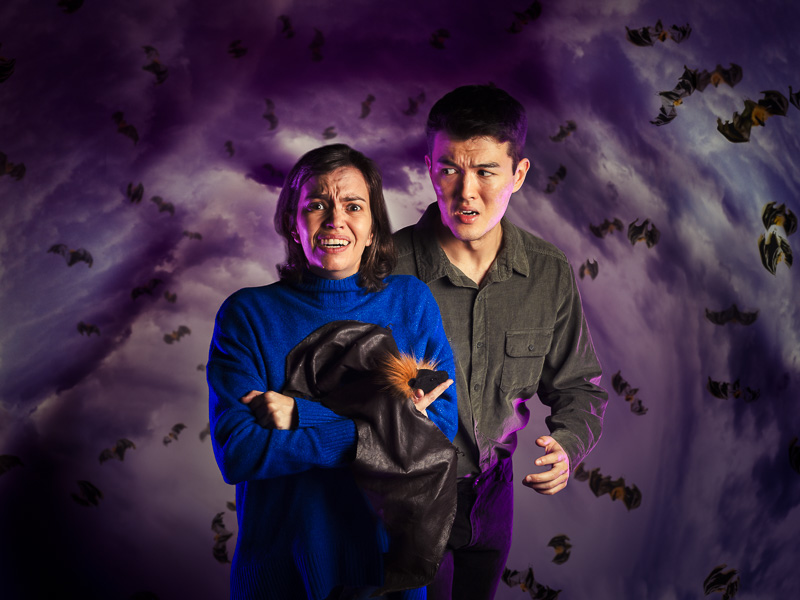
Dead Bat on the Night Shift is premiering at PIP Theatre in August. It’s written by Samantha Hill, who is an amazing early career writer. It’s a story about a woman called Sloane who has been working for all her life, often in low-paid jobs. She works at a call centre, she doesn’t have much work-life balance, she works at night, hence the title. She’s feeling quite desperate in her life and she wants a change…and she thinks that the way to do that is to kill her boss, to essentially cut off the head of the snake and set herself and her colleagues free. She’s a little bit of a martyr in that way, or she thinks she’s going to be. It’s a dark comedy, it is very funny and it’s got a bit of a How to Get Away With Murder approach to the story. It’s quite a thrilling, suspenseful story, of this woman who goes to extreme lengths to get herself out of a situation.
I’m directing that and it’s got a really solid cast. We’ve got Clarise Ooi, who was nominated this year for the Bille Brown Award, a phenomenal actor. We’ve got Ellen Hardisty, hilarious, a very powerful performer. Claire Pearson, who was recently in A Midsummer Night’s Dream at QSE, and others, a stacked lineup of performers. Fantastic newcomer Jaxon Norman and also Jenna Murphy, recently in Act/React’s Importance of Being Wasted. A very funny person!
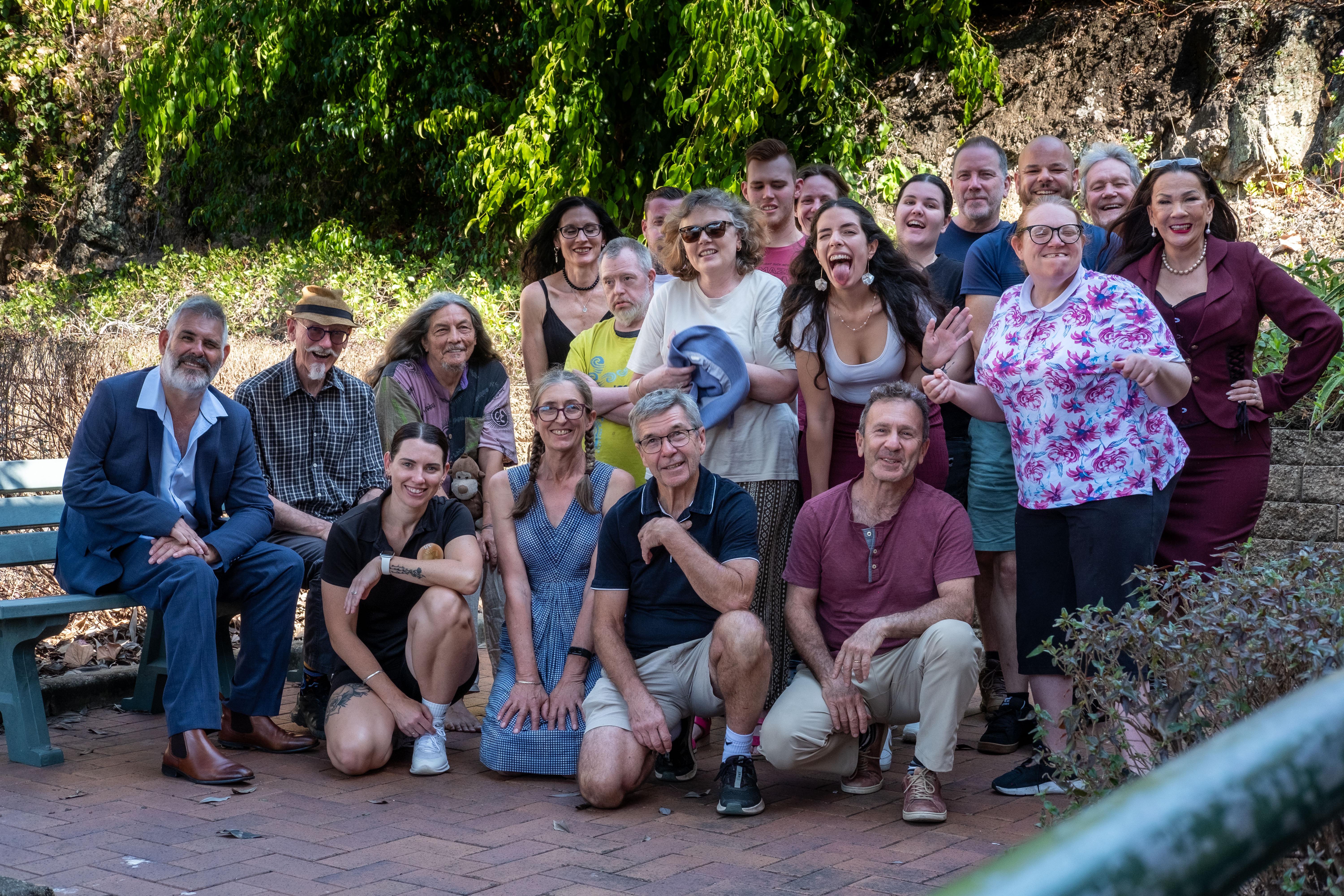
The next show is kind of a co-production, you could say, with the House of Soul choir and a new company called CAST Performance. They work with people from all walks of life to share their stories and give them the opportunity to take to the stage and be seen.
It’s a musical, actually, and it centres on the House of Soul community choir in Brisbane. They’re a real choir, they’ve been around for years and actually the Dalai Llama visited them in 2012 on his Happiness Tour of Australia, [they performed] some of their songs for him. They’re quite a significant community choir, they write their own songs and music and it’s a sanctuary for people of all singing levels, backgrounds, cultures, identities, and abilities to come and have fun, have a sing, express themselves. It’s truly a choir for everyone. It’s a low pressure, very joyous environment.
This show takes their music and weaves a story through it. I’ve been writing it in collaboration with all the members of House of Soul, some who’ve been there for many years, developing the story together and how they want to share their rich history and be represented on stage. House of Soul and CAST approached Observatory, and we’ve been working together to create this show. One of the band’s founders, Brian Procopis, is a talented storyteller and created the original idea, then it was passed down to the choir, and then I came into the picture, so it’s a true collaboration. It’s called The Talent Scout, and it’s about a booking agent who joins the House of Soul and rediscovers his own love of music. It’s a story about how the best talent is being ourselves, and emphasising music as a tool to express identity. It’s going on at the Brisbane Powerhouse in March next year, a one-night-only event, proudly sponsored by Brisbane City Council in partnership with Communify QLD. It’s a great celebration of music, community, and the power of song to unite us all.
So that is Act 1, those two shows – it’s a year so big we’ve got to do 2 parts! We’re just waiting on some outcomes before we can properly announce the rest. So, stay tuned.
And you’re also commissioning more new works for development?
We’ve commissioned 3 new works for 2026, which is a record for us.
The first one, which is a pretty significant commission, is from a writer called el waddingham, and they’re writing a work based on a really famous sci-fi novel called The Left Hand of Darkness by Ursula Le Guin. She was an American writer, iconic, trailblazing, really paved the way for female sci-fi writers in what was a very male-dominated genre. She wrote one of the very first fiction novels about gender, and questioning gender, and that’s what The Left Hand of Darkness is. It was very groundbreaking in 1969. The novel imagines a planet of androgynous people, and she talked about how the novel is a thought experiment: what would happen if we removed gender in a society of people, how would the world be different? It’s a fascinating hypothetical. Obviously, it questions gender norms and what would happen if we did live in a world where gender wasn’t everything. It’s a story that looks at gender fluidity and trans identities.
So, this commission will be an adaptation of Le Guin’s novel?
Correct. And the wonderful thing about Ursula, which is why we thought it had such great grounds for an adaptation, she was one of those writers who was very open to editing her work, very open to criticism and feedback. She actually released several essays after the novel was written, responding to people who found some of the representations of gender problematic. That dialogue between an audience and the writer, or the source material, we thought was such an interesting thing to explore. We’re going to take Ursula’s creative license to see what we can do with it.
Will this adaptation be staged by Observatory?
It’s just being developed next year, but will be on stage in the next few years, so keep an eye out. As with all of these works we have in the pipeline, there will always be some form of showing or reading at some point. Hopefully by the end of the year el will have a rough first draft, so we’ll then be looking to head into creative developments and gather feedback.
The next work in development is called Paid!, and it’s by a disabled writer and artist, Alexandra Ellen. It’s a work about ableism, which can be defined as discrimination against disabled people in favour of those who are non-disabled, and how those attitudes creep into the everyday. Paid! is about a person who lives with disability and their support worker and sometimes overbearing family. It’s about their relationship, figuring out how to work with each other, how new ways of listening, supporting, and collaborating can emerge. It’s an important story to share, and Alex is a fabulous up-and-coming writer in the scene. I’m excited to be sharing these stories which we don’t see enough of, addressing that gap and challenging assumptions, expectations, and biases.
The last work is called Wasted and it’s by Annabel Gilbert. It’s a work about food waste and climate change and cost of living and homelessness, which are at an all-time high at the moment. In Brisbane, as we head towards the Olympics… I think we could expect those things to increase as the city starts to prepare and accommodation becomes more expensive and taken up. I know people have been moved out of places like Musgrave Park, just moving them on, and that’s quite concerning. So, I think it is a very relevant story today and possibly will only become more relevant in the next few years, which is when we’ll be staging the play.
Wasted follows a night at a function centre. There’s a lavish party being thrown, lots of food, lots of it will be going to waste. It’s a multi-protagonist story, so we learn about wastage and the urgency of it through different perspectives and roles and classes of people. I think it will be a very poignant, hard-hitting story. In development so far, we’ve been toying with possibilities of it being a performance artwork. We’ve talked about how we can involve the audience, there’s some exciting possibilities that may take it beyond the realms of a sit-down show. We’re pumped to explore!
Are all of these works being developed through the Telescope New Writing Program?
Paid! and Wasted are being developed through Telescope, which is Observatory’s highest level of support. It’s for emerging writers who are starting to come through, who appreciate just a bit more support. We organise creative developments, readings of their work, meetings with dramaturgs and creative associates who feed into the work, we organize all of it. It is significant level of support.
For commissions like The Left Hand of Darkness, it’s a bit more independent, a bit more free for the writer, which is sometimes all they need. It does depend on what the writer wants, and that’s another thing about Observatory: we support all writers and artists, but always within their process and how they like to work and what they need.
I imagine that is quite a unique opportunity, to have that balance between support and flexibility.
I think it’s conducive to a stronger finished piece if the writer has been given freedom to dream, to take their time, to work how they like to work. Life is too short to be hitting milestones and stressing and popping out drafts every 2 or 3 months. That’s for the professional mainstage companies. Observatory has always been a free and creative space, still with an emphasis on rigour and doing our best to make a really strong end show but, to use a cliché, it is about the journey. It really is. I think it’s that forcing that’s not helpful creatively.
It sounds like a big year ahead, and that’s only Act 1.
We’re hoping to launch Act 2 in March. There will also be some very exciting things in that. I can’t share it now, but seriously, there’s some really big stuff going down.
We’ve just published some of our past works, too, and those are available to purchase through the website.
Are there plans for more publications in the coming year?
Not so far, but that is something we are offering to writers, that we can publish their original works that we work with them on. It shows our commitment to emerging writers, I think, to give them that extra level of support. That’s something we want to do, so that is a possibility always.
You’ve spoken about the ways that Observatory supports artists – how can artists get involved with Observatory?
Always, lots of ways. Have a look at our website, send through your details. We’ve always got lots of works on the go. Too many, sometimes [laughs], but we love it, that’s what we do, that’s why we exist. We’re always looking for people to be part of creative developments and workshops, whether as an actor to read the new scripts or as a sounding board, or technical people like designers to lend their perspective and inform the works that we’re doing. We do auditions every year, so actors can get involved that way.
On the other side of the coin, how can audiences support Observatory and independent theatre more broadly?
Come and see the show, obviously. That’s not always possible, so even if you see a show on social media or a flyer and think “oh, my daughter likes arts”…even if it’s the vaguest connection, share it with them. That’s how word gets around. Another thing that we do now, for all of our shows, is we usually have a Q&A session, so come and participate in the conversation.
There’s always amazing things happening at QPAC and on mainstages, but I think audiences would be surprised by what’s happening on the smaller stages. I think people should take a chance, and I think people would be blown away and surprised by all the activity. There’s a really thriving scene.
Is there anything you are especially excited about in 2026?
Supporting these stories, some really ripper stories. Nurturing them and helping them grow and then sharing them with audiences. A lot of the stories this year are about Brisbane, and about Queensland, and the people who live here, which is pretty exciting to share local-specific stories.
The kind of stories I wanted to share this year are urgent and relevant, but also stories that remind us that we are part of a community. We’re all in this together. We’re all on this planet together, and hopefully that makes us feel less alone. So, harking back to the idea of a planet and discovery: come with us, journey with us, and let’s do it together.
You can read more about the 2026 season on the Observatory Theatre website
Purchase digital or hard copies of Observatory Theatre original works via the shop
 Backstreet Brisbane
Leave a comment