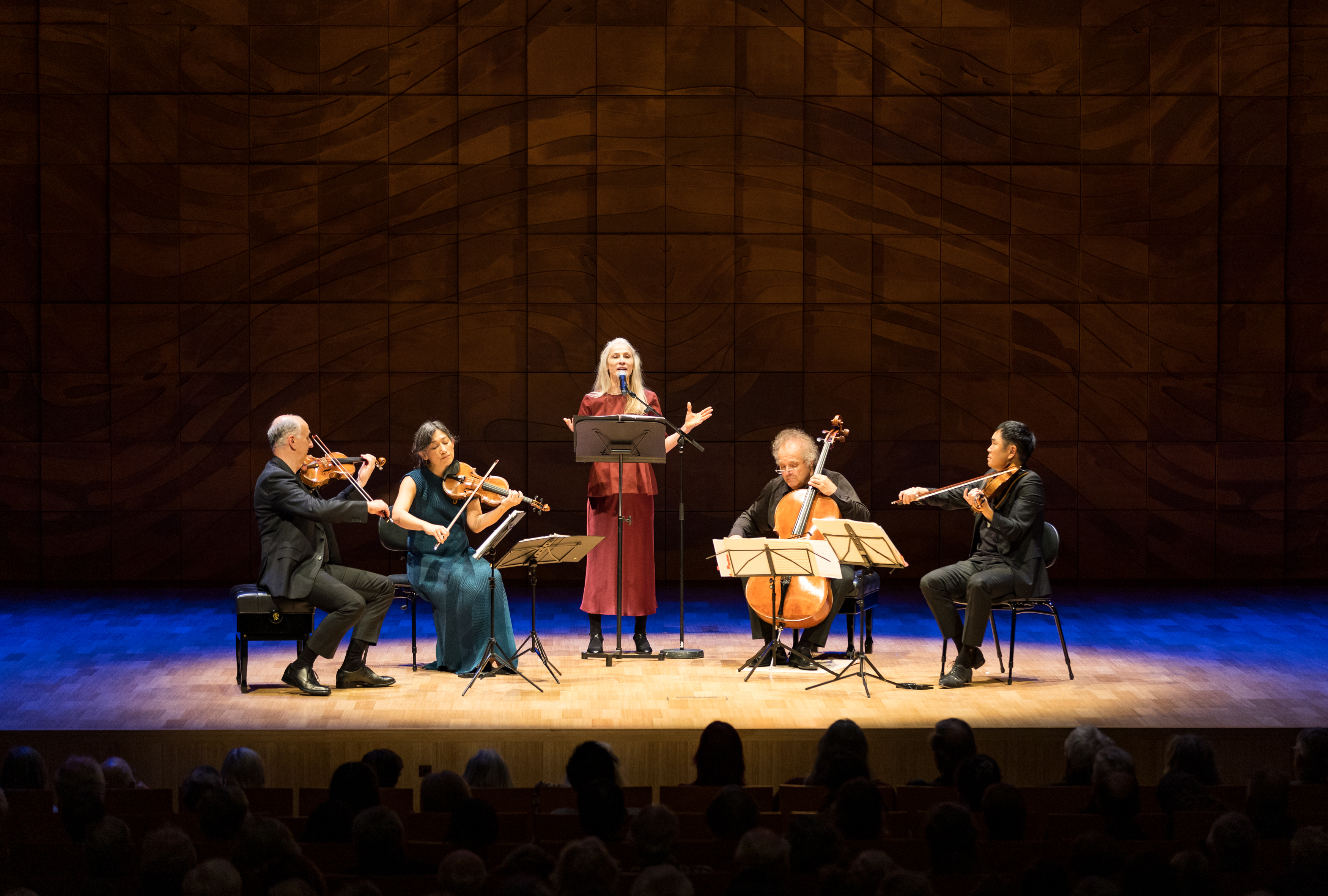
Takács Quartet with Angie Milliken toured Australia’s major cities throughout August, celebrating 80 years of Musica Viva Australia and 50 years of the Budapest-founded, Colorado-based Takács Quartet. The concert included a brand-new work by Cathy Milliken for narrator and string quartet, inspired by the poetry of Berthold Brecht, and this world premiere was framed by Haydn and Beethoven.
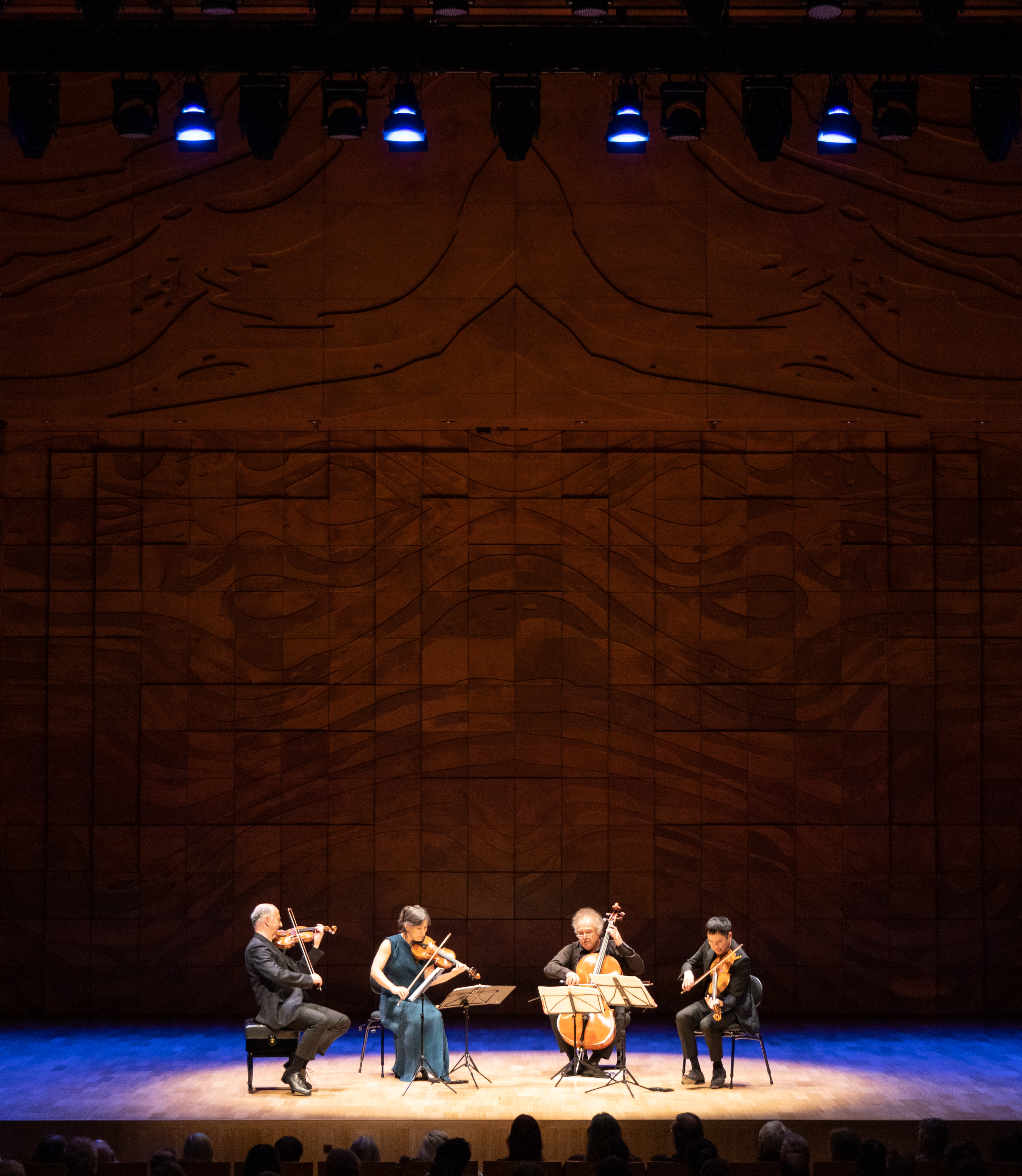
The concert opened with Haydn’s String Quartet in G minor, nicknamed ‘The Rider’ for the galloping theme of its final movement. An Austrian composer of the Classical period and a mentor of both Mozart and Beethoven, Haydn shaped the development of chamber music and particularly the string quartet. From the leaping excitement of the first movement into the building tension and anticipation of the second, the music felt molten in the precision of the layered instruments. Throughout the quartet there was a delicate interplay of the four voices, a bright conversation between the instruments, that eventually returned to the light-hearted energy of the first movement with even more speed and theatricality.
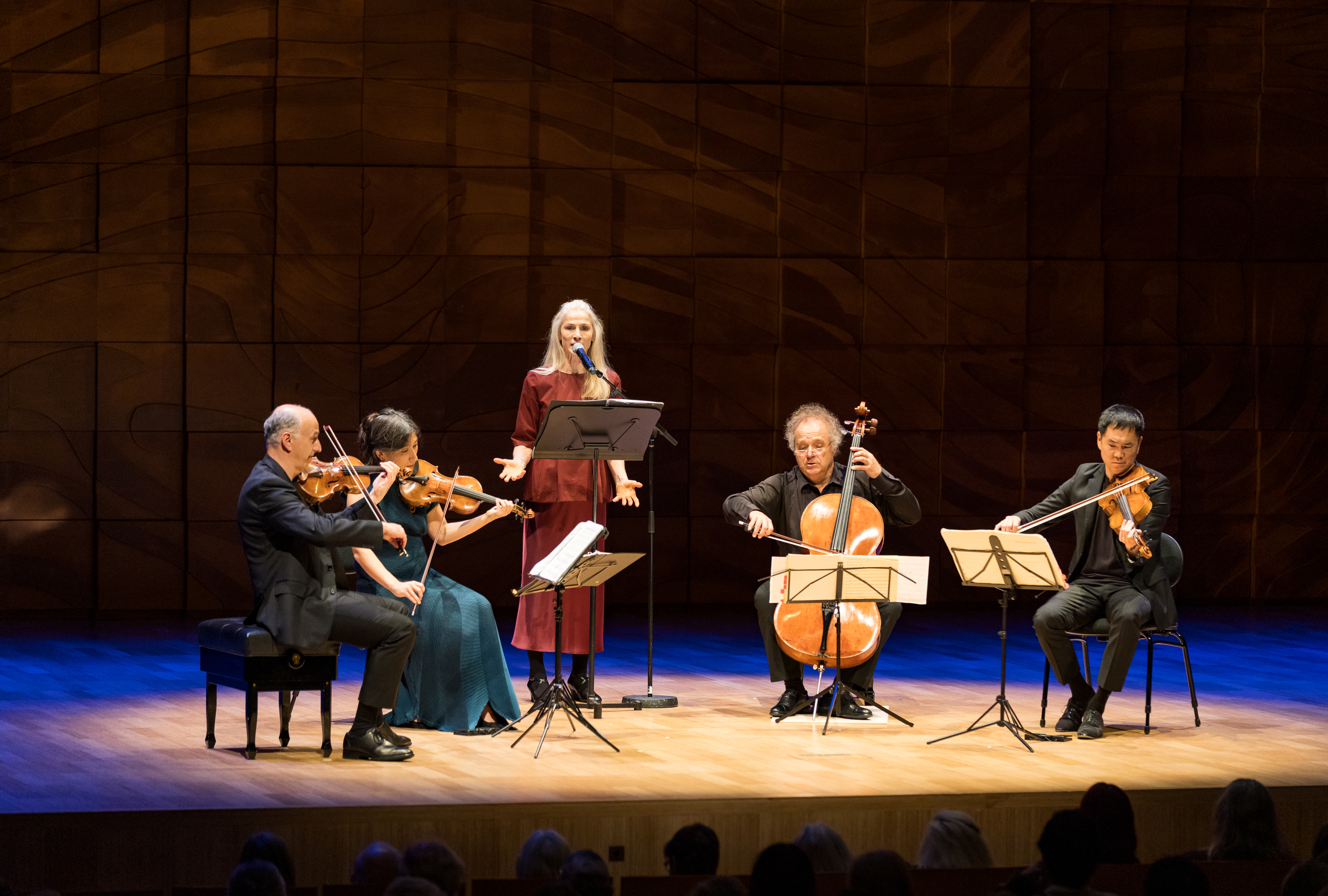
After an interval, the concert continued with Sonnet of an Emigrant, a new work for narrator and string quartet by Australian-born, Berlin-based composer Cathy Milliken. Milliken spoke briefly about her piece, written specifically for the Takács Quartet and inspired by the ‘exile’ poetry of German artist Berthold Brecht. The piece also shares its title with a poem of Brecht’s from that time. Musica Viva Australia’s Artistic Director, Paul Kildea, wrote in his programme note that the commission was intended to “laud our émigré founders and their gloriously foreign names”, drawing the comparison to a line of Brecht’s poetry about being asked to spell his name.
Describing the commission as wonderful, thrilling, and scary, Cathy Milliken weaves a selection of these poems into a narrative about the constant movement of Brecht’s life, between his flight from Nazi Germany, his time in Scandinavia and eventual settling in California. Milliken’s Berlin apartment happens to overlook the Berliner Ensemble theatre, co-founded by Brecht with his wife and long-time creative collaborator Helen Weigel after McCarthyism forced them out of Los Angeles and they finally returned to Germany.

The narrator of this performance was Cathy’s sister, accomplished Australian actress Angie Milliken, who described herself as the fifth instrument in the quartet and brought appropriate, measured gravitas to Brecht’s words, speaking in both English and German.

The piece evoked imagery of a boat leaving the shore, with the Bavarian mountains of Brecht’s childhood receding, to remembering everyday pleasures of home and worrying for friends left behind. The cello suggested a foghorn, sombre and sinister, and the music sustained this slow tension throughout, suggesting a threat just out of sight. The music twined around Angie Milliken’s voice, responding to her words or sometime just vibrating beneath them. Subtle movement by the musicians was followed by a dramatic flick of the bows, and Milliken’s composition created some interesting and unusual modern sounds with classical instruments.

Exploring the emotional language and landscape of exile, the selected poems also spoke to the inevitability of change, and the notes seemed to glimmer around some of Brecht’s most well-known words: In the dark times / Will there also be singing? / Yes, there will also be singing / About the dark times.
Haunting but ultimately hopeful, Milliken’s Sonnet of an Emigrant captures a sense of displacement, the anxiety of uncertainty, and the longing for a home that may no longer exist.
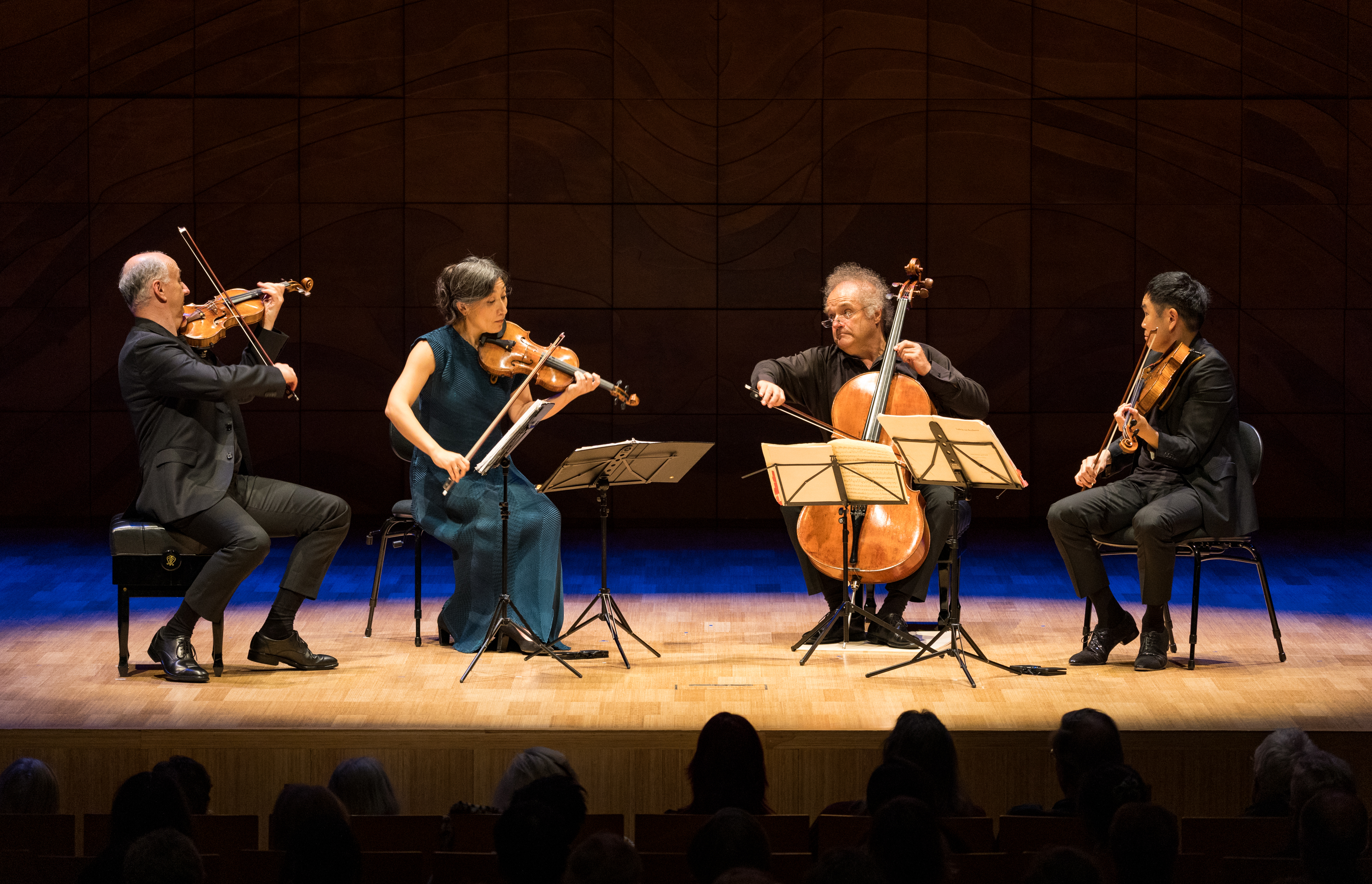
Takács Quartet with Angie Milliken concluded with Beethoven’s String Quartet in C major, the third of the Razumovsky string quartets, which bubbled with energy. The quartet began with spirited intensity in the first movement, settling into a rich rhythm and a dramatic dance between the instruments, to a spectacular finale.
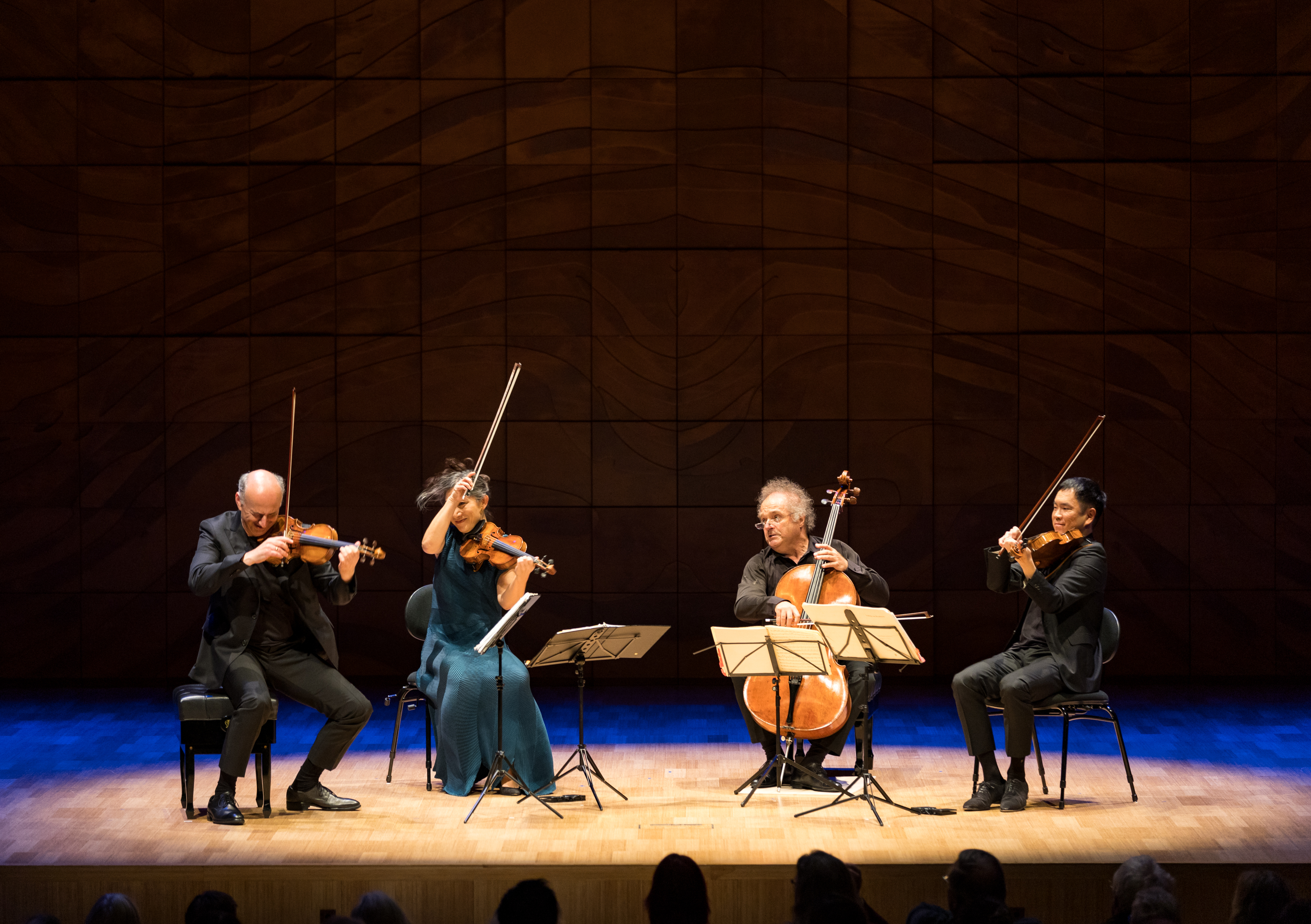
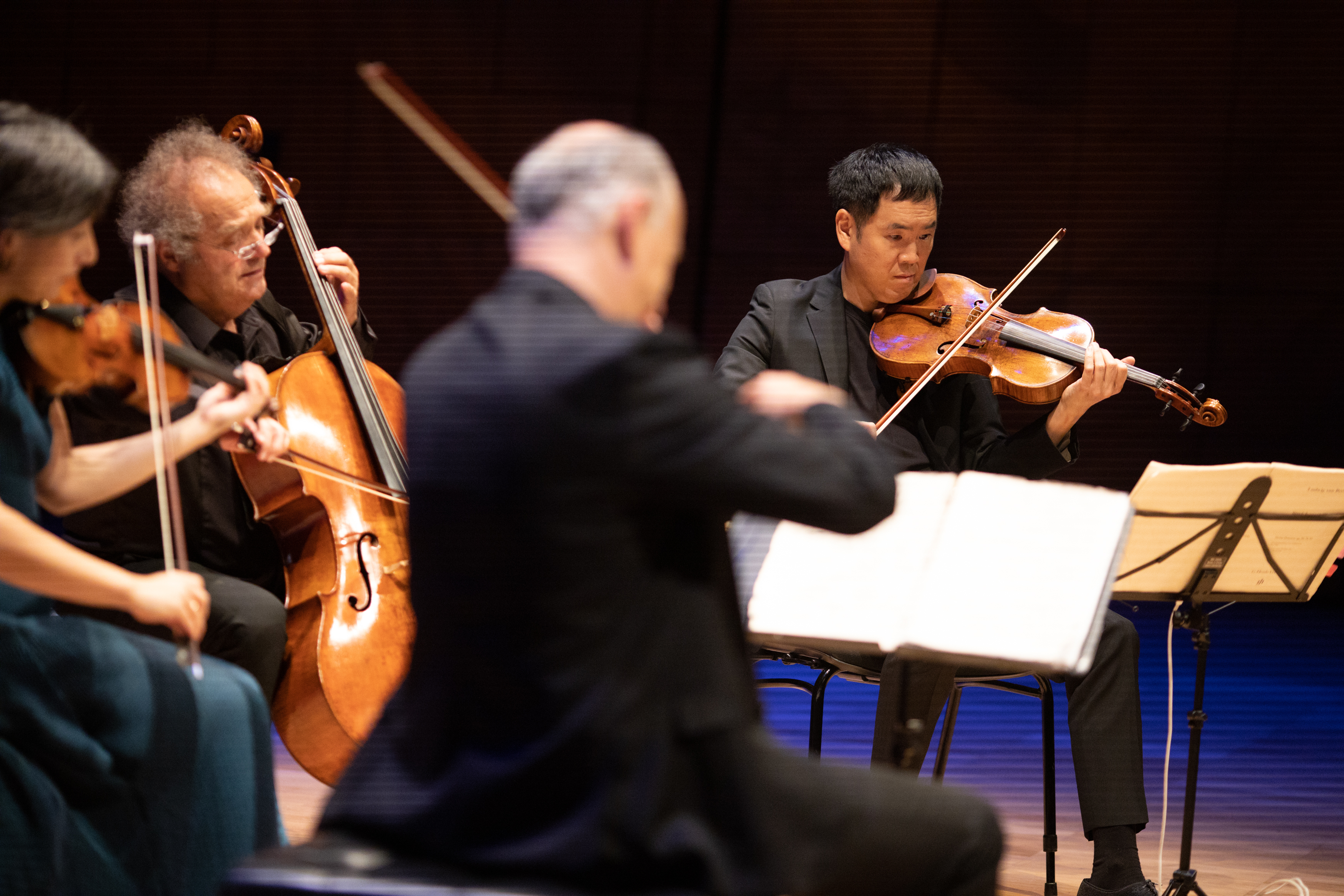
In chamber music, I find it so interesting to watch the wordless communication of the musicians – a moment of eye contact, a turn of the body or the head. The Takács Quartet played with intensity and dramatic flair, all leaning forward together on the end of a note, or sometimes leaping out of their seats.

The programmed pieces were followed by an encore, the second movement from Ravel’s string quartet, and there was also an in-conversation with the performing artists, composer Cathy Milliken, and Musica Viva Australia Artistic Director Paul Kildea afterwards.
Takács Quartet with Angie Milliken was an energised and engaging concert with the world premiere of Cathy Milliken’s Sonnet of an Emigrant as a shining centrepiece, exploring themes of immigration, cultural displacement, and ideas of home.
Takács Quartet with Angie Milliken played at the QPAC Concert Hall, South Bank, on 20 August 2025 as part of their national tour
For further information, visit the Musica Viva Australia website
 Backstreet Brisbane
Leave a comment