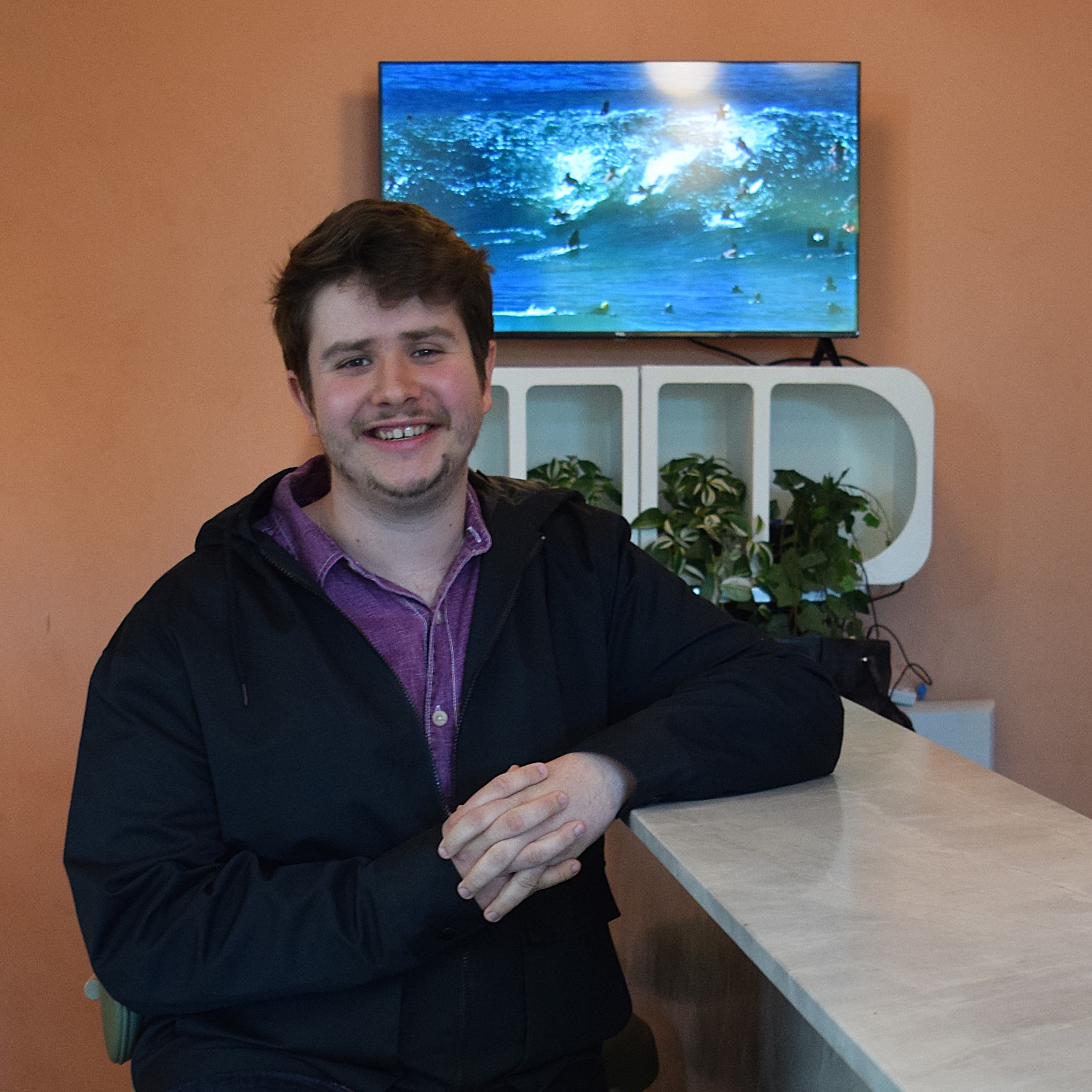
Lachlan Driscoll is a Brisbane-based creative producer and theatre maker, and the Founder & Creative Producer of Observatory Theatre. I sat down with Lachlan to discuss his current creative endeavours, what he looks for in a new work, and his collaborative approach to directing and producing.
How would you describe your creative practice?
I like making rich, layered and thought-provoking theatre. I’m a director, dramaturg, and producer, but I lean more towards a creative producer role. I must say I’m still coming to terms with those two different roles and what the creative producer role means in my context, where I often combine the creative direction for a project and the producing of it together. I think I’m still just learning what that means. Ironic, because that is my title at Observatory Theatre [laughs].
As Creative Producer, I produce all the shows, I produce the programs and the season, and I’m also involved creatively in those productions and those projects. That’s kind of where I’m at with Observatory, but as it grows and more creatives and more artists come on board, my role will shift I would say…
How did Observatory Theatre come about? How long have you been established?
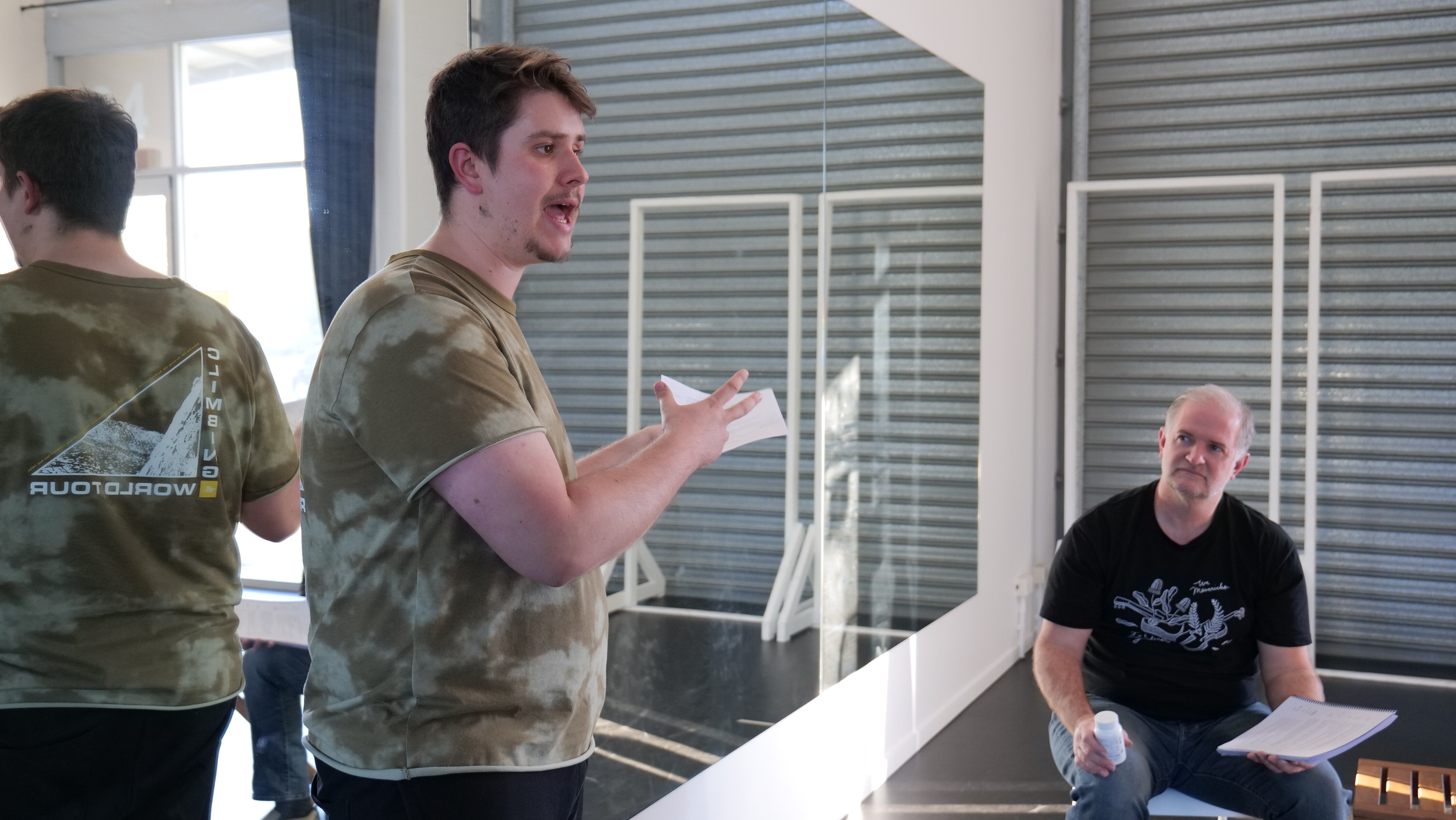
2024 is the fourth year. It came out of uni. In my first year, doing drama, I met lots of people but I had three good, close friends in my course. It was me who initiated the group and initiated the company, and then I asked them to come on board and help across the whole of 2021, the first season. Marketing, helping with producing, all those things. And then I think we just drifted apart a little bit. Particularly because it was the first year of uni, things changed drastically in the second year, but that was fine. I always have been somewhat steadfast and determined in what I’m looking for, and I think it allowed me to have that freedom to define the direction a lot more. So, I went solo.
And now Observatory is supporting many other emerging artists, through shows but also through the Telescope play development program. And that’s where your next production, Disney Off Ice, came from?
Yes, Disney Off Ice was the very first play that was developed through the Telescope New Writing Program. Again, it’s been about testing and exploring what the Telescope process is and can be. I’ve always wanted it to be lots of drafting, lots of talking, lots of workshopping. We did that with Disney. I think that’s really important, to keep that rigour.
It was the first play that we developed…and what a play it is. I always knew it was going to be very interesting. Right from the get-go the writer, Oliver Gough, presented the concept of [Walt] Disney being unfrozen. It’s just wonderful how it’s grown so much, and I think that’s the joy of new play development and the Telescope program – it shifts so much, discovering new things. That’s really exciting to me, and really sparks my interest and my passion, that stories can be refined and worked out until it’s…perfect is not the word, but really unique and really strong, a really strong story and concept that can be shared.

What do you look for in a new play? Even when you can see that there is work to be done, development to be done, what grabs you?
I think it’s the writing style first. Is it compelling, is it quirky, is it witty? I’m drawn to plays like that, where the style is very engaging. What is the voice of the writer and how are they expressing their ideas? Is the language economical and precise, or is it expansive and complex? I think there is beauty in all styles. Oliver’s was certainly like that for me. I’m also drawn to, particularly with Observatory and the Telescope program, ideas and concepts that might be set in an alternative world, dystopian future, a different time period than ours. And it’s through that alternative world, that alternative time, that we discover something new about our world today.
Often, I’ll read a line and I’ll think wow, I haven’t heard that before. If there’s a line that, to me, reads quite controversial I’m like, “ooh, that really stabbed me somewhere”. And if you were to say that line, or the ideas behind that line, to a person in the general public, it might take them aback. I think I look for that as well, something that’s really going to startle and confront.
I think it’s those three things. There’s more, but generally it’s work that is confronting, feels new, feels different. With Observatory, I would never want to do a kitchen sink drama. That has its place for other companies and for other audiences, but Observatory looks at the alternative.

Earlier this year you had a staged reading of Fen Carter’s play The Cane. How was that, as a new way of presenting a story and then having active feedback from the audience?
I think it was great. We all go to see shows and we sit in the theatre and then we leave. We might have a brief chat with somebody, “oh, wasn’t that good” or “what did you think of that?” and that’s kind of the end of it. I’m interested in exploring other modes, where you see something and there’s a discussion period, where it really becomes a much more involved activity to engage with the work. It fosters that dialogue a lot more, it allows audiences to engage and to really tell the writer and the actors how it made them feel. I think that’s one of the goals of theatre, in particular, is learning how the audience relates to it, finding that personal connection. Fostering that with The Cane was really great and something I’m looking to do more of.
And are you running Northside Studio?
I am [laughs]. I often bite off more than I can chew. Which is great, and I’ve certainly met a lot of people that way. I say yes to things, but I also don’t support that, actually, saying yes to everything. I’m an example of why you shouldn’t do it [laughs] and I’m all about mental health and wellbeing. I’m going to take a big break after this year, absolutely.
But yes, I’m the owner and manager of Northside Studio. That’s a venue for hire and I’m hoping to fill it with workshops and classes in all aspects of creative performing arts. Dance, physical theatre, visual art. That’s ongoing, I haven’t had a lot of time to devote to that.
How did that come about? Did you just see a gap for spaces on the Northside?
Yes, but also spaces in Brisbane in general, affordable spaces. I’ve talked to people who say, “that’s why you get grants, to help you” but there’s only so many grants, and it’s very competitive and very time consuming. Northside Studio is a small space, but to hire it is very cheap, it’s only 19 dollars an hour so it very much appeals to the more emerging and indie people, which was my intention, to start a creative hub for independent artists that’s accessible. I suppose the average cost is probably around 30 dollars an hour plus at other places, but it does add up. Shoutout to Backbone – they have the most affordable, surely, in Brisbane at 13 dollars an hour, last time I checked.
I think it’s a problem everywhere. You can always go to your place or your garage and rehearse, of course. I rehearsed a show in someone’s house last year for several months, and it was wonderful. I’d do it again. But for people who want to take a more professional step, finding affordable space can be hard. So that was a reason Northside was born. Just a decent, quality space that’s not going to break the budget. It’s also where Observatory projects have been rehearsing, which has been useful for me.
As well as Disney Off Ice, you recently directed and designed As Told By The Boys Who Fed Me Apples as part of Anywhere Festival.
That wasn’t part of Observatory Theatre, that’s me going off and doing my own thing under my own name. That was quite an epic show. It’s a story about the only horse who returned from World War I, whose name was Sandy. It’s a true story. 136,000 Australian horses went to World War I, and only one horse came back alive.
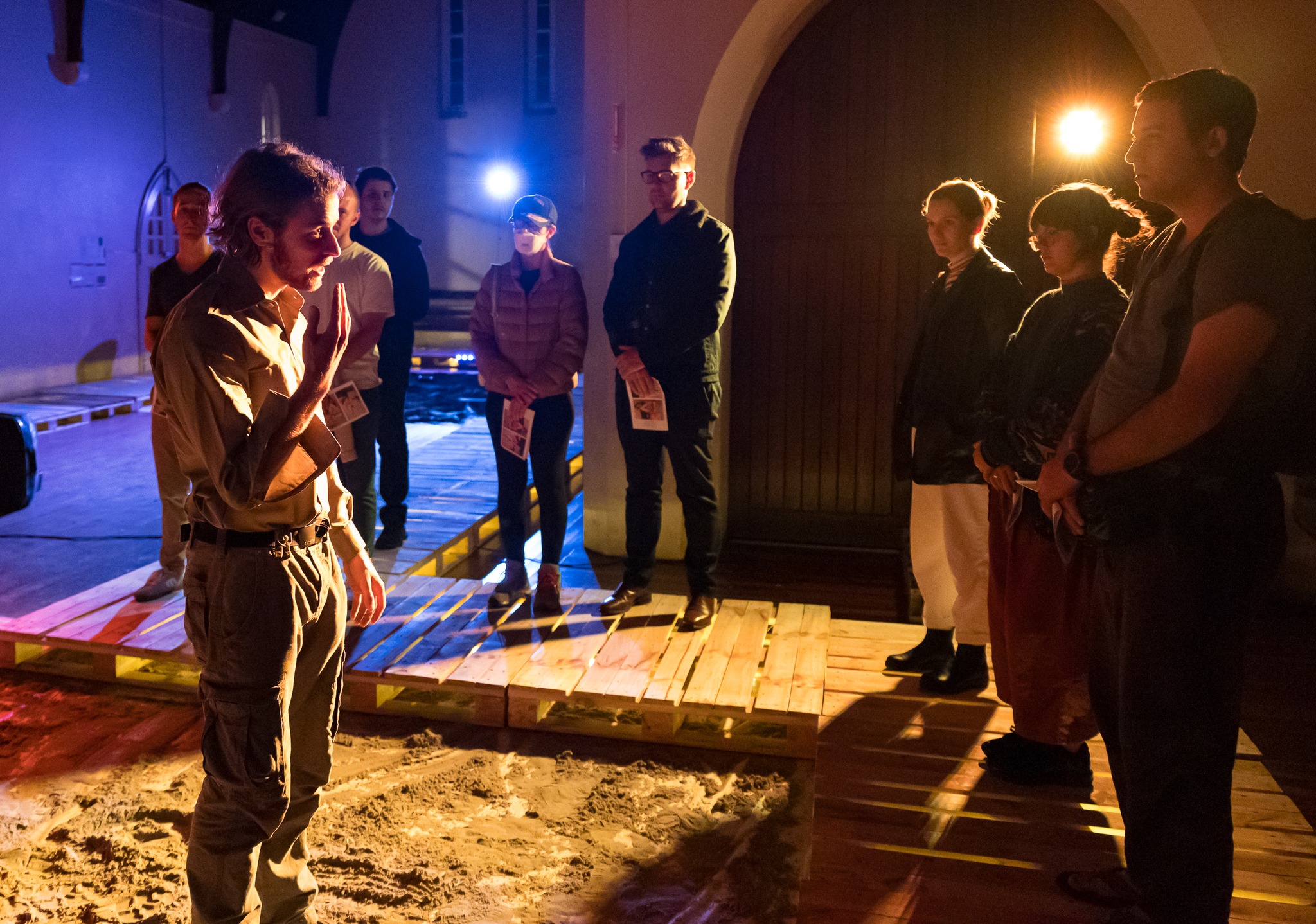
Myself and the two actors really emphasised that incredible journey that Sandy went on. He went to Gallipoli, he went to France…and then finally, against all odds, he returned to Australia. We made it a promenade production where audiences moved through the space. They followed in the footsteps of Sandy, they went on that journey with the horse. That’s very much in the spirit of Anywhere Festival, that kind of movement. Unconventional. We transformed the space it was in, which is very Anywhere as well. The play is in three parts, there were three sections of the church we created and audiences walked on a trench. So, if you’ve noticed that there seems to be a lack of wooden pallets around Brisbane lately, it’s because they all went to that show [laughs]. I think we nailed the Anywhere ethos this year.
How do you approach directing and designing different projects? What is your process?
It probably is a result of me wearing multiple hats on each project as a more indie theatremaker but, to me, direction and design at the moment go together quite well in terms of directing the show and seeing what the world looks like, seeing how everything should look. I think I’ve designed every Observatory show except Control and Destiny Doomed.
I’m learning heaps every new project and I’m constantly humbled by the people I work with [laughs], but I would say it’s largely collaborative. A director I’ve looked at a lot, and is a main source of knowledge and inspiration for me, is Katie Mitchell. She’s a UK director. She wrote an incredible book, that I’m sure every drama student has read, called The Director’s Craft. That book is absolute gold. Katie talks about…as a director you set the parameters, you set boundaries, and you set what everybody should be doing. Then, within that, you encourage everybody to fill in the gaps and to make that work. My process is certainly to provide notes, and come in and shape things where they should be, but I think that certain level of trust and initiative is very important to foster among the team. You set the vision, you set what everybody should be doing, and you just let them do it. It’s also less stressful, it’s a much more enjoyable process. I’m obviously still learning, but that approach of working with everyone, allowing them to take initiative, allowing new ideas and ways of blocking, or ways of doing a scene, or acting, or presenting a character, a set, a costume…whatever, that I haven’t thought of before, and essentially running with it. If it’s outside the vision, there’s a little bit of shaping, but always to keep that kernel of what has been contributed. As cliché as this is, it really is a team effort.
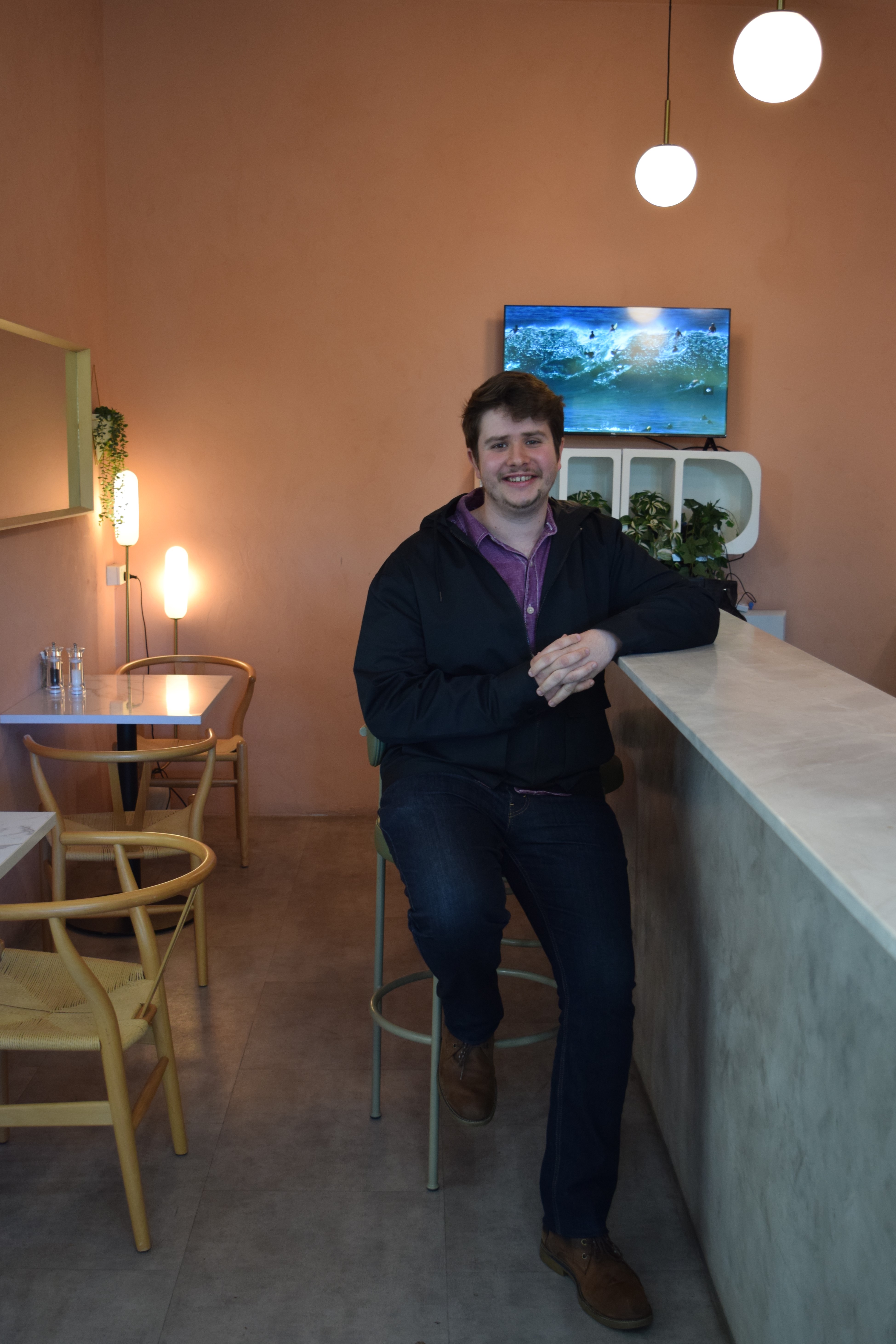
I think of it as artists bringing their philosophy, how they see the world, how they see the piece, and combining that, shaping that, and integrating it into the vision. It is my vision, or the director’s vision, but it’s really heavily influenced by everyone. And in that way, everything you see onstage is everybody’s ideas. Absolutely everything you see has come from the group effort – literally, in terms of bodies onstage, but also in that the essence has come from the team, has come from the group. Everybody contributes their artistic philosophy, their artistic rationale, their way of doing things, and that ultimately shapes the project.
To find out more about Northside Studio, click here
To visit Lachlan’s personal website, click here
 Backstreet Brisbane
Leave a comment