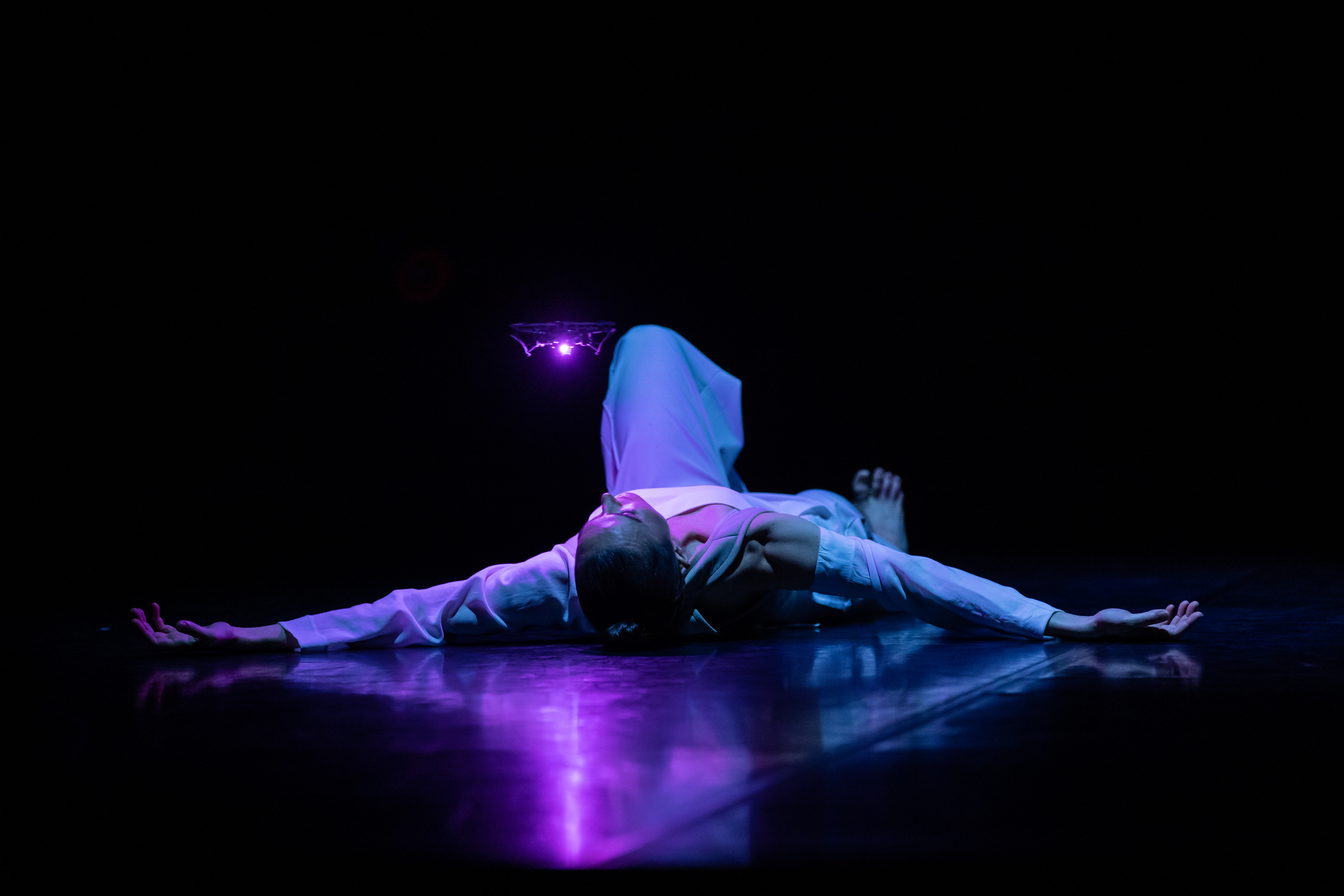
Warning: Drones, strobe lighting, haze and occasional high sound pressure levels.
Australasian Dance Collective brought dancers and drones together as onstage equals with their new contemporary dance work Lucie In the Sky, which made its world premiere at the QPAC Playhouse in May.
Based in Brisbane, ADC continues to experiment with dance in which technology is an active performer and collaborator – in 2021, they premiered Forgery, wherein the choreography was dictated by a changing algorithm, creating a different performance each time – and it’s fascinating to witness the results.

To deliver this technologically ambitious work, ADC partnered with Verity Studios and their autonomous drones, each weighing around 50g and differentiated by the coloured light it emitted. The six dancers and five drones each represented one of the twelve Jungian archetypes, with the exception of The Orphan. Speaking to the audience before the curtain rose on opening night, Artistic Director Amy Hollingsworth said that this show has been six years in the making and that empathy, vulnerability, and connection were at the heart of the work.
Conceived and choreographed by Hollingsworth, in collaboration with the ADC company artists and Verity Studios, Lucie In the Sky began with two of its human dancers in the spotlight, until the drones entered the stage in a blinding flash. There were technical difficulties early on opening night, necessitating a pause in the performance, but this was resolved quickly and the show resumed without further interruption.
After this introduction, the choreography became a series of duets between a human dancer and a cyberphysical dancer, interspersed with larger group choreography. The first of these duets was performed by Chimene Steele-Prior, as The Caregiver, with the titular Lucie, a purple-lighted drone representing The Friend, using languid, explorative movement.
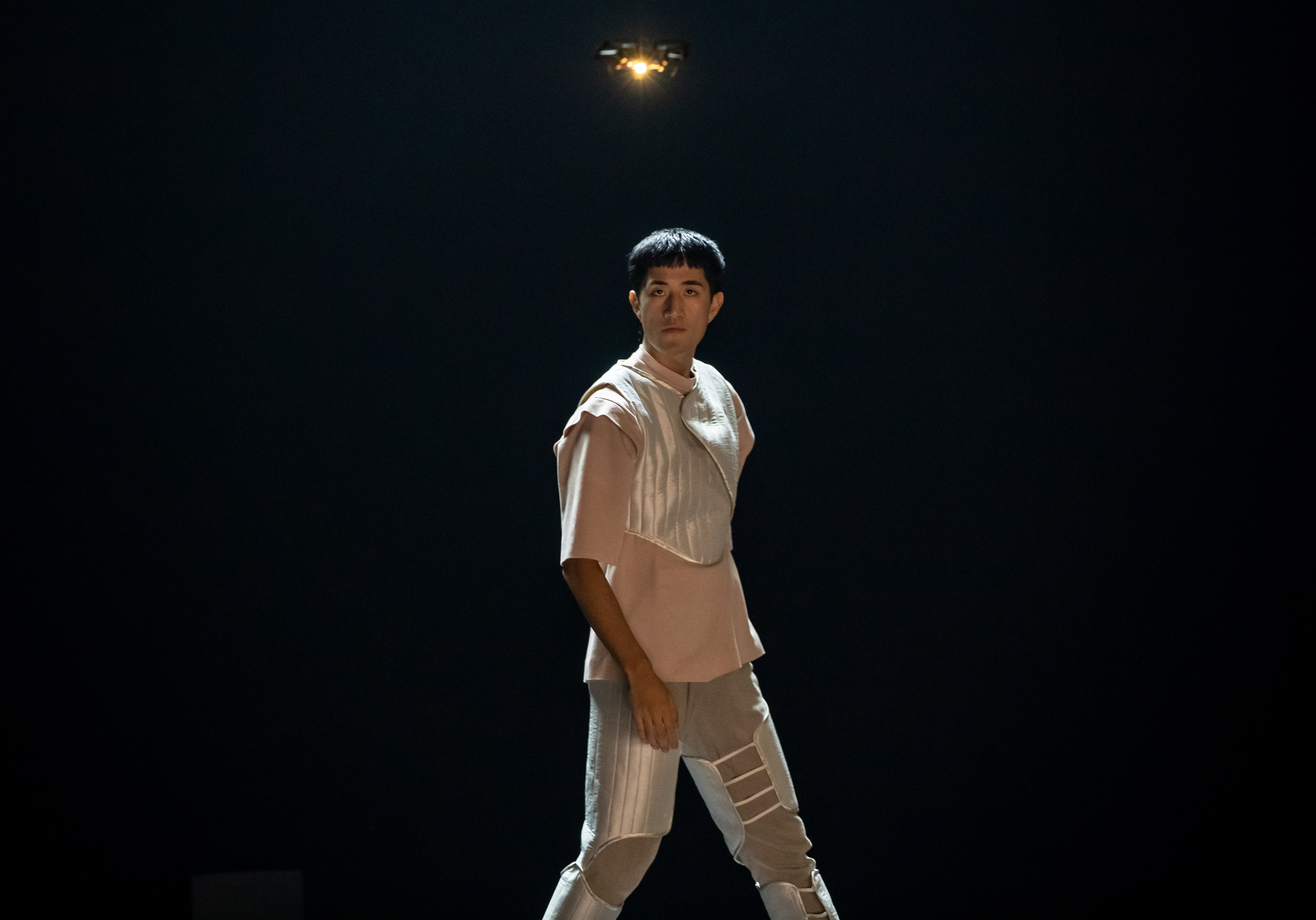
Harrison Elliott performed as The Magician, with playful, acrobatic choreography that bordered on tumbling. Elliott interacted mostly with the green-lighted drone Skip / The Jester, and his conversational and emotional engagement with the drone felt the most natural and believable of the human performers’.

Chase Clegg-Robinson was frantic as The Innocent, a thumping heartbeat bass line as she moved backwards and forwards across the stage, pursued by empty air. As she convulsed on the floor M / The Leader, a yellow-lighted drone, re-appeared and hovered over her, while all the other human dancers gathered. The brightest source of light onstage, the human dancers followed The Leader as it moved.
Only Jack Lister as The Seeker did not have a cyberphysical counterpart, although he performed a number of duets with other human dancers, as well as a slow solo, and interacted with the drones during the group choreography. The company dancers were generally sharp and cohesive, and managed the navigation of their drone counterparts smoothly.
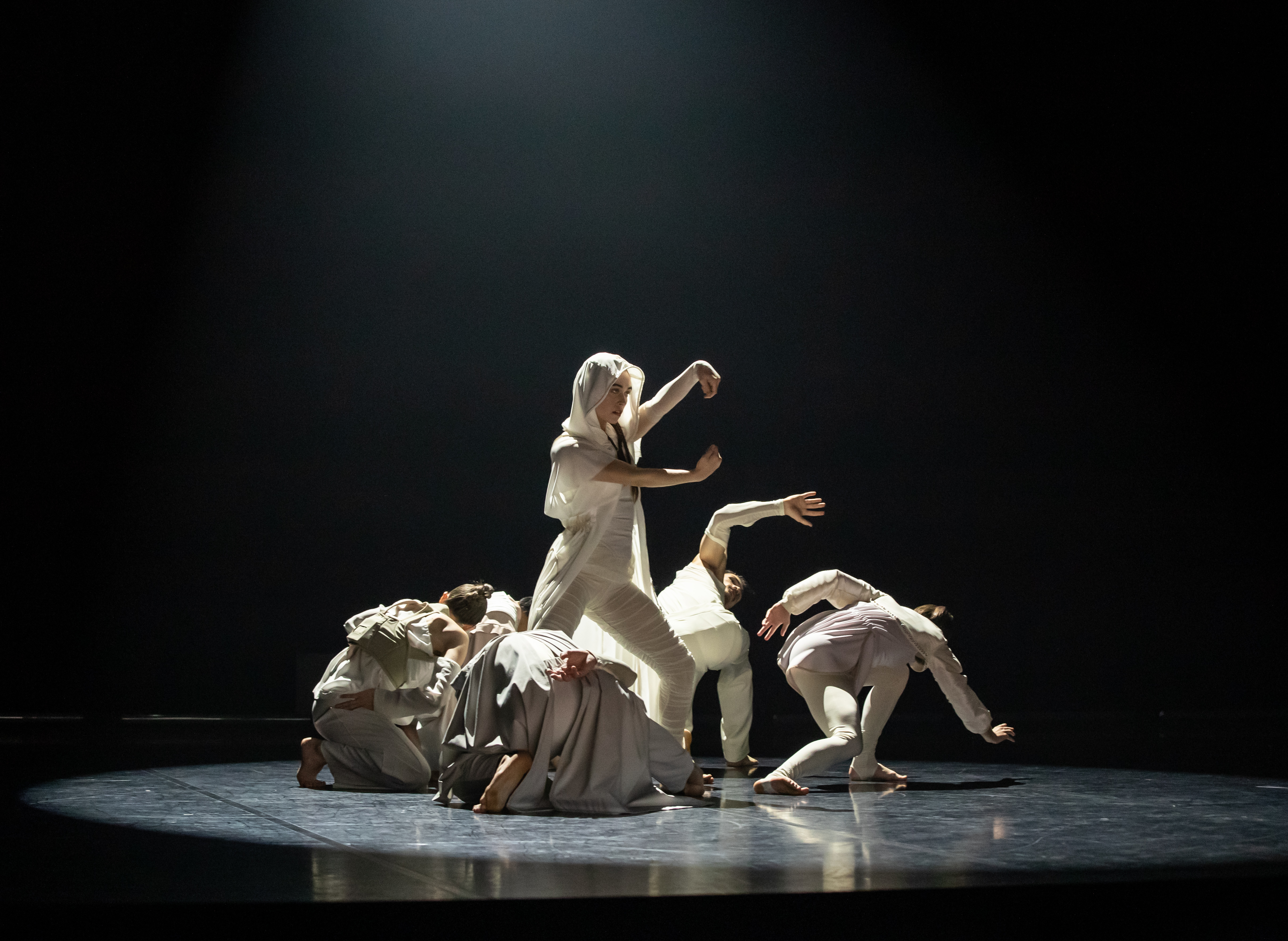
Freeze frames and other rapid or sudden changes in pace maintained the momentum of this 60-minute performance, and the choreography created a mirroring effect between the drones and their human counterparts. In addition, the contemporary choreography incorporated ADC’s characteristic movement style and, at times, seemed to borrow from the physicality of improvised physical theatre.
The thing that struck me about this production is the human desire to anthropomorphise objects. Although Lucie In the Sky focused on a collaborative and cooperative future between artificially intelligent machines and humans, the group choreography in particular emphasised the old sci-fi fears about control, surveillance, power, and a “robot uprising”.
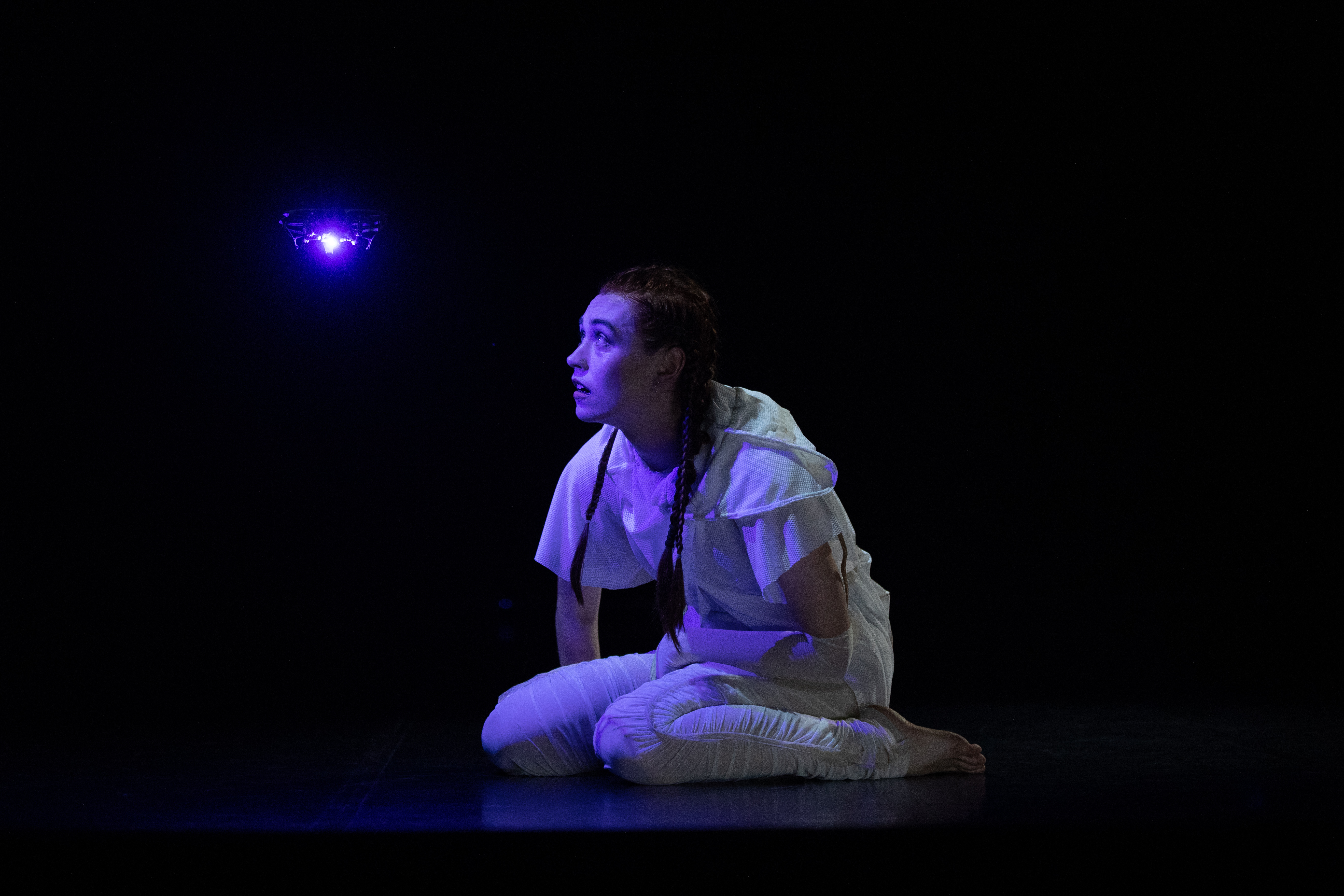
The sparse staging felt modern and crisp, although costuming by Harriet Oxley recalled mid-2000s apocalypse movie couture. Lighting design by Alexander Berlage made use of dramatic contrasts and sudden changes, from spotlights and strobes to blindingly bright flashes aimed at the audience, which also helped to maintain the momentum of the work and divide the vignettes. The coloured lights of the drones also moved through the stage space, illuminating the dancers in their proximity. Music composition and sound design by Wil Hughes included a full-length score that brought together diverse musical elements evoking classical strings, dance clubs, and a human heartbeat with distortions and thumping bass lines that you could feel in the roots of your teeth, while also allowing for the buzz of the drones to be heard from the stalls.
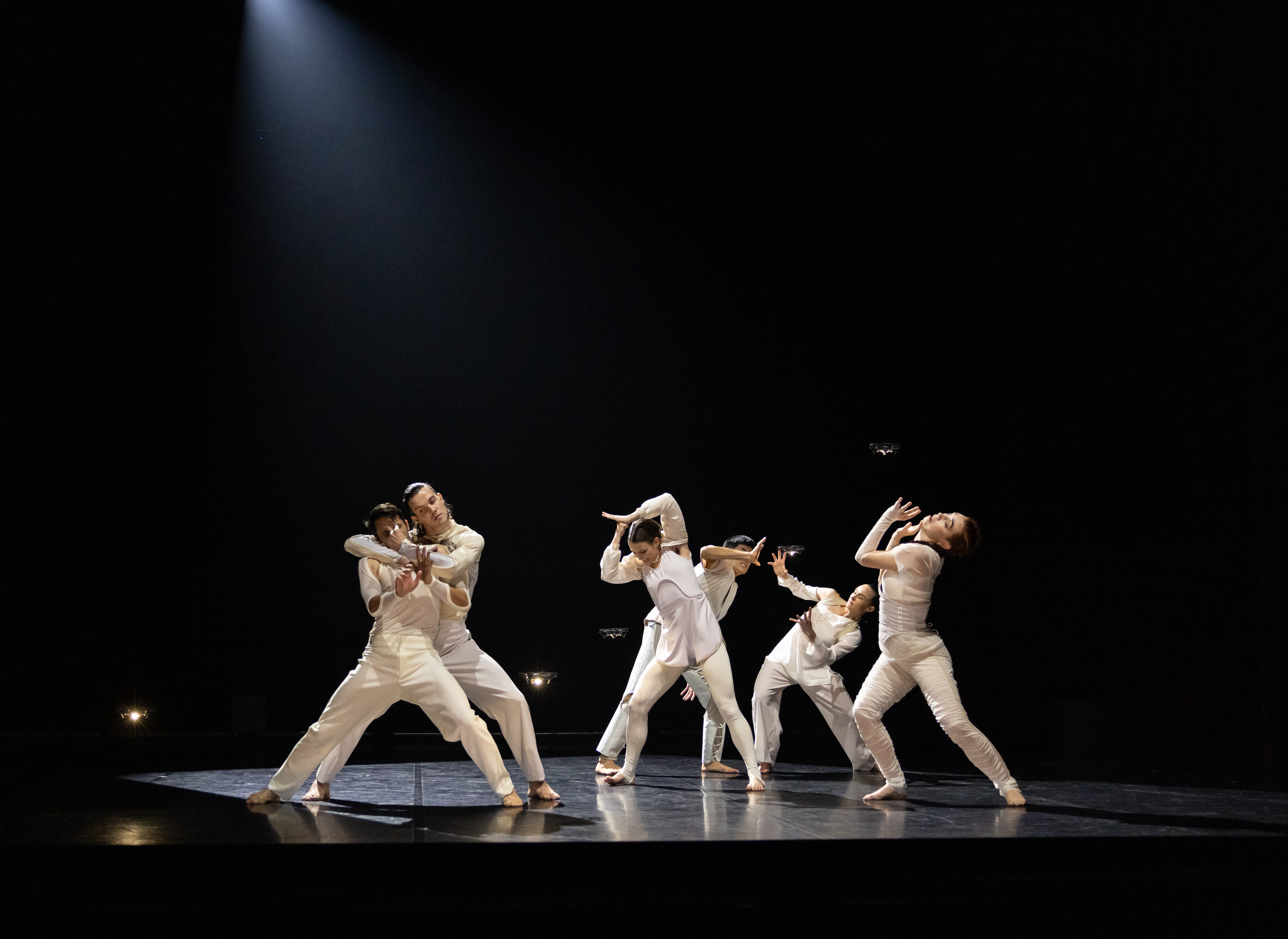
Under the artistic directorship of Amy Hollingsworth, ADC continues to experiment with the boundaries of dance as an art form, and it is so refreshing to see the limits and rules of the genre stretched and tested in these new and interesting ways. Lucie in the Sky was a technologically ambitious dance work, incorporating cyberphysical performers with their human ensemble for an interesting and unique new kind of collaborative performance.
Lucie In the Sky was performed at the Playhouse Theatre, QPAC, from 5 – 13 May 2023
For further information, visit the ADC website
 Backstreet Brisbane
Leave a comment